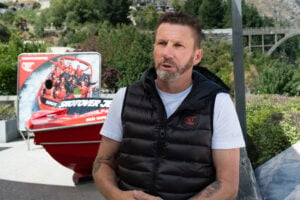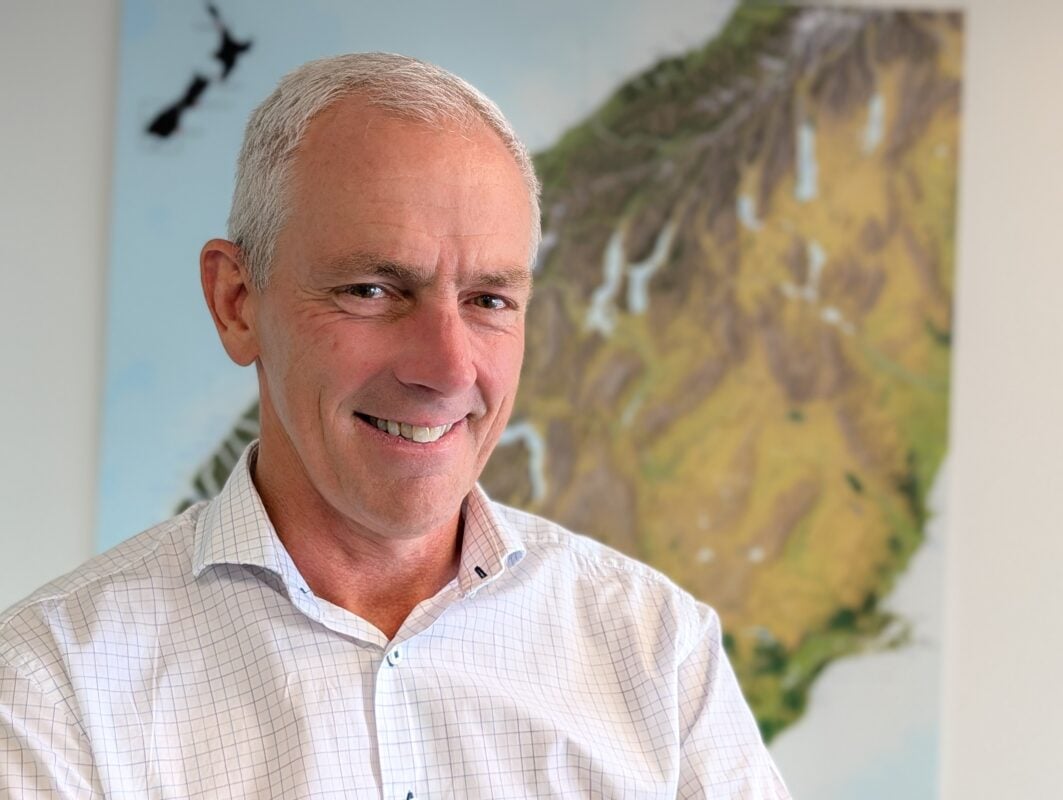
From his corner office in Queenstown, New Zealand, Dave Beeche enjoys a cinematic view of Lake Whakatipu and the surrounding alpine peaks that make the South Island one of the world’s most recognizable tourism destinations. But as the CEO of RealNZ, a tour operator founded in 1954, he’s leading a shift in how the region defines that legacy.
For decades, Queenstown has been the adrenaline capital of the world, a hub for bungee jumping and jet boating. Beeche is steering his company toward a different direction: environmental stewardship.
“It’s a core part of our DNA,” Beeche says. “It’s more than a tagline or a purpose statement on a wall.”
It’s about time. Queenstown is a victim of its own postcard-perfect success, with the local infrastructure buckling under the weight of 3 million annual visitors. The surge in short-term rentals has squeezed the local housing market, and the environmental footprint of all those jet boats and bungee jumps isn’t exactly light.
Even Beeche admits the company still burns a lot of diesel to keep its ski resorts and tours running. For a town of roughly 35,000 permanent residents, playing host to so many guests creates what he calls a “say-do gap” that’s wider than a Fiordland canyon.
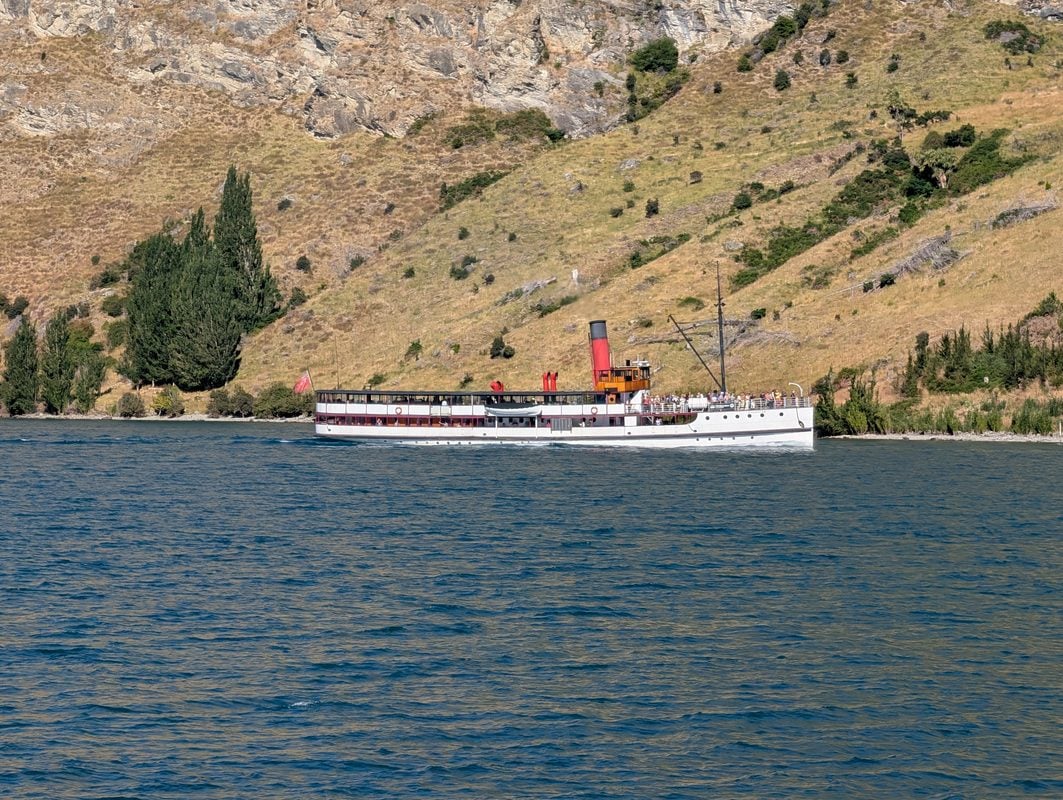
The TSS Earnslaw, a restored steamship launched in 1912 that shuttles visitors across Lake Whakatipu on New Zealand’s South Island. (Photo by Aren Elliott)
Bridging the “say-do” gap
RealNZ’s values can be traced to its founders, Les and Olive Hutchins, who helped spearhead the campaign to save Lake Manapouri in the 1960s. That effort, which gathered signatures from nearly 10 percent of New Zealand’s population, effectively birthed the country’s modern conservation movement.
Today, Beeche is using that history to address the “say-do” gap.
“There’s a theory—and there’s been some research to back this up—that when people go on holiday, they leave their sustainability ambitions at home,” he explains.
That’s the “say-do gap”: Travelers who claim to prioritize the environment end up making purchasing decisions based on price, schedule and the appeal of the experience.
“It’s not yet a full differentiator in terms of people’s choice, but we fully believe that in the long run, people will want to choose more sustainable options in their tourism experiences, and so we’re leaning into that really heavily.”
Last year, RealNZ committed 1 percent of its direct online revenue to protect the Southern New Zealand Dotterel, a critically endangered alpine bird. The company also raised $270,000 for New Zealand’s Department of Conservation to fund predator trapping and monitoring.
It operates an internal network of roughly 2,000 traps, which are cleared by volunteers.
The company is also modernizing its tactics. By upgrading to AI-enabled traps that automatically reset, RealNZ saw a spike in effectiveness, catching 77 possums in a single month compared to its previous average of eight.
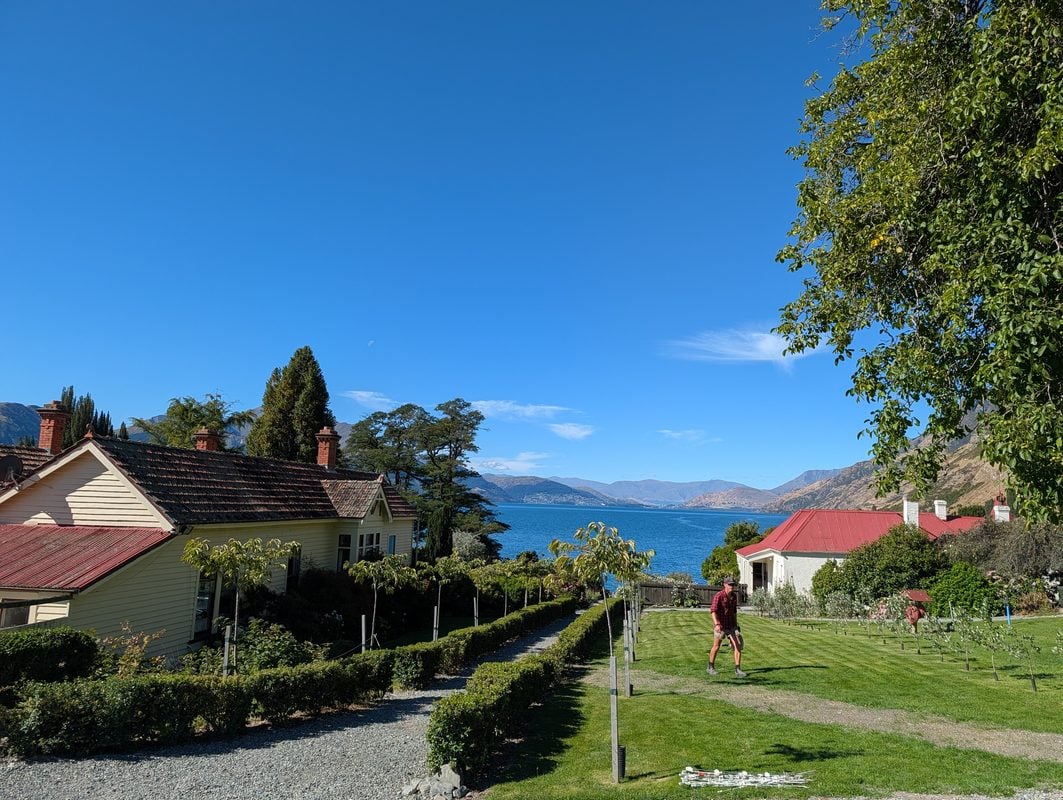
Walter Peak High Country Farm, an historic ranch originally settled in the 1860s. (Photo by Aren Elliott)
Here’s the operational reality of being green
Despite the focus on sustainability, Beeche is candid about the hurdles of decarbonizing a massive fleet. The company still burns a significant amount of diesel and operates a historic coal-fired steamship.
“We have very strong commitment and ambitions to reduce emissions but we need to move in lockstep with technology,” Beeche says. The company recently piloted a 10-seater electric hydrofoil and is exploring electric options for its bus fleet as battery technology and infrastructure improve.
Turning tourists into advocates
RealNZ’s most potent tool may be the emotional impact it has on visitors. Beeche views the company as an incubator for environmental evangelists, citing its Doubtful Sound overnight cruise as a prime example. During the trip, crew members turn off all engines and generators, asking guests to put away phones and cameras to experience absolute silence.
“To me, that’s a much more powerful thing than giving someone a slide presentation on nature,” Beeche says.
To see this philosophy in action, you have to head to the Queenstown docks and board the TSS Earnslaw, a carefully-restored steamship launched in 1912. Known as “The Lady of the Lake,” she is the only coal-fired steamship still operating in the Southern Hemisphere. After a 45-minute cruise across the crystalline waters of Lake Whakatipu, you’ll arrive at Walter Peak High Country Farm, a historic ranch originally settled in the 1860s.
Here, the intersection of tourism and conservation is literally rooted in the earth. The property sits on land that was once smothered by invasive, monoculture pine trees—stubborn, non-native plants that choke out local biodiversity. RealNZ took the costly and labor-intensive step of chopping them down. In their place, it has planted roughly 30,000 native trees to restore the region’s natural ecosystem.
A guide leads visitors through a lush kitchen garden, where they learn about seasonal local produce while foraging directly from the vegetable beds and orchards. Everything about the operation emphasizes sustainability—the idea of staying in balance with New Zealand’s fragile ecosystem. At the end, there’s a high-country lunch featuring fruits, vegetables and cheese, served on a rustic table made out of fallen trees.
But the highlight of the tour—the real sales pitch for sustainability—comes at the end. Every guest is invited to play a role in Walter Peak’s Land Restoration Project by planting their own native tree or shrub on the reforested peninsula. RealNZ even lets visitors name their saplings.
Not only does it directly aid the farm’s conservation goals, but it creates a powerful emotional tether to the land. It’s easy to imagine guests returning years later, grandchildren in tow, to check on the native tree they planted on a sunny afternoon at Walter Peak.
For Dave Beeche and RealNZ, that lasting connection is the point.
“If we’re a good custodian of the land and are doing our bit to reinvest in the environment that we’re operating in, then that’s going to pay dividends in the long run,” Beeche says. “We 100 percent believe it’s ultimately going to be value-creating. It’s a really good virtuous circle.”
In an industry where the bottom line often dictates the path of least resistance, RealNZ is trying to show visitors that there’s another way. If it can convince 3 million people a year to fall in love with conservation, they just might turn Queenstown into one of the world’s most sustainable destinations.

Have a question about this story? Tell us what happened — we read every comment.
Join the conversation