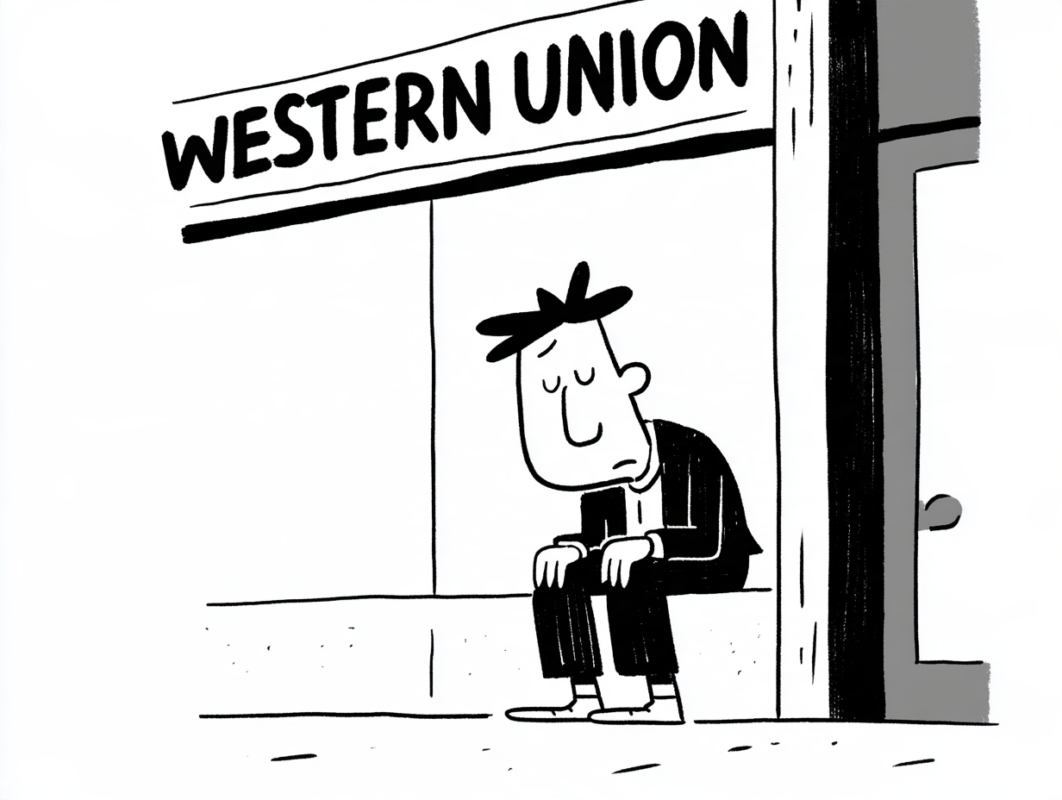
Dirk Shearer got scammed out of $15,000, and I couldn’t do a thing about it.
Shearer, a carpenter from Glen Rock, Pa., wrote to us recently about a transaction he made through Western Union. He said it was a fraudulent money transfer. He’d filed a claim with the company and a report with his local police department.
I couldn’t help him get his money back, and I’ll have the reason in a minute. But first, let me tell you why I’m writing about Shearer. Today we’re relaunching our Elliott Confidential podcast. The new format takes a theme from our advocacy (like criminal complaints or failed cases) and expands on it.
Today’s episode, which you can listen to below, is about an alleged crime that we decided not to get involved in. And there’s an improbable twist at the end that, to be honest, I never saw coming.
WARNING: This episode contains adult themes. Listener discretion is advised.
Why we can’t help you recover your money
We sent Shearer a standard request for his paper trail: the emails between the customer and the company. Why? Because without a record, there’s no case.
Shearer wrote back that he’d already given us his reference numbers.
“You should be able to check it yourself,” he said.
Actually, we don’t have access to Western Union’s internal files. That’s way above our pay grade as advocates.
Our leverage is pretty simple. When a reader hands us a documented dispute, and it passes our rigorous review, we share it with the company, and we politely ask that company to take a look.
Most of the time that’s enough. The record does the arguing. But without the record, I’m just another person calling a customer service line with a story.
I work with the public and I feel your pain. In my instance, I’m a tax auditor for a city agency. The things taxpayers expect us to know is unbelievable.
I imagine they think we’re all The Amazing Kreskin, able to assimilate facts we have no way of knowing unless they tell us. For instance, that they retired and are no longer required to file annually.
The carpenter who lost $15,000? If he’s not willing to engage in the process there’s really not much you can do for him.
The bigger problem is that his complaint alleges a crime. Somebody took his money. Deciding who, and whether what happened meets the definition of fraud, is a job for police, prosecutors and eventually a judge. I’m none of those.
Our advocates don’t have the authority to weigh evidence, and my opinion about who’s telling the truth doesn’t carry that much weight. Even if I believed Shearer — and I have every reason to — that’s not a finding of fact.
Beyond that, Shearer had already filed a police report, and that almost always stops my team in its tracks. Once law enforcement is involved, there’s almost nothing we can do to help. It’s an issue for the company’s legal department and law enforcement officials.
Three strikes and you’re out. So sadly, his case went into our infamous F-File.
The bizarre case that refused to go away
The F-File (“F” as in Failure) is the subject of this week’s episode of the Elliott Confidential podcast. It’s the case that refused to close.
A woman we’re calling Connie wrote to us after a popular vacation rental platform banned her. She said it was a case of mistaken identity. The platform runs periodic background checks on its guests, and Connie’s photo had come back flagged as someone who was a member of the world’s oldest profession.
She insisted the flag belonged to someone else, a woman who happened to look a great deal like her. She sent us the side-by-side images, and she wasn’t wrong about the resemblance. She also sent her ID and her teaching certificate, because Connie taught elementary school. Our team wanted to help her.
Then the platform did something companies almost never do. A representative asked to get on the phone with us. Our cases move by email, and a request to talk is rare enough that everyone here sat up straight.
After our call, we had no choice but to send Connie’s case straight into the F-File.
That’s the part I can tell you. Two years later her name turned up in our newsfeed, and that’s the subject of our episode. I’ve been doing this work for about 30 years and I’ve seen a lot of strange cases. This is one of the strangest.
My co-host Iden and I take the whole thing apart on the show.
(One warning before you press play. The episode is for grown-ups. There are adult themes, and we’re not shy about them. Listener discretion is advised.)
Tell me whether we called Connie’s case right. And tell me about Shearer, while you’re at it. Should a consumer advocate back away when a complaint turns criminal, or is that the moment somebody needs help most?
If you have a failure of your own you’d like us to dissect on the show, send that too. The cases we lost often make better listening than the ones we won.

Have a question about this story? Tell us what happened — we read every comment.
Join the conversation