Christopher Elliott

Christopher Elliott is the founder of Elliott Advocacy, a 501(c)(3) nonprofit organization that empowers consumers to solve their problems and helps those who can't. He's the author of numerous books on consumer advocacy and writes three nationally syndicated columns. He also publishes the Elliott Report, a news site for consumers, and Elliott Confidential, a critically acclaimed newsletter about customer service. If you have a consumer problem you can't solve, contact him directly through his advocacy website. You can also follow him on X, Facebook, and LinkedIn, or sign up for his daily newsletter.
Fear of travel is at a high, but the data tells a different story. Here's why your summer vacation is still a safe bet, from peace rankings to airline risk.

No, your summer vacation isn’t going to kill you

Fear of travel is running high this summer. A reader named Cindy Smith nearly canceled a Danube river cruise and a week in Croatia after reading headlines about a cruise hantavirus outbreak and crew arrests. She is not alone. In a recent Global Rescue survey, less than 1 percent of respondents said their concerns about personal safety abroad had eased since last year, while 56 percent said they felt more concerned. Travelers cite three recurring fears: airlines collapsing mid-trip, dangerous conditions abroad, and anti-American sentiment. Yet the major U.S. carriers such as Delta, United, American, and Southwest remain profitable, and a conflict on one side of a continent does not make the other side unsafe.
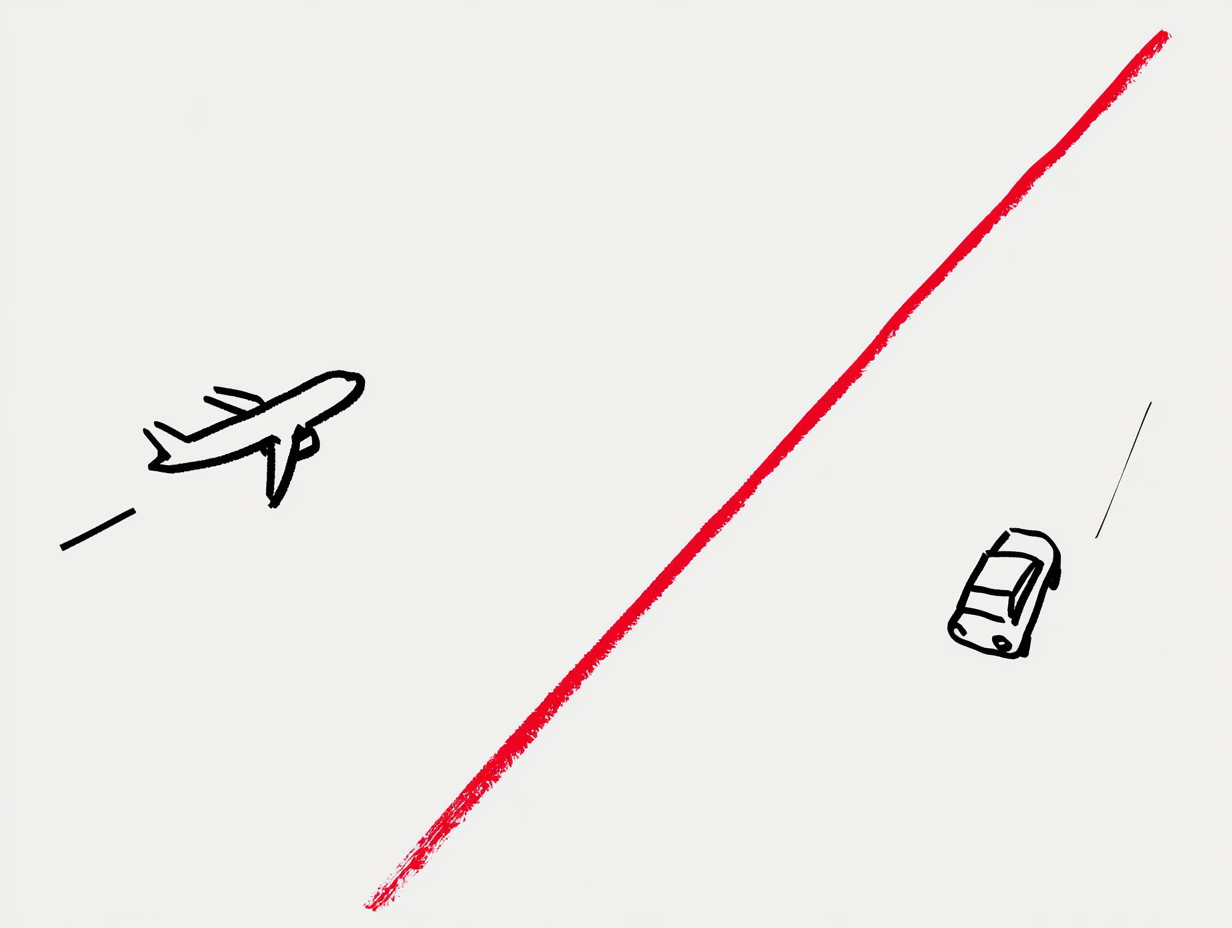

Simple hand-drawn Bauhaus-inspired minimalist illustration on a white background showing a black line-drawing of an airplane taking off on the upper left and a small black line-drawing of a car on the lower right, separated by a single bold red diagonal line running corner to corner, symbolizing the widening divide between affluent air travelers spending more per trip and budget-conscious travelers priced out of summer vacations this year

The summer travel divide: How to find affordable vacations this year

Summer travel intent has hit its lowest point since the pandemic. Deloitte’s latest summer travel survey found only 45 percent of travelers plan a summer vacation with paid lodging this year, the lowest figure in six years. Travel intent fell across every income bracket, but the drop among households earning under $100,000 was twice as steep as the decline among middle- and high-income earners, an 8-point drop versus 4 points each. The travelers still going plan to spend $4,069 on their summer vacations, up 17 percent from last year. Deloitte’s broader 2026 outlook calls this a bifurcation of standard and luxury travel and frames competition for the high-spending traveler as one of the year’s defining trends. Travelers earning between $100,000 and $199,000 show the biggest booking gap, with 37 percent fully booked versus 45 percent last year, leaving a large amount of unsold late-May inventory that revenue managers are aware of.

Architect Anders Lendager with a graying beard and dark bomber jacket gesturing with both hands as he speaks in front of his timber-clad TRÆ office building in the Sydhavnen port district of Aarhus, Denmark, with the wooden facade and large windows visible on the left and modern high-rise buildings, a construction crane, and a freight truck in the background under an overcast sky

Wooden skyscrapers, next-level recycling: How Aarhus wants to become one of the most sustainable cities in the world

Aarhus is often described as Denmark’s second city, but it is quietly trying to become something more difficult to define. Behind its cafés, port cranes, hotels and waterfront developments is a city testing how far sustainability can be pushed into ordinary urban life. Its energy system has already moved away from coal, its heating network is being reshaped by geothermal plans, and even its waste, cruise terminals and new buildings tell a larger story about how climate ambition works when it leaves policy documents and enters daily infrastructure. From the Port of Aarhus to the Sydhavnen district, from Randers’ rainwater systems to ecolabelled hotels and low-impact stays near Mols Bjerge National Park, the region offers a closer look at what a greener city can become when design, energy, tourism and waste management all start moving in the same direction.

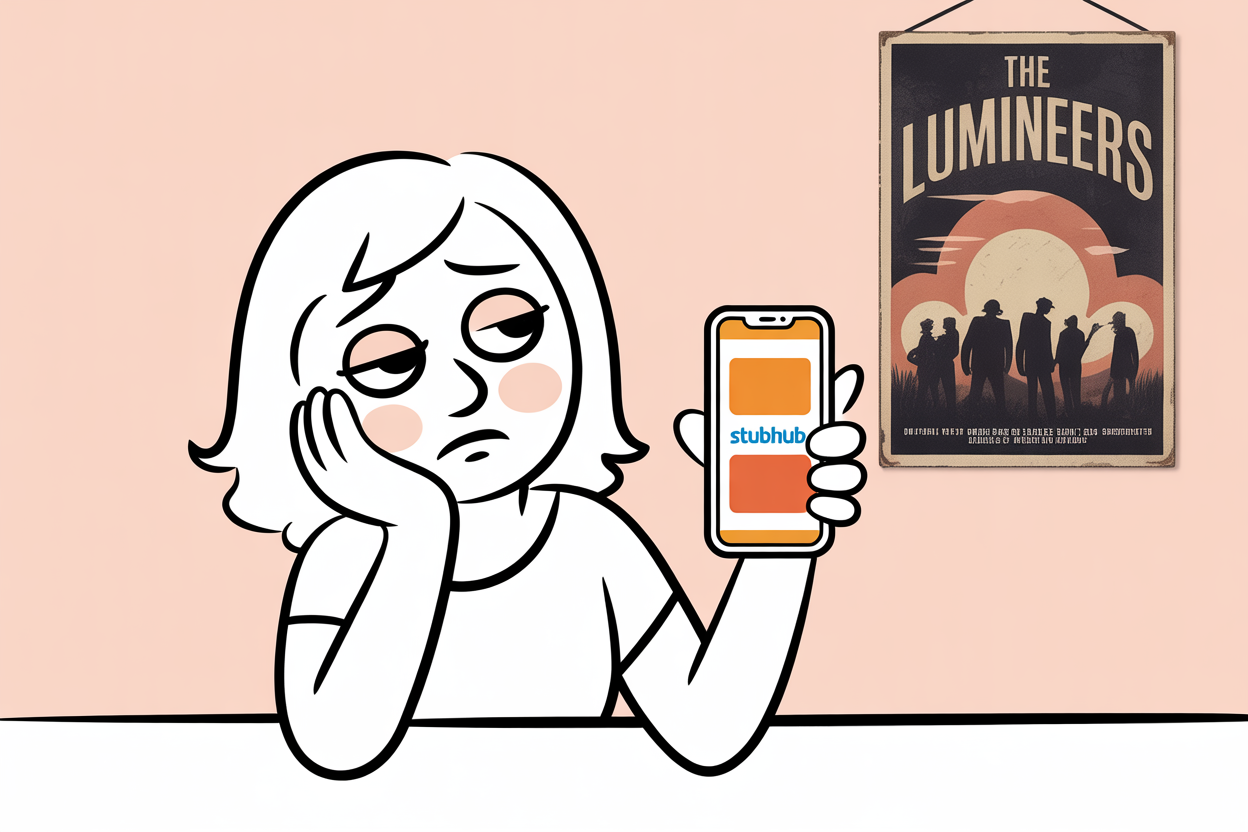
Editorial cartoon of a disappointed woman with shoulder-length hair resting her chin on her hand while holding up a smartphone showing the orange StubHub app, seated at a table against a pink wall with a vintage-style concert poster for The Lumineers hanging on the wall behind her, illustrating a frustrated concertgoer who received the wrong tickets and struggled to get a refund through StubHub's confusing return policy

Help! StubHub’s confusing ticket return policy cost me $1,176

Sharon McMonagle paid $1,176 for four club section tickets to a Lumineers concert through StubHub. The confirmation email included no seat numbers, and the day before the show StubHub sent tickets for a completely different section with no club access. StubHub asked her to accept the wrong tickets and transfer them back, which she feared would lock her into ownership. An agent told her to send a screenshot proving she had not accepted the tickets. After 45 days, StubHub said she would receive nothing because she had not returned the tickets through Ticketmaster, tickets she never accepted in the first place. StubHub advertises a FanProtect Guarantee promising that buyers who do not receive the tickets they ordered will get comparable replacements or a full refund.

Minimalist editorial cartoon of a frustrated couple sitting back-to-back on a single gray suitcase in an airport terminal with their heads bowed, both staring at their smartphones with downcast expressions, surrounded by blurred information board signs in the background, illustrating a Cleveland couple's stressful return trip from Greece after Delta and Sky Express cascading booking errors forced them to pay for a new $435 ticket and recheck their luggage in Athens

An agent error turns a simple return trip into a costly odyssey. Will Delta fix it?

Robert Kempke and his wife flew from Cleveland to Athens with a return through Thessaloniki on Sky Express, a regional carrier booked through Delta. Their online check-in for the Sky Express flight was blocked because of a 185 euro balance linked to a duplicate third passenger using Kempke’s name. Sky Express refused to fix the error and told them Delta had to correct it. The Delta agent canceled and rebooked the Sky Express segment, which collapsed the entire return itinerary including the Athens to Cleveland flight. The Kempkes paid $435 for a new Aegean Air ticket to Athens, retrieved and rechecked their luggage, and rebooked their U.S. return. Delta initially promised a refund plus 12 euros for seat assignments, then denied the claim. Under U.S. Department of Transportation rules, passengers are entitled to automatic and prompt refunds for flights canceled by the airline. EU Regulation 261/2004 applies to flights within or departing the European Union.

Soft pastel digital illustration of a young teenage girl with a messy brown bun and large worried eyes standing alone with her arms crossed and a small brown shoulder bag, beside her dark blue rolling suitcase, in the middle of a busy blurred airport terminal with other travelers and luggage in the background, illustrating a 13-year-old unaccompanied minor stranded at LAX after United Airlines denied boarding for a connecting flight the airline itself had authorized

United authorized my teen’s connecting flight, then left her stranded at LAX

Shiri Willcot’s travel agent tried to book her 13-year-old daughter Ryan on a connecting flight from Los Angeles to Costa Rica via Houston, but United Airlines policy prohibits unaccompanied minors ages 5 to 14 on connecting flights. A United supervisor overrode the system, approved the reservation, and charged Willcot’s credit card the $300 unaccompanied minor fee. The travel agent reconfirmed the booking twice before departure, and a United representative on a recorded call two days before the flight confirmed Ryan could board without issue. At LAX, United agents refused to let Ryan board. For a month afterward, United claimed no record of the original flight existed despite confirmation emails, the credit card charge, and the recorded call. The airline gave three contradicting explanations before settling on its final narrative blaming the travel agency.

Editorial cartoon illustration of a smiling AI robot with "AI" labeled on its chest holding out a paper voucher in one hand and a colorful striped "Favor" shopping bag in the other, while a frustrated middle-aged man in a blue polo shirt stands with arms crossed next to his black rolling suitcase refusing the offer, illustrating how travel companies use automated systems to push customers into accepting vouchers instead of legally required cash refunds

Why are travel companies replacing real refunds with “coupon justice”?

Travel companies are increasingly replacing cash refunds with vouchers and goodwill credits when flights cancel, hotel rooms fail, and rental cars run out of vehicles. The practice exploded after the pandemic when companies pivoted to vouchers to hoard cash. The actual redemption rate for travel vouchers is below 10 percent, meaning a 90 percent chance the credit goes unused and the company keeps your money entirely. Under U.S. Department of Transportation rules, airlines must provide prompt refunds to your original form of payment when they cancel flights or make significant schedule changes. Airlines offering only vouchers without a genuine cash option violate these legal obligations. Hotels and online booking sites operate in a legal gray zone with few hard rules governing refund practices.

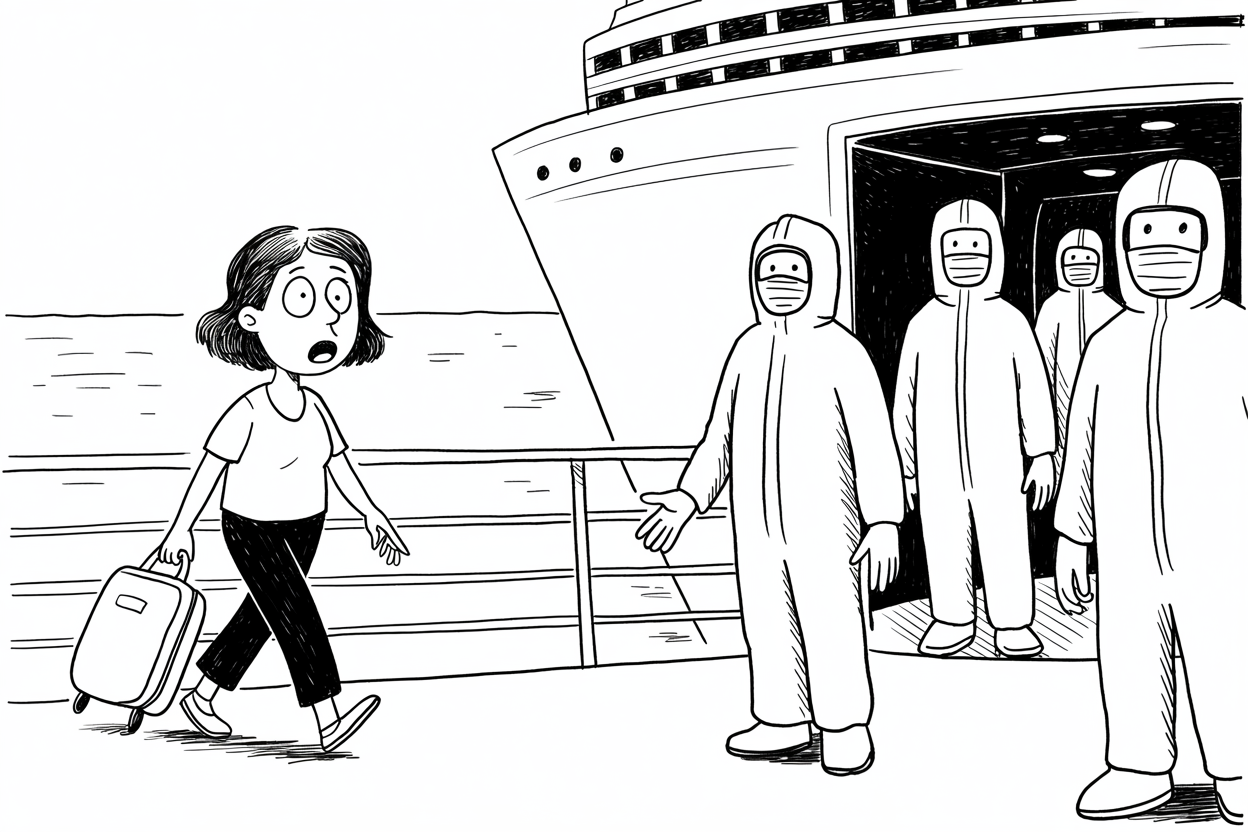
Black and white editorial cartoon showing a worried woman with short hair pulling a small rolling suitcase down a pier with her mouth open in alarm, while four masked workers in white hazmat suits stand in front of a large white cruise ship's open dark hold preparing to board, illustrating the cruise industry's mounting safety crisis of viral outbreaks, deaths, and federal scandals during summer 2026

This isn’t the summer for a cruise

A hantavirus outbreak on the Dutch MV Hondius killed three people and infected at least eight more, caused by the Andes virus strain, the only hantavirus known to spread person to person. The Caribbean Princess arrived in Port Canaveral with 102 passengers and 13 crew members sick from norovirus, the fourth gastrointestinal outbreak on a cruise ship this year. U.S. Customs and Border Protection detained 28 crew members at the Port of San Diego, with 27 allegedly involved in child sexual abuse material. The CDC Vessel Sanitation Program lost its full-time civilian staff a year ago, and its chief retired during the hantavirus outbreak. Most cruise ships sail under flags of convenience like Bermuda, Panama, the Bahamas, and Liberia, escaping U.S. labor, safety, and consumer protection laws.

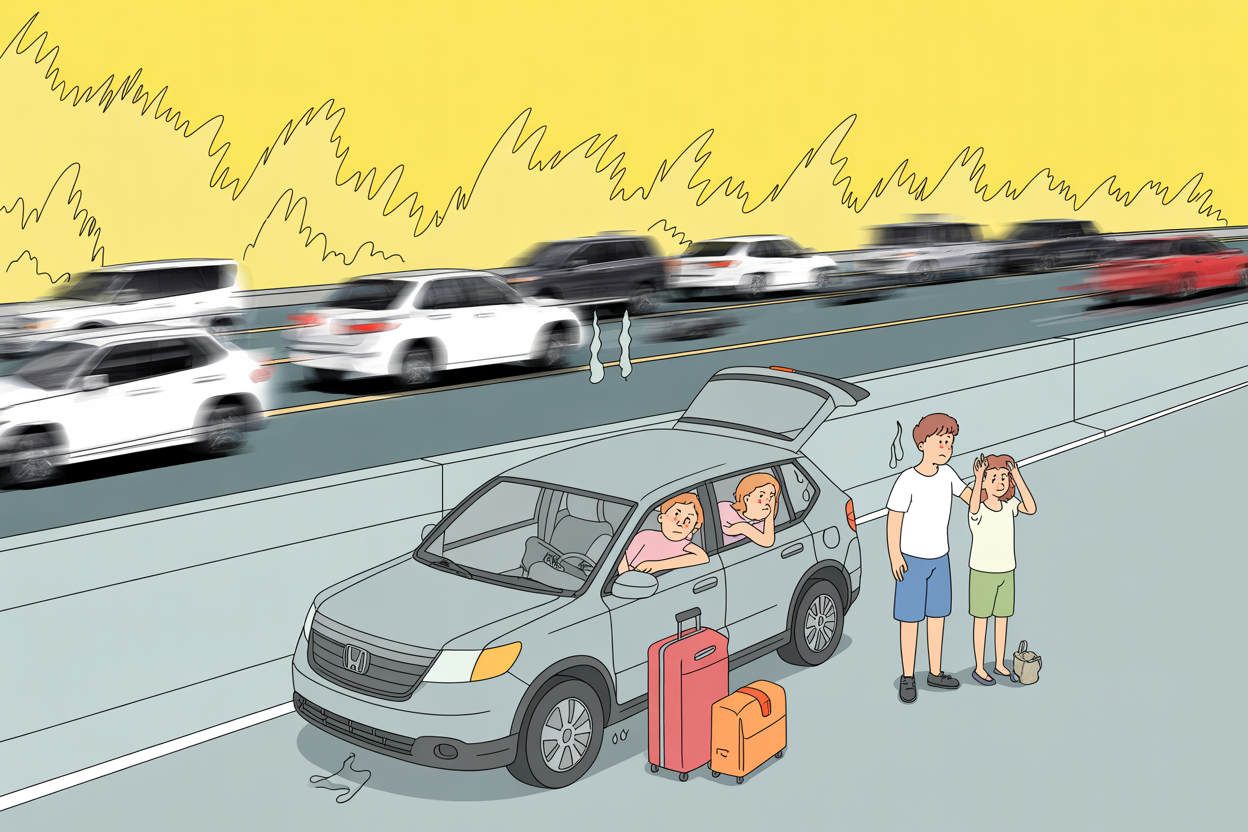
Editorial cartoon showing a stranded family of four standing next to a broken-down silver Honda SUV with steam rising from the hood and two orange suitcases by the open trunk, while traffic blurs past on a yellow-tinted highway under a sweltering yellow sky, illustrating the common summer road trip breakdown scenario between Memorial Day and Labor Day when heat stresses vehicle cooling systems, batteries, and tires

Summer road trip questions you never ask (but should)

Drivers face their 100 deadliest days between Memorial Day and Labor Day. Late August is one of the most common times for vehicle failures because cooling systems, batteries, tires, and belts have been stressed all season. Pavement temperatures can exceed 150 degrees Fahrenheit, hot enough to warp metal and disintegrate tires. Travel trailer blowouts are extremely common because many towable RVs use cheap tires with speed ratings of just 65 mph. 85 percent of drivers have roadside assistance, but only 18 percent actually use that coverage during a breakdown. Standard auto insurance does not cover mechanical breakdowns, and common towing mileage limits are as low as 15 miles before passengers pay out of pocket.