
in this case
- James Phillips booked two first-class tickets through the Hawaiian Airlines app for himself and his wife Linda, one after the other on the same card, and got written confirmations for both within minutes.
- At the Honolulu airport an agent said his ticket was fine, but Linda’s confirmed, paid-for ticket had been voided, with no explanation, and her seat already resold. To get her on a later flight, he had to buy a new ticket for $575 more than the one he had already paid for.
- The airline first hinted his card was declined, then blamed a third-party channel he never used, even though he booked direct and had the confirmation, which raises a pointed question about who pays when an airline’s own system cancels a ticket you did nothing to lose.
James Phillips books two tickets through the Hawaiian Airlines app for himself and his wife. But when they arrive at the airport, the airline says his wife’s confirmed, paid-for ticket has been voided. To get her on a flight, he has to pay an extra $575. Can he get his money back for an error he didn’t cause?
Question
I booked two first-class, round-trip tickets through the Hawaiian Airlines app for my wife, Linda, and me to travel from Honolulu to Haneda. I received written confirmations for both tickets almost immediately. Both were purchased, one after the other, using the same credit card.
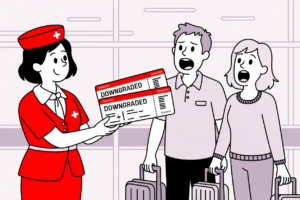
When we arrived at the Honolulu airport, an agent told me that I had a ticket, but my wife’s had been voided.
No one could tell us why. Her seat had already been sold to someone else. The agent told us that to get my wife on a later flight, I would have to buy her a completely new ticket. The new ticket cost $575 more than the original I had already paid for. I was assured at the airport that I could contact the customer relations department for a refund.
Hawaiian Airlines first insinuated that my credit card was declined. I have spoken at length with my credit card issuer, and it is adamant that it did not decline the charge for my wife’s ticket. (Why would it decline one ticket and not the other, purchased on the same card at the same time?)
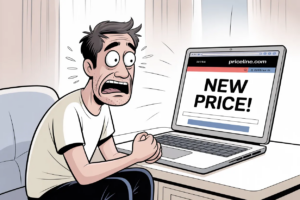
Then, Hawaiian tried to deflect blame to a third-party booking channel, even though I booked directly on its app and had the confirmation to prove it. In another email, a representative admitted our tickets were being treated as a Hawaiian Airlines direct booking.
Since neither I nor Chase took any action to void my wife’s ticket, the fault lies with Hawaiian. The airline should not be able to take advantage of its own mistake, hold me hostage in Honolulu, and force me to pay an additional $575. I only want reimbursement for the extra amount I was required to pay. Can you help? — James Phillips, Kailua Kona, Hawaii
Answer
Hawaiian Airlines should have honored your wife’s confirmed ticket. Full stop.
I really, really want someone to take an airline to court and sue for far more than the value of the ticket. There ought to be damages for pain and suffering in these cases, and until there is, the airlines will have no incentive not to keep trying to get away with robbing their customers.
Read more insightful reader feedback. See all comments.
When an airline’s system suffers a ticketing error — which this obviously was — it should have two immediate priorities. First, alert the passenger. Second, fix the problem at no cost to the customer.
What an airline should not do is void a confirmed reservation without notice, sell the seat to someone else, and then charge you a premium to get her on another flight.
The airline’s response to you was even worse. Blaming a nonexistent “third party” or, even more absurdly, your credit card, was a classic runaround.
You did exactly what I always recommend: You kept a meticulous paper trail. Your documentation was flawless. When a company gives you a nonsensical answer, you must continue to push for a logical one in writing — which you did.
When front-line customer service fails, the next step is to appeal to the executives. I publish the executive contacts for Hawaiian Airlines and many other companies on my consumer advocacy site, Elliott.org.
Based on the correspondence you shared, it looked as if Hawaiian Airlines was doubling down on its mistake. So we took a two-pronged approach. My advocacy team and I decided to contact the airline on your behalf. We presented your clear documentation and asked for a review. You also filed a complaint with the Department of Transportation.
That worked. I heard back from a senior resolution coordinator at Hawaiian Airlines, who apologized and admitted that the previous agent’s responses “did not provide a fair resolution,” adding that the agent was “coached regarding this case.”
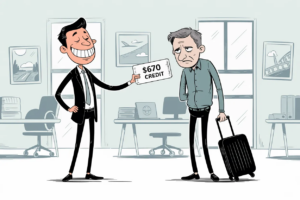
Hawaiian Airlines admitted that its system canceled Linda’s ticket by mistake. It refunded the entire fare difference and issued both you and your wife each a $250 travel voucher.
This is a textbook case of why you should never accept a company’s first “no,” especially when it defies logic.
A confirmed ticket disappeared, the seat was resold, and the passenger had to pay again to fly. The case raises broader questions about who bears the cost of an airline’s own error.
Your voice matters
What you need to know when an airline voids a confirmed ticket
When an airline cancels a confirmed, paid ticket through its own error, you have options, but you may have to fight for them. Here is what travelers should understand.
When a ticketing error is the airline’s fault, it has two immediate responsibilities: alert the passenger, and fix the problem at no cost to the customer. What it should not do is void a confirmed reservation without notice, resell the seat, and then charge you a premium to rebook. It should not. If the cancellation was the airline’s error and you did nothing to cause it, being forced to buy a new, more expensive ticket is exactly the kind of charge worth disputing. Document what you paid originally and what you were charged to rebook. Verify and push back. If it claims your card was declined, ask your card issuer to confirm in writing whether it was, and note that a single card paying for two tickets at once would not logically decline only one. If it blames a third-party channel you did not use, point to your direct-booking confirmation. Because it turns a he-said dispute into a documented one. Confirmations, receipts, and written exchanges let you show your ticket was confirmed and paid and that the error was not yours. When a company gives an illogical answer, keep pressing for a logical one in writing. Escalate. Take your documented case to a company executive, who often has more authority than a frontline agent to resolve it. A clear, concise written summary with your evidence attached tends to work best. For a flight problem like this, a complaint to the U.S. Department of Transportation can add useful pressure alongside a direct appeal to the airline. A two-pronged approach, executive contact plus a regulatory complaint, signals that you are serious. Never automatically accept a company’s first no, especially when it defies logic. A confirmed, paid ticket is a contract, and a well-documented, persistent appeal to the right people can turn an unfair denial around. For help with a specific dispute, see how the Travel Troubleshooter helps consumers.What should an airline do when its system causes a ticketing error?
Can an airline charge me to rebook a ticket it canceled by mistake?
What if the airline blames my credit card or a third party?
Why does a paper trail matter so much?
What can I do when frontline customer service won’t help?
Does filing a DOT complaint help?
What is the bigger lesson here?

Have a question about this story? Tell us what happened — we read every comment.
Join the conversation