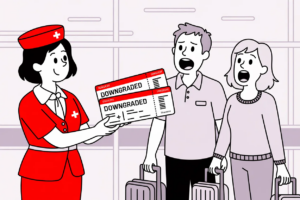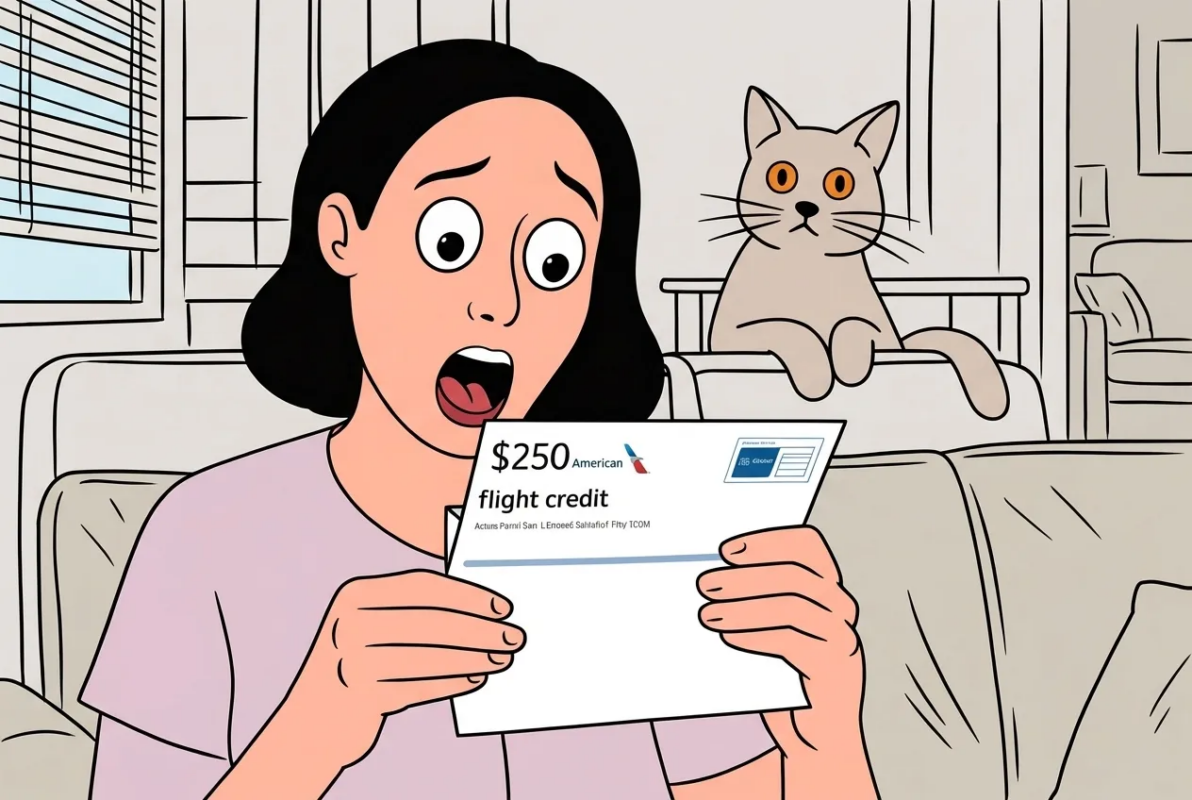
American Airlines bumps Nicholle Acciarri from her flight, and a gate agent promises her $650 in compensation. But when she tries to collect, the airline changes its tune and offers a measly $250 credit. Is she entitled to the full amount they promised her?
Question
I was recently denied boarding on an American Airlines flight from New York to Cleveland because the flight was oversold. At the gate, an agent told me I would be compensated with a $650 check or reimbursement for my rental car, airline ticket, or hotel.
I ended up having to rent a car and drive all the way back to Cleveland. When I followed up with American Airlines to claim what I was promised, it only gave me a $250 flight credit that expires in one year.
I’ve gone back and forth with its customer relations department, and now it claims I’m not entitled to any regulated compensation because of an “equipment downgrade.” One supervisor even admitted their records showed I was eligible for a $353 check or a $442 credit due to weight restrictions, but then they claimed that was entered in error, too.
I’m an attorney and I don’t like it when people don’t keep their word. I would like the $650 check or reimbursement I was promised at the gate. Can you help me get American Airlines to honor its word? — Nicholle Acciarri, Westlake, Ohio
Answer
American Airlines should have done what it promised. While airlines have specific policies for compensation, a verbal agreement from an authorized representative should carry weight, especially when it induces a passenger to make alternative travel arrangements like renting a car.
Under Department of Transportation (DOT) regulations, you aren’t technically eligible for involuntary denied boarding compensation if the airline switches to a smaller aircraft for operational or safety reasons. American Airlines is leaning heavily on this rule, claiming your flight was an equipment downgrade rather than a simple overbooking.
The confusion here is entirely the airline’s fault. A representative told you one thing at the gate. Then a supervisor contradicted the first representative, and then another representative offered an entirely different story. Come on!
You did the right thing by keeping a paper trail of these contradictions. For future reference, always try to get a gate agent’s promise in writing before you leave the airport. When a company digs in its heels, you can appeal to the executives. I list the contact information for American Airlines’ leadership on my consumer advocacy site, Elliott.org.
I contacted American Airlines on your behalf. A representative acknowledged that since an agent made the offer of a check or trip credit at the airport, but American Airlines wouldn’t honor it. The $650 you mentioned was likely the offer made to volunteers before they moved to the involuntary list.
American Airlines issued you an additional $192 trip credit, bringing your total compensation to $442. While it isn’t the $650 you were hoping for, it’s a significant improvement over the initial $250 “goodwill” gesture.
Resolve it yourself
Stuck with a complaint? Build your path to a fix.
Answer two quick questions and get a step-by-step plan tailored to your situation.
Your plan

Have a question about this story? Tell us what happened — we read every comment.
Join the conversation