
in this case
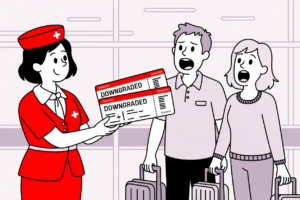
- Allison Turpen booked a round-trip Aeromexico flight from Washington, D.C. to Oaxaca. The airline then moved her connection to the next day, leaving her arriving in Mexico City at 9:30 p.m. with the onward flight not departing until 6:15 a.m., an overnight layover of more than eight hours.
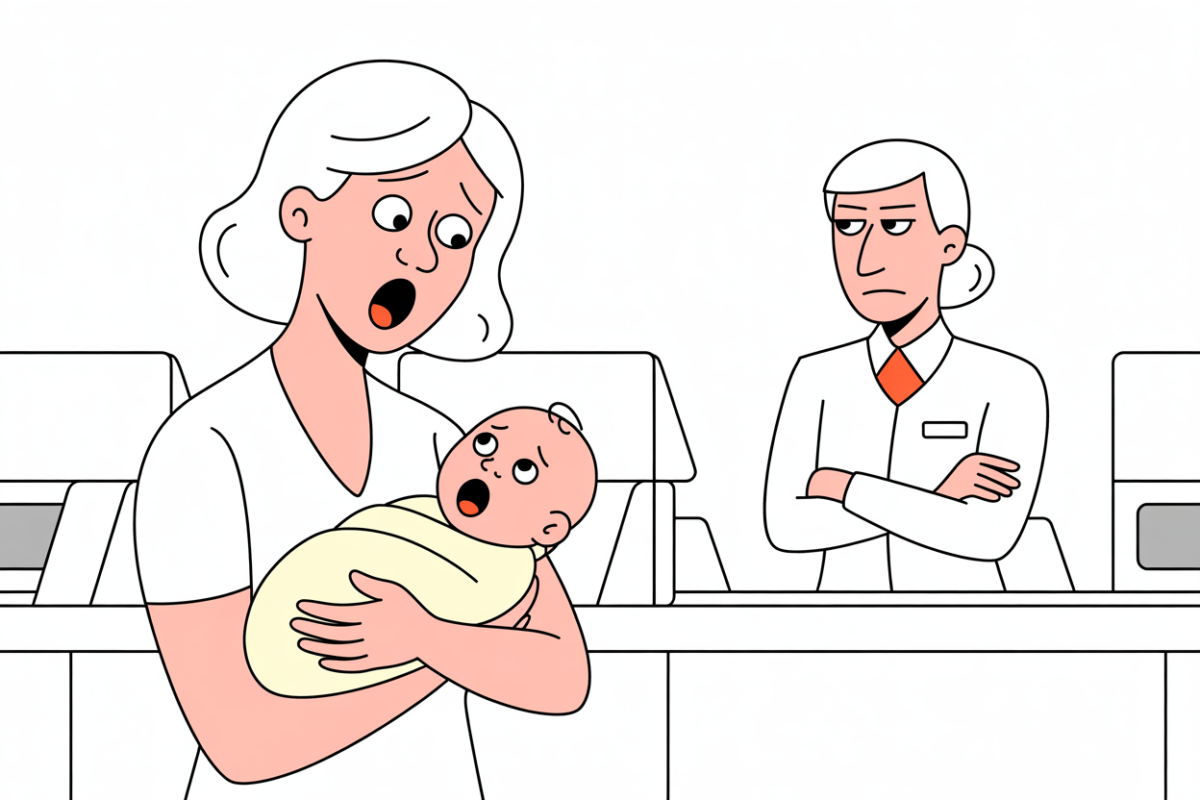
- Turpen would be traveling with a newborn and could not spend the night in the airport with a baby, so she asked to cancel and get her $1,360 back. After nearly a dozen calls, Aeromexico denied her, pointing to a contract clause saying flights are subject to change.
- Her case turns on a question a lot of travelers get wrong: when an airline itself rewrites your itinerary, does a “subject to change” clause really let it keep your money, or do federal rules say otherwise for a flight departing the United States?
Aeromexico expects a mother and her newborn to sleep in the airport after it changes her flight schedule. But when the airline refuses to refund her ticket, she turns to the Travel Troubleshooter for a solution.
Question
I booked a round-trip flight with Aeromexico from Washington, D.C. to Oaxaca, Mexico. Recently, the airline informed me it had changed my connecting flight to the next day.
The new itinerary left me with a layover of more than eight hours in Mexico City. My flight would arrive at 9:30 p.m., but the connecting flight wouldn’t leave until 6:15 a.m. the following morning.
I will be traveling with a newborn. This schedule will not work for me because I can’t stay overnight in the airport with a baby.
I requested a cancellation and refund for the flight, but the airline is refusing. I’ve called nearly a dozen times to speak to different people. They finally responded to the case, telling me that because their contract says flights are subject to change, my request was denied.
Can you help me get my $1,360 back? — Allison Turpen, Linden, Va.
Answer
Aeromexico should have refunded your ticket the moment you pointed out the schedule change. In fact, it should have offered you a full refund automatically when it revised your schedule.
Airlines love to tell passengers that schedules are subject to change. It’s written into their contracts of carriage—the legal agreements between you and the airline—to protect them from liability when weather or mechanical issues cause delays.
But they shouldn’t be able to use those clauses to hold your money hostage when they completely rewrite your itinerary.
I would take this a step further.
If an airline denies a refund that is required by policy or law, they need to pay treble damages.
I don’t care if the denial comes from AI, an intern, a customer service agent, or the VP of operations.
Violate your published policies, or any applicable law or regulation, pay up.
Read more insightful reader feedback. See all comments.
You were holding a ticket for a flight departing from the United States. That means you are protected by the U.S. Department of Transportation (DOT). According to the government, you are entitled to a refund if the airline makes a “significant schedule change and/or significantly delays a flight and the consumer chooses not to travel.” The DOT defines it as 3 hours for domestic itineraries and 6 hours for international itineraries.
Aeromexico’s response to you was disappointing.
“Our transportation contract stipulates that all our flights are subject to changes or cancellations,” a representative wrote to you. “For this reason, although we would like to help you, the request is denied.”
That’s nonsense. The airline’s internal policies do not supersede federal regulations.
When you run into a stone wall like this, you have a few options. You can file a complaint directly with the Department of Transportation. That usually gets an airline’s attention because it affects their performance statistics.
You could have also appealed to a manager. I publish the names, numbers, and email addresses of the Aeromexico executives on my consumer advocacy site, Elliott.org.
You decided to ask me for help. My advocacy team contacted the airline on your behalf, pointing out that because your itinerary included a flight from the U.S., DOT regulations require the airline to provide a refund.
Aeromexico reviewed your case again and processed a full refund of $1,360.
“This is a huge relief!” you told me.
I’ll bet. If this ever happens to you again, remind the agent of federal regulations. And if they don’t listen, you know where to find me.
An airline rewrote a mother’s itinerary into an overnight airport stay with a newborn, then cited “subject to change” to keep her money. Turpen’s case raises questions worth talking through.
Your voice matters
Schedule changes and refunds: what your rights actually are
A “subject to change” clause does not always mean what an airline says it does. Here is what travelers ask most. This is general information, not legal advice.
Not when the change is significant and your flight touches the United States. Airlines point to “subject to change” clauses in their contracts of carriage, which exist mainly to limit liability for weather or mechanical delays. Those clauses do not let an airline rewrite your itinerary and then deny a refund when you reasonably choose not to travel. Under U.S. Department of Transportation rules, you are entitled to a refund if the airline significantly changes or delays your flight and you choose not to travel. The department treats a change of three or more hours on a domestic itinerary, or six or more hours on an international one, as significant. An overnight layover imposed by the airline can clear that bar easily. What matters is the itinerary, not just the airline’s home country. If your flight departs from or arrives in the United States, DOT refund protections generally apply, regardless of where the carrier is based. A U.S. departure is enough to bring those rules into play. No. The DOT refund right after a significant schedule change applies even to nonrefundable tickets, because the airline, not you, is the one that changed the deal. If you accept the new schedule or a rebooking, though, you generally give up the automatic refund, so decline the alternative if you want your money back. State plainly that federal rules require a refund after a significant schedule change when you choose not to travel, and that internal policy does not supersede those rules. Keep it factual and specific about the size of the change. If the first agent will not budge, ask to escalate. File a complaint with the U.S. Department of Transportation, which affects an airline’s performance record and often prompts a second look, and email a customer-service executive directly with your itinerary and the details of the change. A brief, polite, well-documented appeal frequently succeeds where a phone call did not. Save your original and revised itineraries so you can show exactly how big the change was, and act promptly when you get a schedule-change notice. If you decide the new schedule does not work, request the refund rather than accepting a rebooking. For more help, see Elliott Advocacy’s consumer resources.Can an airline keep my money after it changes my schedule?
When am I entitled to a refund for a schedule change?
Does this apply to a foreign airline like Aeromexico?
Does a nonrefundable ticket change this?
What should I say when an agent denies me?
What if the airline still refuses?
How can I protect myself before I travel?

Have a question about this story? Tell us what happened — we read every comment.
Join the conversation