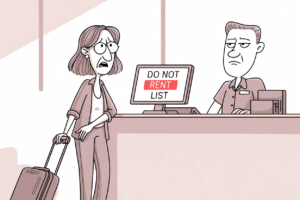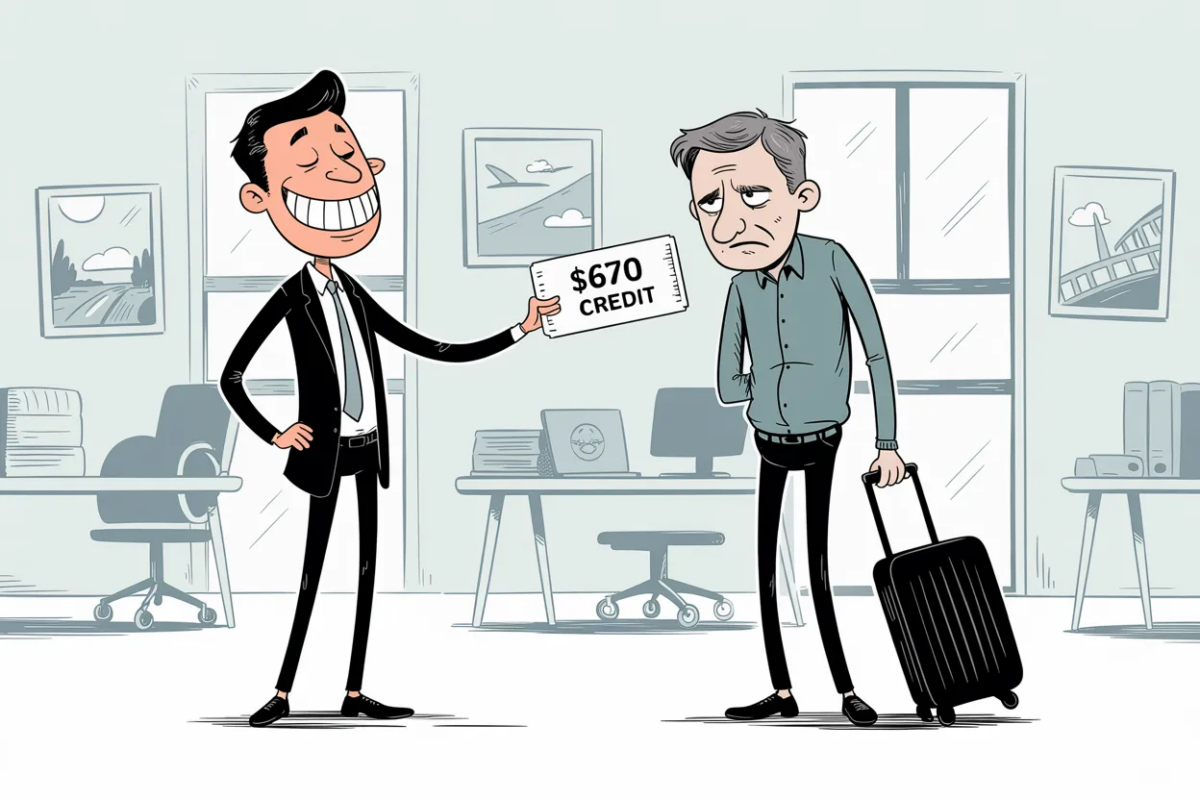
Michael Hughes thought he was being smart by paying for his European tour in full to lock in the price. But when his airline canceled his flight, his tour operator sent him a new bill for $670. Can a company really ignore its own price-lock guarantee because of an error?
Question
I paid in full for an Overseas Adventure Travel (OAT) trip to Spain and Portugal almost a year in advance. I did this specifically to take advantage of the Good Buy program, which OAT advertises as a way to “secure your trip’s price and protect yourself from cost increases.”
A few months later, Air France canceled our original flight. OAT rebooked us on Delta, but then it mailed me an invoice for an additional $670 for customized air cost. I called and spoke with a representative who told me the fee was for a seating upgrade to Delta Comfort+. Since I wanted the extra legroom, I paid it.
When we got to the airport, the gate agent told us we were in standard coach. No Comfort+ seats were ever reserved. When I returned home and asked for a refund, OAT changed its story. First, it said the $670 was an “excess” charge. Then, it admitted its agent gave me “incorrect information” about the seat upgrade, but claimed the $670 was actually to cover the cost of the more expensive Delta flight.
I pointed to Section 7 of OAT’s own terms and conditions, which says the company cannot increase airfare costs for Good Buy customers who have paid in full. OAT told me that clause applies to “other things” but not airfare, and that the $670 was simply “correcting an error.”
OAT offered me a $670 credit toward a future trip, but after this experience, I don’t trust the company. I want my money back. Does the Good Buy plan actually mean anything, or can OAT charge me whatever it wants? — Michael Hughes, Burnsville, Minn.
Answer
Overseas Adventure Travel should have honored its contract with you. When a company offers a price lock as an incentive for customers to hand over thousands of dollars months—or even years—in advance, that agreement isn’t a suggestion. It’s a binding promise.
Section 7 of OAT’s agreement says the company reserves the right to increase the trip price due to changes in airfares “unless you pre-paid according to the terms of the Good Buy Plan prior to the cost increase going into effect.” You paid in full 10 months before your departure date. OAT shouldn’t have passed that cost on to you. It’s not the first time a traveler has asked whether OAT should cover the airfare after a trip changes.
Beyond the contract, there are federal protections to consider. The U.S. Department of Transportation (DOT) is very clear: once a ticket is fully purchased and the transaction is complete, an airline—and by extension, the agent acting on its behalf—is generally prohibited from increasing the price.
I despise companies that try to “refund” money they owe you in the form of a credit toward a future purchase.
Like Mr. Hughes and OAT, why would I ever want to do business again with a company that ignored their own written policy, had their agents tell me things that were blatantly untrue and continue to stonewall me in repayment until I got a consumer advocate involved?
You did the right thing by keeping a meticulous record of your correspondence. When a company agent tells you a fee is for a seat upgrade and it turns out to be for a price hike it wasn’t allowed to charge you in the first place, “oops” isn’t a valid defense.
Frequently asked questions about tour pricing and cancellations
Can a tour operator raise the price after you’ve paid in full?
Not if your contract locks the price. Many prepaid plans promise that once you pay, the cost of your trip won’t change. Read the terms, and if the operator later bills you more, point to the clause that guarantees your price and ask it to honor the agreement in writing.
What is Overseas Adventure Travel’s Good Buy plan?
Good Buy is OAT’s prepayment program. You pay for your trip early, sometimes close to a year ahead, and OAT agrees to hold the price. Section 7 of OAT’s terms allows a fare-based increase only for customers who had not prepaid under Good Buy before the increase took effect, so a traveler who paid in full months earlier is protected.
Does a price-lock guarantee legally bind the company?
A written price lock is part of your contract, and a company that ignores it is breaking that contract. The guarantee is only as strong as the language behind it, so save your confirmation, the terms and any email that spells out what you were promised. Those documents are what you’ll rely on in a dispute.
Can a company charge you more after your flight is canceled and rebooked?
A cancellation by the airline doesn’t erase a price you already locked. If your tour operator rebooks you on a costlier flight, that difference generally belongs to the operator, not to you, when your plan guarantees the price. Ask for an itemized explanation of any new charge before you pay it.
Is a travel credit the same as a refund?
No. A refund returns your money. A credit keeps it with the company and commits you to booking again. If a company overcharges you and then offers a credit to make it right, you can decline and insist on cash back.
What does the Department of Transportation say about price increases after you buy a ticket?
Federal rule 14 CFR 399.88 bars an airline or its ticket agents from raising the price of air transportation once you’ve bought the ticket. The main exception is a new government tax or fee, and even then the seller needs your consent. The rule covers the airfare itself, which makes it a useful point to raise when an extra charge lands after your flight is paid for.
What should you do if a travel company bills you extra after you paid in full?
Put your objection in writing and quote the part of your contract that locks the price. Keep every receipt and email. If the front-line agent won’t move, take it to a manager or an executive, whose contact information is often easier to find than people expect. A calm, documented appeal to someone with authority tends to work better than another call to customer service.
When you hit a wall like this, you should always appeal the initial rejection to an executive. I list the OAT executive contacts on my advocacy site, Elliott.org. A polite, firm email to an executive often works better than a dozen frustrating calls to a front-line agent who is just reading from a script.
The company conducted a full internal review after I made them aware of your case. A spokesperson for OAT told us that the team processed a refund of the $670 in question. It also apologized to you for the “confusion.”

Have a question about this story? Tell us what happened — we read every comment.
Join the conversation