Cartoon of a weary traveler standing with a red suitcase beside a self-service check-in kiosk while three uniformed airport employees nearby chat among themselves and ignore her.

Self-service fatigue hits travel: Why are we having a DIY backlash?

Judy Williams stood in two lines at the airport just to drop a single checked bag, and then the machine rejected it, again and again. The real insult was not the glitchy kiosk. It was the three employees standing nearby, chatting and hugging, who did not lift a finger to help. That small scene is the reality of do-it-yourself travel: you do the unpaid work, and when the system fails, you are on your own. Across the industry, more of travel’s routine tasks have been handed to the traveler, the app check-in, the self-tagged bag, the help center that loops without ever reaching a person, and the convenience can start to feel like something closer to abandonment. Self-service technology, one customer-experience expert notes, was never meant to replace human support. It was meant to enhance it. In travel, the gap between that intention and the reality keeps widening.
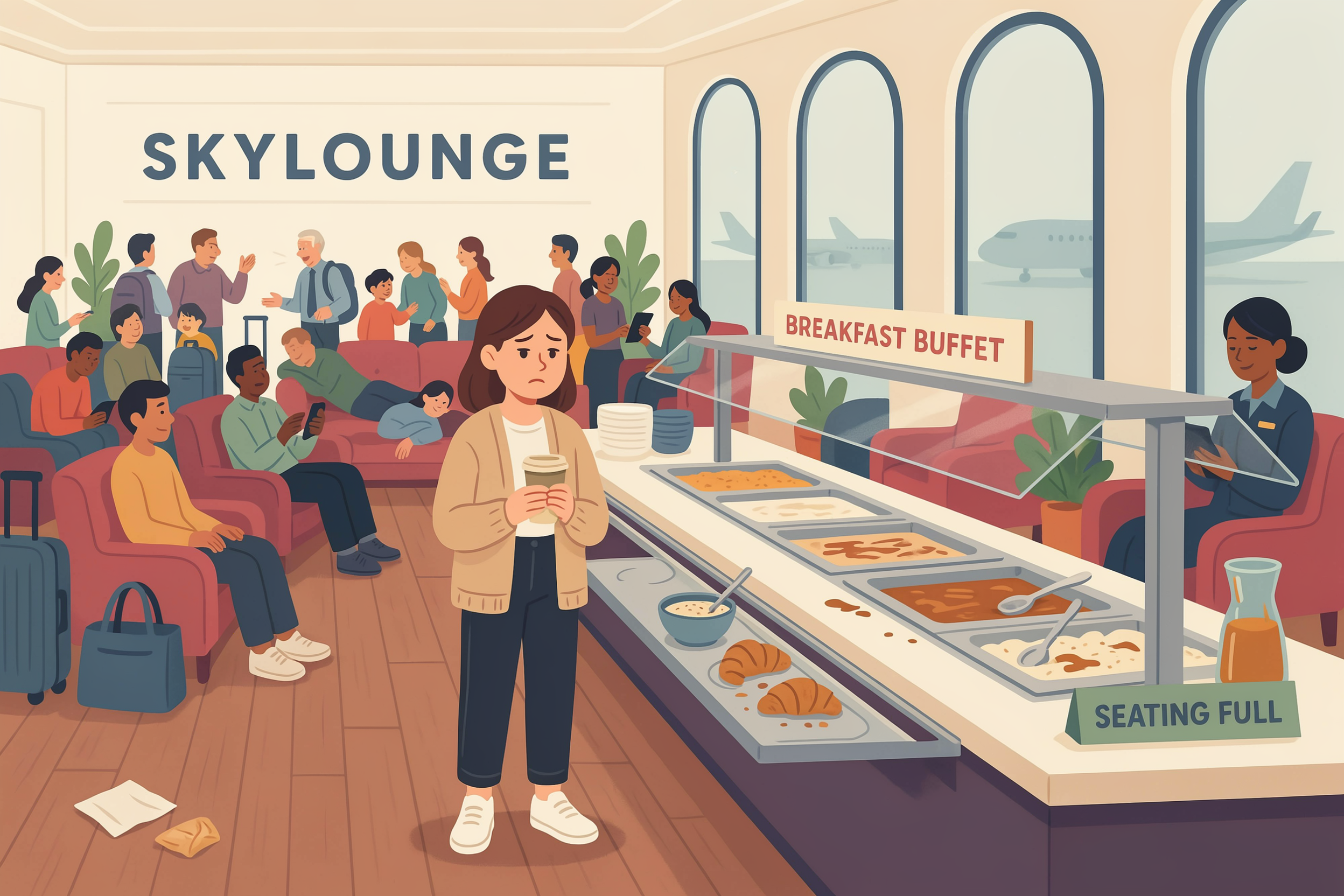
Cartoon of a disappointed traveler holding a paper coffee cup in a packed airport lounge marked SKYLOUNGE, beside a picked-over breakfast buffet with a "seating full" sign.

Your airport lounge pass Is worthless—unless you do this

The overcrowded airport lounge is no longer a perk. It is purgatory. Karin Kemp can tell you why. She had a four-hour stopover in Washington and thought it was the perfect chance to use her lounge pass. She was wrong. The lounge was full, an agent ordered her to wait, and she finally got in half an hour later. “There was barely anything left on the breakfast buffet,” she says. “If you could call it that.” That is the lounge letdown. What was once a quiet corner of the terminal, your reward for loyalty or a hefty annual fee, has become a cafeteria for the masses, with entry lines longer than the Starbucks queue, food gone by midmorning, and seats that take the sharp elbows of a subway commuter to claim. Blaming credit cards is the easy answer, and it is part of the story. But the real reason the lounge curdled, and what it will cost you to buy back anything resembling exclusivity, is where this gets interesting.

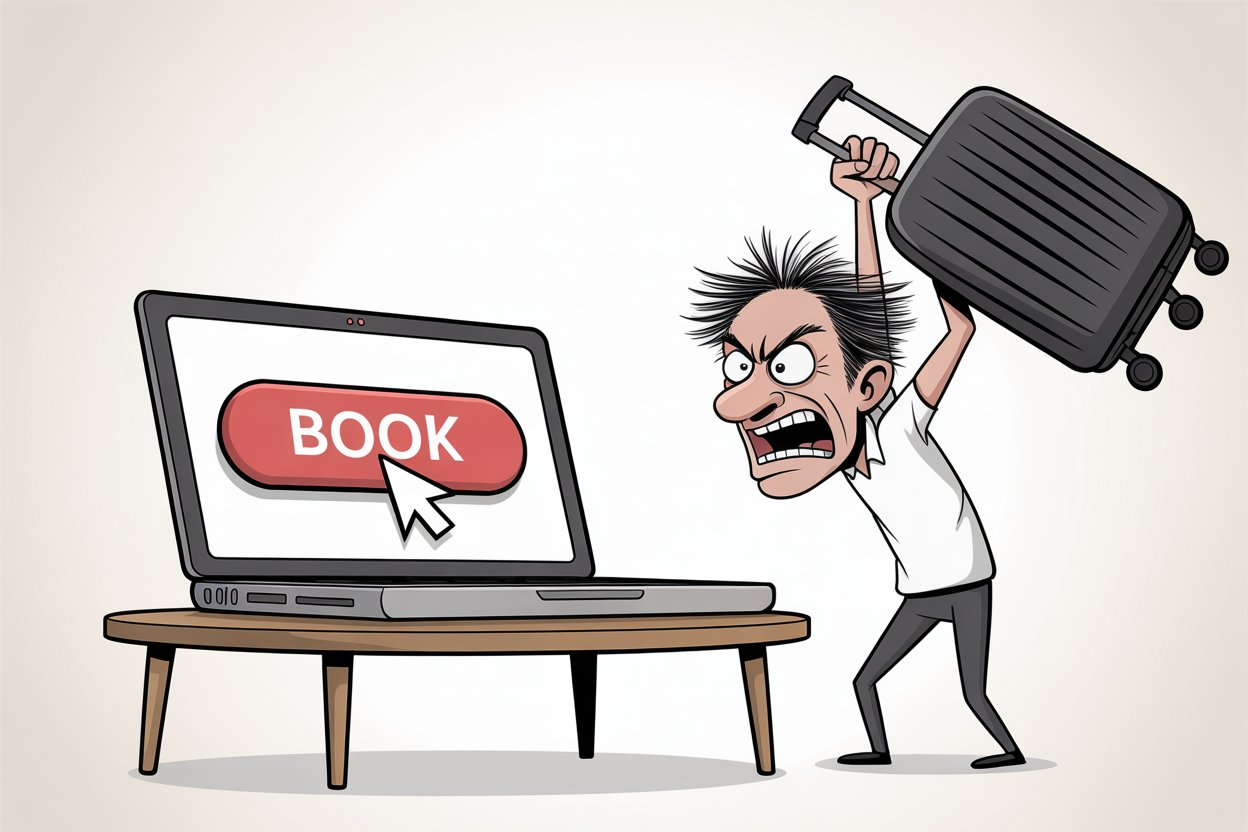
Cartoon of a furious, wild-haired traveler raising a suitcase overhead as if to smash a laptop that displays a large red "BOOK" button on its screen.

Are you rage-booking your next vacation? Here’s how to stop

It was a $12,000 vacation to Bali, booked late one night after a stressful business meeting. Sydney Ceruto, a neuropsychologist, remembers it well, because it happened to one of her patients. “She told me later she didn’t even want to go,” Ceruto says. “She just needed to feel like she was escaping.” We are living in the age of rage-booking, the impulsive travel purchase driven by exhaustion, anger, or heartbreak rather than any real desire to see a place. More than half of American travelers say they feel exhausted, and a striking share admit they have booked a trip purely to get away from their lives. It is reshaping how the whole industry sells to you, and some companies have figured out exactly how to profit from your worst, most depleted moments. The question is whether you can catch yourself before you click, and there are clearer warning signs than you might think.

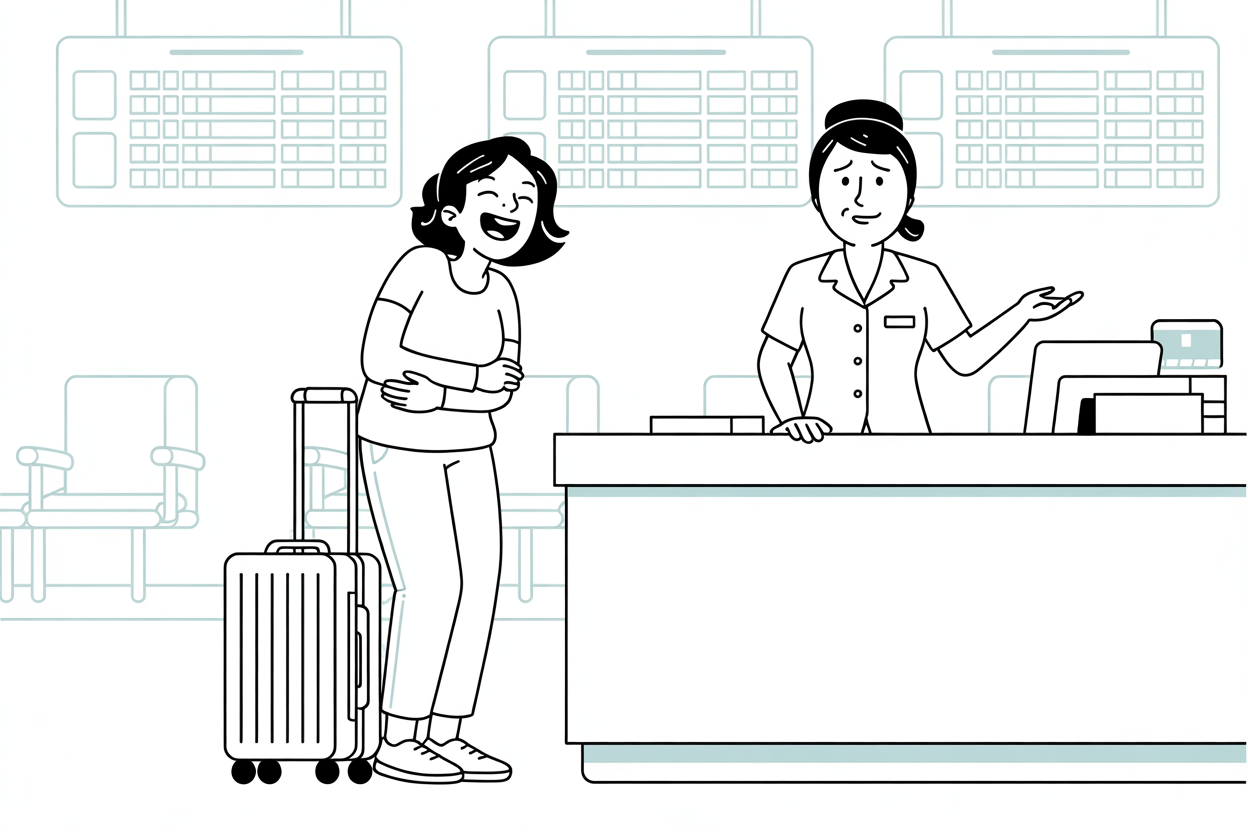
lack and white cartoon of a woman laughing with her arms crossed beside two rolling suitcases at an airport check-in counter, while a uniformed agent gestures apologetically under a wall of flight boards.

Traveling? Here’s why you should pack your sense of humor

Did you hear the one about the professor who spent 24 hours trapped in airport hell trying to reach a conference on happiness? It is not a joke. Travel has become absurd enough that humor is now a survival skill, and psychologists say the gap between the trip we are promised and the circus we actually get is exactly the thing we should be laughing at. The interesting part is what laughter actually does for a stranded traveler, and the way experts say to use it that most people get exactly backwards.

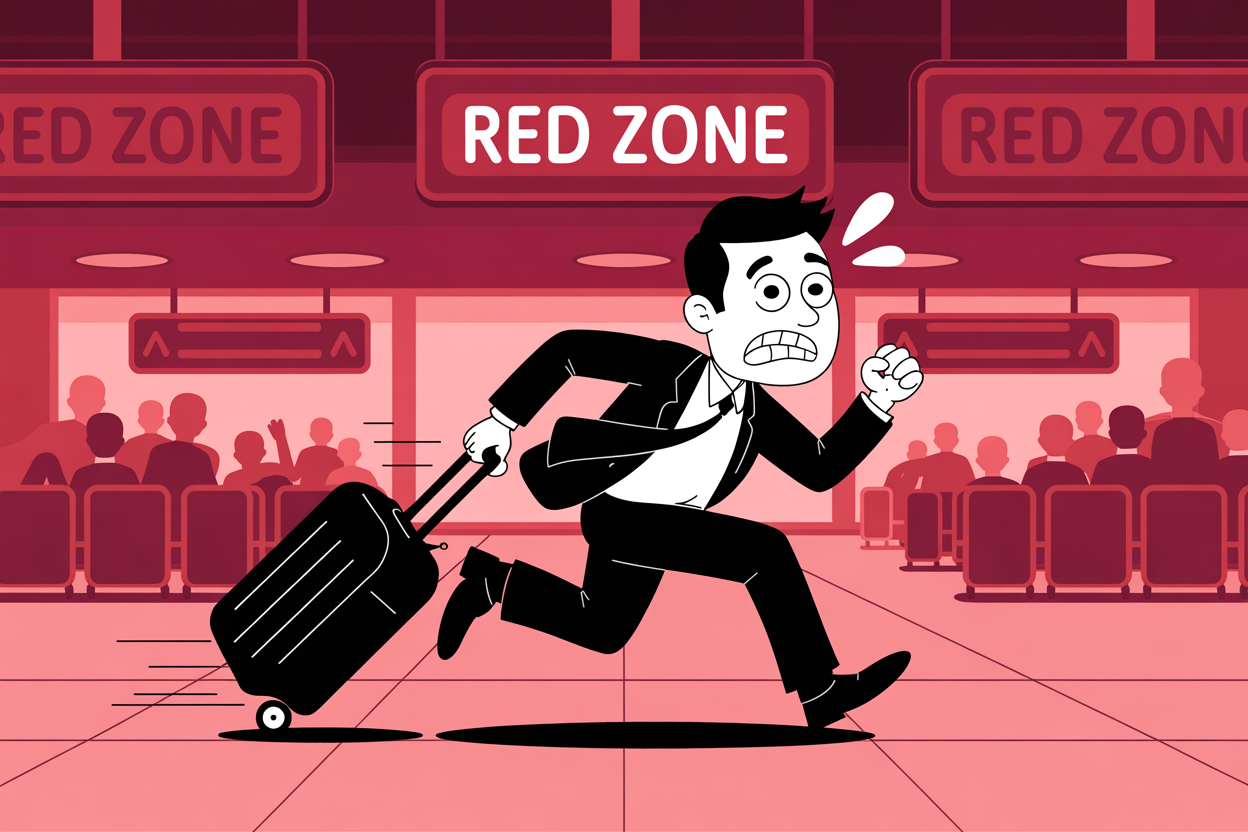
Cartoon of a panicked business traveler in a suit sprinting through an airport terminal dragging a rolling suitcase, with large RED ZONE signs overhead and a tense crowd waiting behind him.

The red zone: Why this part of air travel makes even the pros lose it

The red zone is that anxious stretch from your front door to your airplane seat, where normal people turn into nervous wrecks. It is a blur of high-stakes, time-sensitive decisions that overloads your brain, and it is stressful enough that most couples in one recent survey called travel the ultimate relationship test. It has even given rise to the airport divorce, where partners deliberately separate after security just to avoid an argument. We have all seen it: the passenger shouting at a gate agent over a delay, the family sprinting through the terminal with shoes half on, the quiet sob at the gate when a flight is canceled. With air travel booming this summer, the red zone is only getting more intense. There is real science behind why a security line can hijack your nervous system, and the surprising part is that even the most seasoned travelers, the ones with passports full of stamps, are not immune to it.

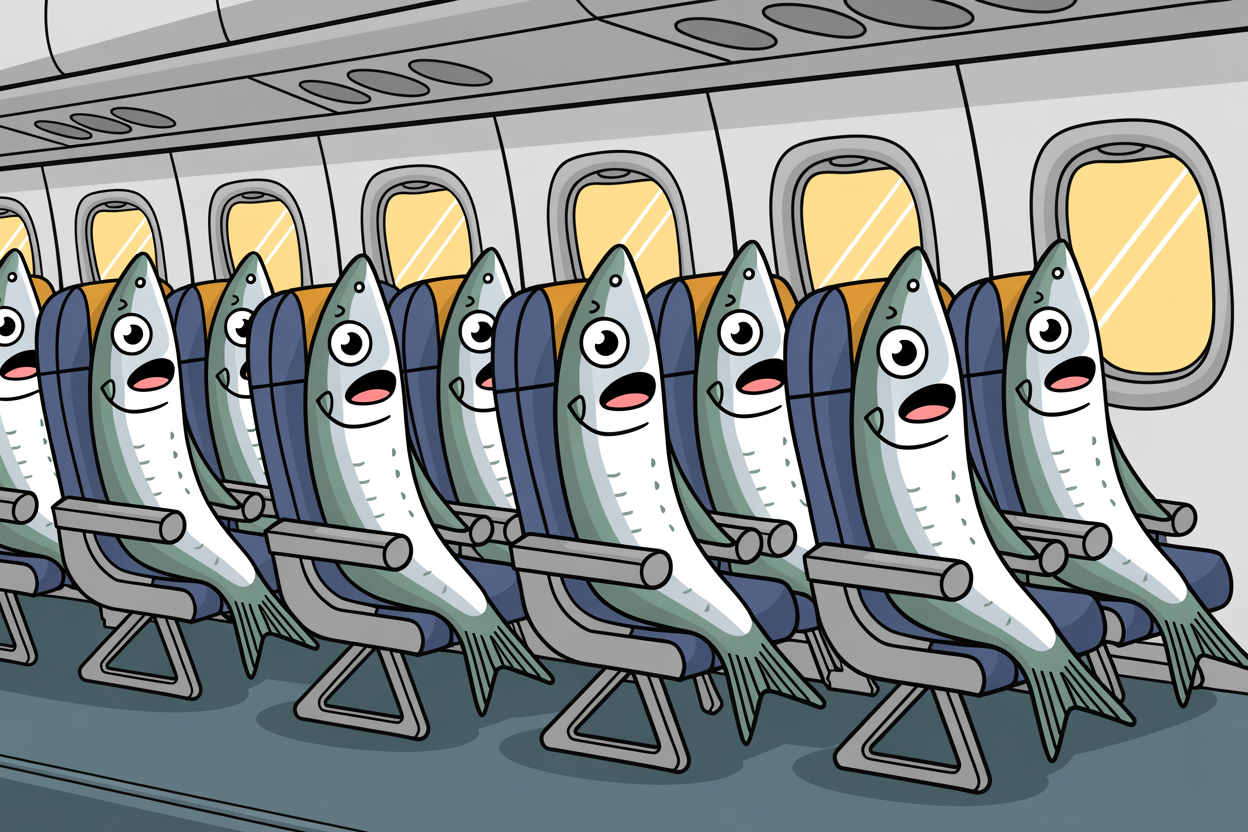
Cartoon of smiling sardines packed upright into narrow airplane seats in a tightly spaced cabin, illustrating how shrinking economy legroom crams travelers in like sardines.

Premium creep: How the travel industry downgraded you for profit 

Remember when you could check a bag, choose your seat, and stretch your legs on a flight without paying extra? It is not an urban legend. You used to be able to do all three at no additional charge. A 34-inch seat pitch was once standard in economy class. Today the industry calls that same space premium economy and charges you more for it, while the 30-inch squeeze becomes the new normal. Call it premium creep, the quiet industry-wide pattern where yesterday’s basics quietly become today’s luxuries, wrapped in marketing language about choice and flexibility. And it is not just airlines: hotels, cruise lines, and even car rental companies have all found ways to strip out what used to be included and sell it back to you. Which raises the question worth sitting with the next time you compare two fares: are you buying an upgrade, or just paying to undo a downgrade the company handed you in the first place?

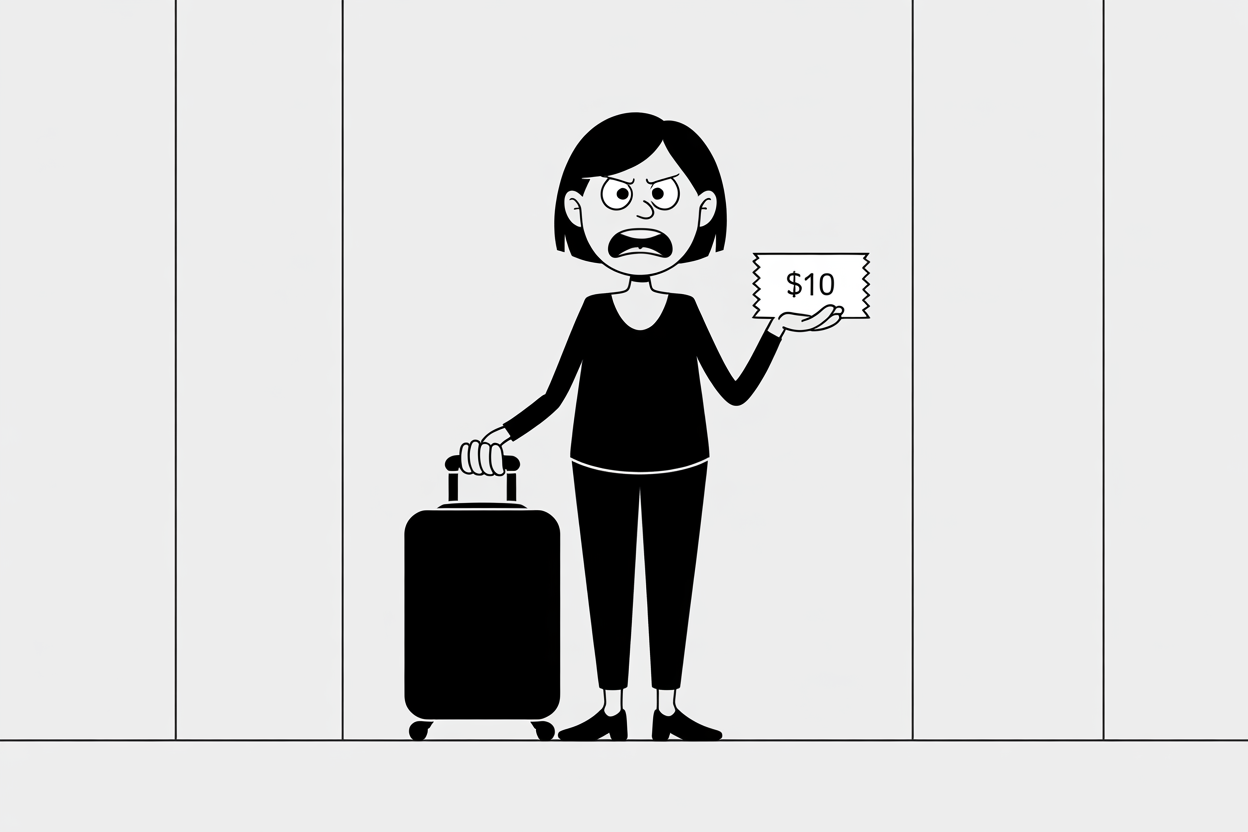
An angry airline passenger stands with a suitcase while holding a $10 voucher after a flight delay.

The delay tax: Why your airline voucher barely covers your expenses anymore 

When a flight is delayed or canceled, airlines cover only what they call duty of care: a meal voucher, sometimes a hotel, or a refund if the flight is canceled. Angela Justice received a $10 voucher after her Boston to Chicago flight was canceled. The real cost, the delay tax, is far larger. It includes nonrefundable hotels travelers cannot reach, lost wages, child care that keeps ticking, and the replacement flights passengers must book themselves when the airline’s rescheduling timeline proves useless. Airlines calculate compensation based on what it costs them to reschedule a flight, not what it costs the traveler to miss the reason they flew in the first place. The official story is that duty of care solves the problem and the Department of Transportation signs off. But the law was written in a different era, when travel was simpler and airlines were more generous, and regulators have not caught up now that delays are chronic and carriers watch every penny.

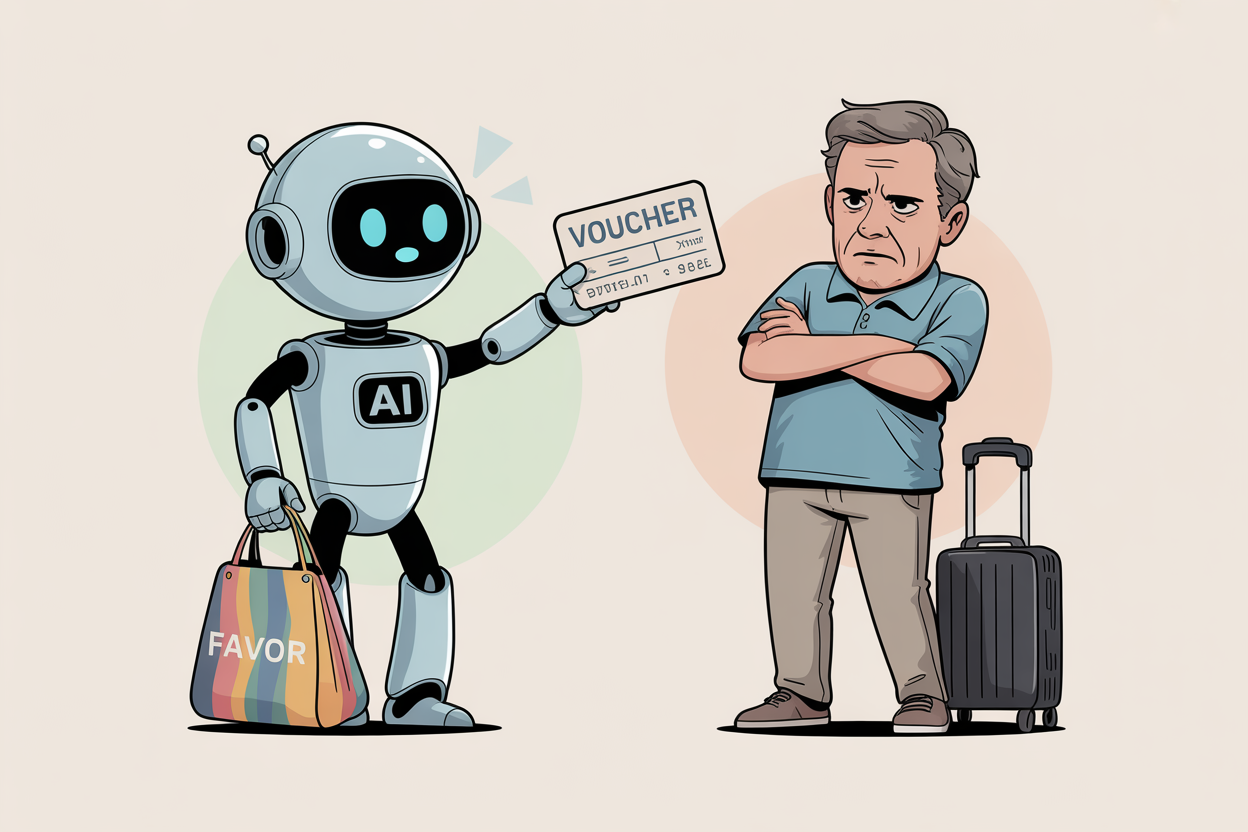
Editorial cartoon illustration of a smiling AI robot with "AI" labeled on its chest holding out a paper voucher in one hand and a colorful striped "Favor" shopping bag in the other, while a frustrated middle-aged man in a blue polo shirt stands with arms crossed next to his black rolling suitcase refusing the offer, illustrating how travel companies use automated systems to push customers into accepting vouchers instead of legally required cash refunds

Why are travel companies replacing real refunds with “coupon justice”?

Travel companies are increasingly replacing cash refunds with vouchers and goodwill credits when flights cancel, hotel rooms fail, and rental cars run out of vehicles. The practice exploded after the pandemic when companies pivoted to vouchers to hoard cash. The actual redemption rate for travel vouchers is below 10 percent, meaning a 90 percent chance the credit goes unused and the company keeps your money entirely. Under U.S. Department of Transportation rules, airlines must provide prompt refunds to your original form of payment when they cancel flights or make significant schedule changes. Airlines offering only vouchers without a genuine cash option violate these legal obligations. Hotels and online booking sites operate in a legal gray zone with few hard rules governing refund practices.

Editorial illustration showing four silhouetted figures with their hands raised to their heads in confusion or doubt, standing on concentric ring patterns and looking up at a large dark-blue globe of Earth with a giant white question mark hovering in front of it, illustrating how travelers are increasingly questioning the recommendations of professional travel experts in an age of paid influencers and commission-driven advice

Travelers are ignoring the advice of professionals. Here’s why that could be a mistake.

Travelers are increasingly skeptical of professional advice, ignoring travel agents who collect commissions, influencers paid by destinations, and points bloggers earning kickbacks from credit card companies. A Global Rescue survey shows 85 percent of travelers are concerned about geopolitical instability yet proceed with their plans despite the risks. Cautious skepticism is healthy when evaluating tourism-engine search results and influencer endorsements that dominate Google’s first page. But ignoring U.S. State Department advisories at Level 3 reconsider travel or Level 4 do not travel can lead to serious consequences. The chief medical officer at AXA Partners US says many travelers contract serious diseases and traumatic injuries in risky locations that were easily avoidable by following government advisories.

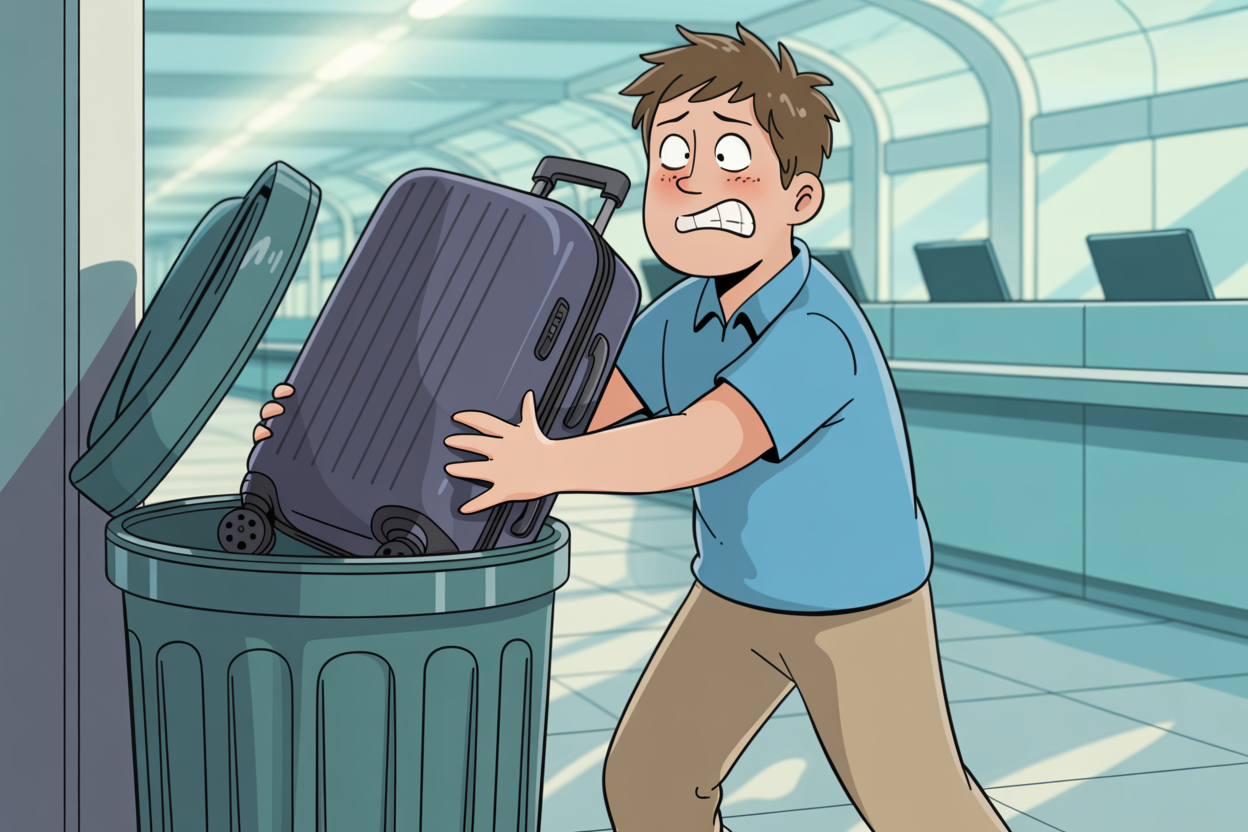
Editorial cartoon showing an anxious traveler in a blue polo shirt grimacing as he stuffs a large purple roller suitcase into an open green airport trash can, with empty seating areas and large glass windows visible in the background, illustrating the increasing trend of travelers abandoning their luggage at airports to avoid baggage fees

The great luggage abandonment: Why travelers are ditching their bags at the airport

Travelers are increasingly abandoning their luggage at airports and hotels to avoid baggage fees that can exceed the value of the bags themselves. Hotels in Tokyo and Osaka now post warning signs about luggage abandonment fees while Narita Airport reportedly stores dozens of unclaimed bags daily. Kansai Airport in Osaka and Chubu Airport in Nagoya report similar pile-ups. Asian carriers known for strict baggage fee enforcement contribute to the trend, along with Japanese tourists buying cheap rolling luggage for shopping trips and abandoning it before flying home. Airports hold abandoned bags 30 to 90 days before disposal.