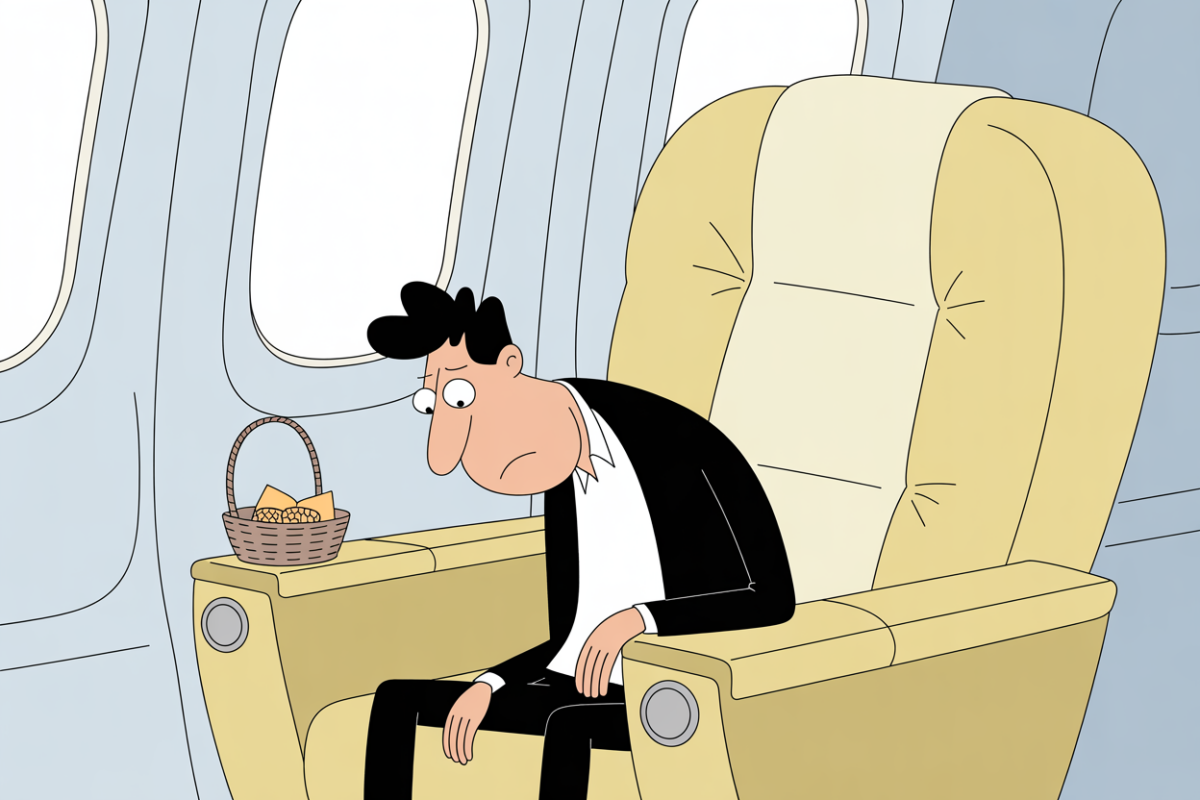
Do you know the feeling of getting a first-class seat, hoping for hot towels and porcelain plates? And instead, you get a basket of lukewarm popcorn from a surly flight attendant.
Ralph Velasco does. On a recent domestic flight, the photographer and international tour organizer from Chicago discovered there was no meal in the front of the cabin, just a basket of snacks.
Why? A flight attendant told him the airline no longer serves meals on that route.
It’s the time of year when the amenities you thought you had just disappear. You pay more, you get less. It’s that sinking realization that our vacation budget bought us a whole lot of nothing.
Why does it feel like a “no service” summer?
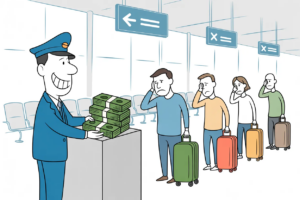
When travel demand came roaring back after the pandemic, capacity and labor systems didn’t recover at the same pace. So, instead of raising prices, airlines, hotels and car rental companies just cut service.
Jeff Galak, an associate professor of marketing at Carnegie Mellon University’s Tepper School of Business, explains why travelers are not OK with that.
“What makes it feel worse is the reference point,” he says. “Consumers remember pre-pandemic full service and now feel the loss, even when prices look normal for a luxury category.”
Behind the scenes, the calculations are cold but necessary, according to one airline insider, who works in the operations department at a major carrier and asked not to be named because he isn’t authorized to discuss pricing. He told me when fuel costs rise but competition keeps base fares locked, airlines slice what passengers can’t compare on shopping sites—legroom, complimentary snacks, customer service staffing ratios.
It’s not just that there’s no coffee maker in the room. It’s that the “Starbucks” in the lobby is owned by the hotel, and the prices charged are more than any corporate Starbucks charges. In Las Vegas, my understanding is that there is just one regular Starbucks on the entire Strip.
It’s not just that the hotel has a firm 11:00 a.m. checkout and a 4:00 p.m. check in time, a 19 hour-long day, but if I show up at 3:30 p.m. they want me to pay a fee for “early” access to a room that has already been cleaned.
It’s not just that the hotel has a resort or destination fee, but that some of the amenities in the list are not available as that area or function has been roped off for a convention.
Domestic airlines have systematically reduced economy class legroom over the years while still advertising a “premium” experience. But you can’t have it both ways.
Coffee makers and ghost hotels
The no-service summer isn’t limited to the friendly skies. It has infected hotels, too.
Take the experience of Krista Kowalczyk, a photo preservationist from Fort Myers, Fla. On a recent trip to Las Vegas, she stayed at an expensive chain hotel that charged her to check in two hours early. And when she got to her room, there was no coffee maker.
Her stay at another chain hotel in Denver wasn’t much better. Kowalczyk, a seasoned traveler, has resorted to a strategy that would make a minimalist wince: She brings her own coffee maker.
“I know these aren’t luxury properties, but at $500 a night, a coffee maker would be nice,” she says.
No kidding. If I’m paying that much, I shouldn’t have to pack kitchen appliances.
Oh, don’t forget the ghost hotels. Hugh Dixon, the marketing manager for a moving company in London, recently stayed at a midmarket hotel. The rate had jumped from $180 to $220 a night after the pandemic, yet the front desk was unstaffed after 10 p.m.
“There were only key card locks to enter my floor and no live staff,” Dixon recalls. When he asked about it, the day staff cited labor shortages and high costs.
Why is this happening now?
Jay Wardle, president of Adara, a company that tracks travel data, says the industry learned a lucrative lesson during the pandemic: We are pushovers.
“Despite these cuts in services, most travelers are still booking travel,” Wardle says. “This has led to a chain reaction where those once temporary savings for brands by cutting services quietly became permanent.”
In other words, as long as we keep filling seats and rooms, companies have no incentive to bring back turndown service or provide a meal. They are banking on our collective amnesia.
But you can fight back.
How to avoid the no-service summer?
Get informed. Review recent traveler reviews, and make sure they’re recent. A lot can change in a few months. Pay attention to the angry rant from last week about the missing coffee maker, but ignore the five-star review from 2019.
Go small. Mac Steer, the owner of a telecommunications company and a frequent traveler, advises skipping the big chains that answer to shareholders. “Small businesses often fight harder for your loyalty and can’t afford to cut corners the way a global conglomerate can,” Steer says. He suggests booking independent or boutique hotels where the owner is likely to personally ensure your stay is up to par.
Leverage your loyalty. If you must fly a major carrier or stay at a chain, use your status. Wardle notes that brands prioritize established customers. It might not get you a meal, but you’ll get priority treatment if something goes wrong, like a canceled flight.
Yes, you can fight this nonsense
This summer we’ve seen a drop in service levels. And if you talk to insiders, they’ll tell you it’s just business.
It shouldn’t be. You should reward companies that maintain their human touch and high service levels with your business. And until they get their act together, you need to vote with your wallets. If a hotel wants to charge you luxury rates for a “ghost” experience, don’t just complain to the manager—blacklist it.
And if you see me in the airport lobby lugging a coffee maker and a bag of sandwiches, please don’t laugh. I’m just packing for the no-service summer.

Have a question about this story? Tell us what happened — we read every comment.
Join the conversation