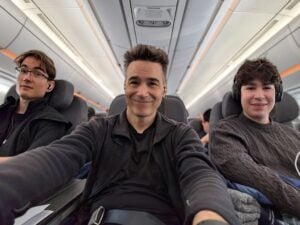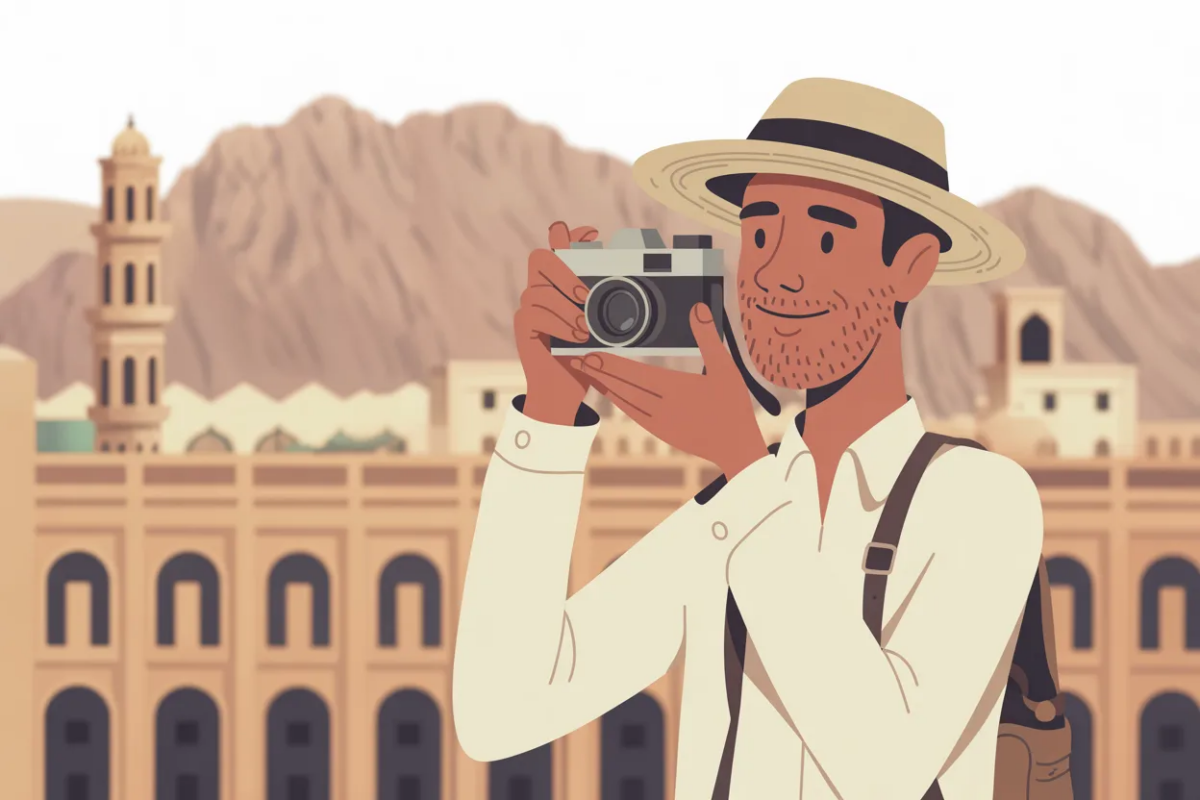
Bob Gourley works with technology every day, but for a recent trip to Muscat, Oman, he turned old school. Instead of booking his flights online, he hired a travel advisor. And instead of taking pictures on his phone, he used a 35 mm camera.
You know, with film.
“I had 36 shots,” says Gourley, who works for a computer security company in Washington, D.C. “I stopped more. I observed more.”
The result was a completely different trip than the one he’s used to. Instead of taking an endless series of images for his social media feed, Gourley slowed down to enjoy the experience. His photos of the Grande Mosque were more contemplative. Having a travel advisor curate the trip made it less algorithmic and more, well, human. He saw more things that interested him, like the historic Mutrah Souq, and fell into fewer tourist traps.
In an era of AI-driven itineraries, a growing number of travelers are trading digital efficiency for analog adventures. By returning to film cameras, paper journals, and human travel advisors, they’re finding that removing immediate digital gratification makes a trip more memorable, meaningful—and maybe even better.
People taking selfies, with or without selfie sticks, are a hazard. They have no awareness of their surroundings, proven by the number of incidents of people falling, sometimes to their death, taking their “Instagram worthy” picture. Many places have banned selfie sticks, due to these incidents.
Why are travelers going analog?
New research from ALG Vacations found that among people who use AI to plan a trip, 77 percent still want a human to make the final call. Among millennials who use AI, 51 percent have also booked through a travel advisor, the highest rate of any generation.
Travelers aren’t necessarily anti-digital. They’re just opposed to being optimized into numbness. They want experiences that feel real and human, not endlessly mediated through a screen.
The response is subtle, but if you pay attention, you’ll notice it. It’s people carrying paper notebooks instead of tablet computers. They have Polaroid cameras instead of phones. They’re actually experiencing the trip instead of just curating a video of it.
You can see the evidence everywhere. Like the “no videos” rule for travelers. Richard Campbell, founder of 10Adventures, says he never watches videos of a destination before he travels there.
“I want to be surprised and amazed seeing something for the first time,” he says. “I think this is a key part of travel.”
Hotels have noticed. Hotel Rangá, a countryside property in southern Iceland known for northern lights viewing, sells guests an “Analog Menu” for 20,100 kroner (about $165). The package includes two disposable cameras, a deck of the hotel’s playing cards, a coloring book about Icelandic history with crayons, and three postcards. The best thing in it may be the map of South Iceland, marked by hand with the staff’s own favorite stops, which is the kind of recommendation no algorithm will give you.
The return of travel advisors?
Perhaps the most visible sign of our analog adventures is the resurgence of human travel advisors. While booking a flight is a simple transaction, a customized trip of a lifetime requires empathy that a chatbot can’t offer.
Michael Johnson, president of Ensemble travel agency consortium, says planning has come full circle for the most discerning travelers.
“In a world that’s increasingly automated, people are craving that human connection more than ever,” Johnson says. He says advisors provide perspective and reassurance—telling you, for instance, whether a 500-guest or 140-guest ship is right for your Antarctica expedition.
It’s not just the affluent older travelers. Other people want a human connection, too, says Jacquie Whitt of Adios Adventure Travel. She’s seen an increase in people younger than 40 who turn to her for travel advice.
“Although travelers seem to like the convenience that digital offers for making online reservations, they contact me for advice to help organize their tours, activities and to get information about special documents,” she says.
How to have an analog adventure
Making the most of analog travel doesn’t mean you have to be a Luddite. Here are a few strategies:
Practice delayed gratification. Like Gourley, try a 35 mm camera with limited shots. The wait to have the film developed keeps the trip alive long after you return home. It’s something you can look forward to. “When people finally revisit old travel pictures, it often changes how they think about their trips,” says Mitch Goldstone the CEO of ScanMyPhotos.com.
Keep a physical record. Architect Laura Intscher sits for hours sketching ancient ruins instead of snapping photos. “I notice more detail and my memory of a place I have drawn is always more vivid,” she says.
Write a postcard. The Moana Surfrider in Waikiki offers a “One Year Wave” experience where guests write a postcard to themselves that the hotel mails a year later. It’s a tangible memory that reconnects you with the feeling of the trip.
Take a time-out from your devices. Put down the phone or the video camera, stop thinking about posting to your social media accounts, and just take in the place you’re visiting.
Reality check: This doesn’t mean you will leave your phone at home. Joe Cronin, president of International Citizens Insurance, says smartphones remain an indispensable travel tool.
“The reality is that most travelers need their phones for practical reasons, like boarding passes, translation apps, and emergency contacts,” he says.
The question is, when do you use the phone—and when do you leave it in your pocket?
The goal of an analog adventure is to return home feeling fulfilled but not exhausted. In a world optimized for immediacy, the ability to unplug and engage with the physical world has become the new ultimate luxury.

Have a question about this story? Tell us what happened — we read every comment.
Join the conversation