When Brian Clark budgeted for a recent marathon flight to New Zealand, he braced for the 18-hour time difference. He didn’t expect to pay a $70 entry fee.
“It was a surprise,” says Clark, a medical educator from Provo, Utah. Such a surprise, in fact, that he had to recalculate his travel budget.
New Zealand charges most visitors an International Visitor Conservation and Tourism Levy of NZ$100 (about $57), plus NZ$23 (about $13) for an electronic travel authority, the NZeTA. That’s NZ$123, or about $70, before he’d booked a room. The levy money is split evenly between tourism and conservation, according to New Zealand’s Ministry of Business, Innovation and Employment.
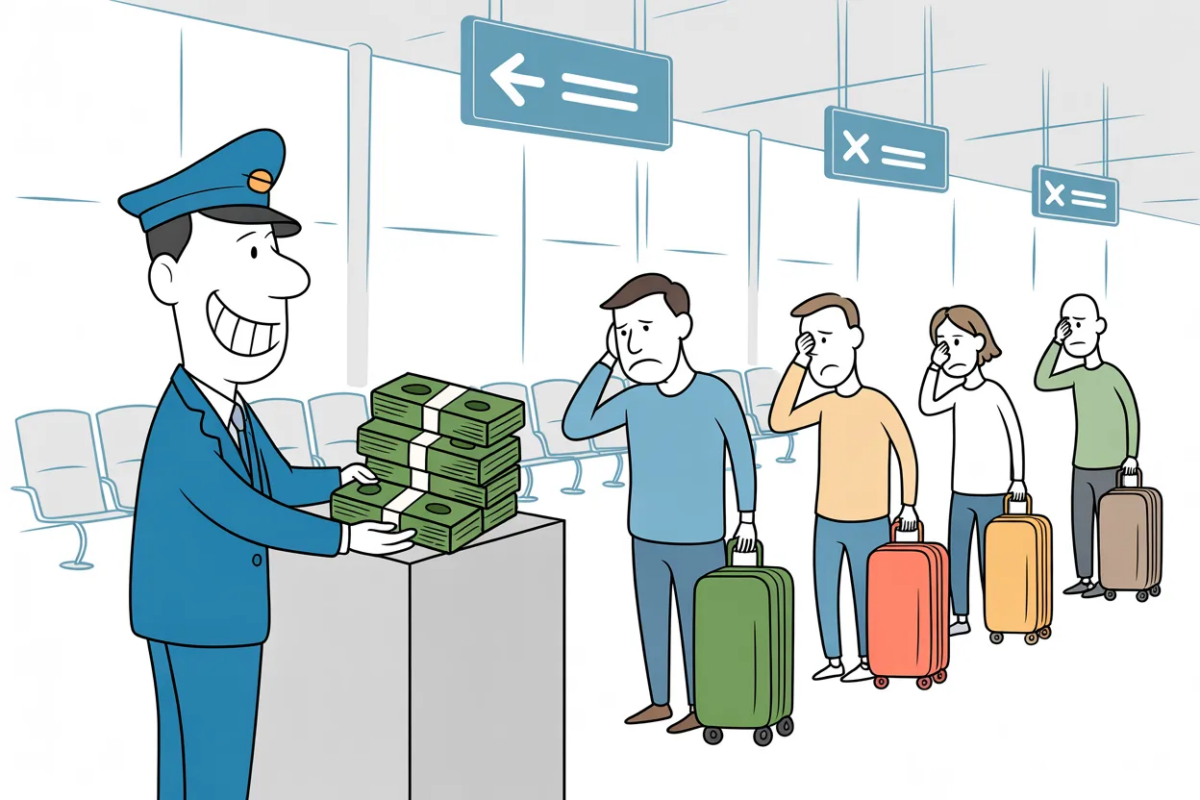
Governments have figured out that the border is a place to collect money. Britain now requires an Electronic Travel Authorisation from most visa-exempt visitors, including Americans, and it has raised the price twice since launch. The European Union’s ETIAS has been coming for five years and no longer has a start date. Australia charges for one of its two electronic entry permits and not the other. And the United States nearly doubled its own entry fee in September 2025, a detail that tends to get overlooked when Americans complain about paying to cross someone else’s border.
How much money is involved? Air travelers paid an estimated $60.4 billion in specific taxes on their tickets, according to an IATA study of 55 countries published last November. But that figure covers ticket taxes only. The entry and exit fees in this story are charged separately.
Governments collect all kinds of fees and taxes without disclosing anything about them. This is nothing new.
And if $70 is going to blow your travel budget, you shouldn’t be traveling (especially internationally), IMO.
Which countries charge entry fees, and how much
- United Kingdom: The ETA is required for travelers from more than 80 countries and territories, including the U.S., at a cost of £20 (about $27) per person. The price went from £10 (about $13) at launch to £16 (about $21), then to £20 on April 8. It’s good for two years or until the passport expires, with multiple entries and stays up to six months. Enforcement is no longer discretionary: carriers have refused boarding to passengers without one since Feb. 25.
- European Union: ETIAS is expected to cost €20 (about $23) and cover 30 European countries, with validity for three years or until your passport expires. The €7 (about $8) figure that still appears on some official EU pages is more than a year out of date. No launch date has been set.
- Australia: Which permit you need decides what you pay. Travelers from the U.S., Canada, Japan and a handful of other countries use the Electronic Travel Authority, which has a service charge of A$20 (about $14) for the government app. European and British passport holders get the eVisitor instead, and it’s free. You can’t choose between them.
- United States: The Electronic System for Travel Authorization, or ESTA, went from $21 to $40 on Sept. 30, 2025, under the budget reconciliation law. It now costs $40.27, after a 27-cent inflation adjustment took effect Jan. 1. The fee to get an I-94 at a land border rose from $6 to $30 on Sept. 30, 2025, the same day as the ESTA increase.
Andy Abramson, a communications strategist and seasoned international traveler, has been broadsided by several of these fees.
“What struck me was how normalized these pre-travel payments have become,” Abramson says. “You can’t even board without first paying for digital permission to arrive. It adds another administrative and financial layer to what used to be a fairly frictionless process.”
Exit fees are less common than travelers assume. Indonesia, for one, charges tourists nothing to leave. The money comes out on the way in: 500,000 rupiah (about $30) for a visa on arrival, plus a tourism levy of 150,000 rupiah (about $9), or roughly $40 a head.
What does get expensive is staying too long. When I lived in Bali, my brother overstayed his visa by a single day and paid about $60 for it. Indonesia fines overstayers 1 million rupiah (about $60) per day, and it collects at the airport before you’re allowed to leave.
Why fake government visa sites outrank the real ones
When governments roll out new digital entry systems, scammers follow. Third-party websites built to look like official government portals charge several times the official rate for nothing more than submitting a simple form on your behalf.
“Scammers are experts at purchasing domains that look official,” says Chris Bajda, an e-commerce entrepreneur who studies digital consumer behavior. “People who have experienced this know these websites mimic the official government portals closely.”
That’s what happened to a colleague of Clark’s. He clicked the first search result instead of going to the official government portal.
“He assumed the higher price meant expedited approval,” Clark says. He paid a markup and waited the same 72 hours as everyone else.
If it happens to you, dispute the charge with your card issuer. A billing dispute on a service that was never rendered as described is one of the few consumer protections that reliably works, and you can find your issuer’s escalation contacts in our company contacts directory.
Are these fees funding conservation or general revenue?
Jason Boertje, an expert on outdoor tourism and frequent international traveler, has a test he applies. Legitimate fees are locked to a purpose by law. Someone audits them. You can see what they paid for: trails, rangers, waste systems.
“You should be able to see a public breakdown of allocations, a named agency in charge, and audits or third-party oversight,” Boertje says. “When revenue disappears into a general budget and reporting is vague or nonexistent, it reads like a cash grab.”
Antoinette Leon, chief operating officer at ItsEasy.com Passport & Visa Services, says these small fees multiplied by millions of visitors generate steady income, and foreign visitors don’t vote.
“That makes tourism micro-taxes politically attractive,” Leon says. “In some countries, the funding is legitimate and transparent. In others, the money simply flows into general revenue.”
Robert McIntosh, managing director of Interski Holidays, a U.K.-based group tour operator, has watched pay-to-play spread in Italy, where several cities raised their overnight tourist tax again this year.
“We ultimately see it all as little more than stealth taxes,” McIntosh says.
Countries can fairly charge for checking passports and running a border. Some of them fund real conservation work with the proceeds. New Zealand publishes the accounting to prove it. But when a fee disappears into general revenue with no public accounting, a traveler has no way to know what the money bought.
Before you write off the whole practice, look at your own country’s numbers. A visitor from Madrid or Tokyo now pays $40.27 for permission to fly to Chicago, up from $21 a year ago, and $250 more if a visa is involved. The border has become a revenue line almost everywhere. You’ll probably notice it first when someone else charges you.
ETIAS has no launch date. What that means for your next Europe trip
ETIAS was supposed to start in the last quarter of this year. The European Union removed that window from its official site over the summer, and eu-LISA, the agency building the system, has concluded internally that a 2026 launch isn’t feasible. The EU says it will announce a specific date several months ahead of the launch.
Nobody is collecting ETIAS applications right now. Any site accepting one today is a fraud.
What to expect when it starts:
- The €20 (about $23) fee is expected to be waived for travelers under 18 and over 70, though both would still need an approved authorization.
- Most applications will be decided within minutes. Some take up to four days, and longer when the EU asks for documents.
- Nobody will be turned away for lacking an ETIAS during the first six months, and first-time arrivals stay exempt for six months after that. Full enforcement is unlikely before late 2027.
- Apply before you book anything you can’t cancel. Your name, passport number and birth date have to match your booking.
One European requirement is already live, and travelers keep confusing it with ETIAS. The Entry/Exit System has been running at every Schengen border since April 10. It’s free, but it takes your fingerprints and a facial image the first time you enter.

Have a question about this story? Tell us what happened — we read every comment.
Join the conversation