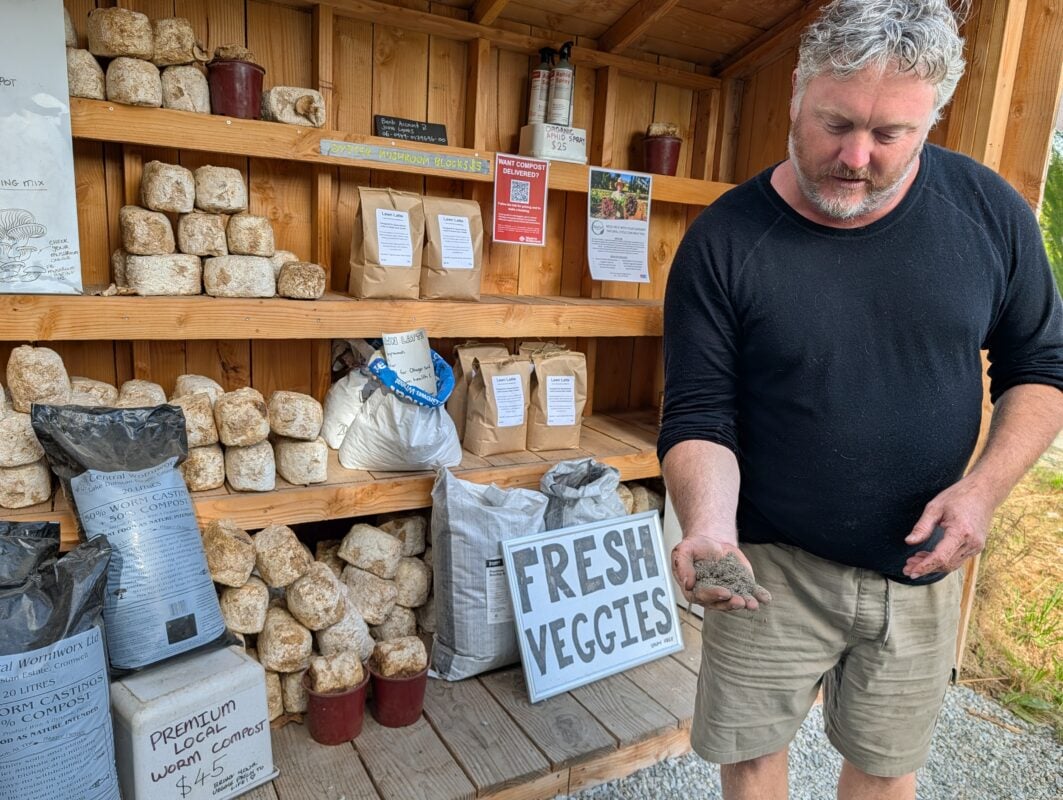
On the shortest day of the year in Queenstown, New Zealand, the serrated edge of Single Cone mountain casts a long, blue shadow over a valley locked in a deep freeze. In this sub-alpine June chill, the air feels like acupuncture needles on your skin, and the Otago earth is as hard as ice.
But not for Michael Sly. He’ll be busy harvesting watermelons and eggplant in the dead of winter—and helping Queenstown meet its ambitious sustainability goals.
His secret is in a metabolic fever of steaming food scraps.
Sly, known locally as the Compost King, operates an enterprise called Waste to Wilderness. It takes the byproduct of Queenstown’s massive tourism industry—the half-eaten buffets and coffee grounds from 95 percent of the town’s luxury hotels—and blends it with carbon-heavy wood chips from invasive wilding pines. The result is fertilizer used for the region’s regeneration.
“Food waste isn’t the end,” Sly explains, as steam rises from the core of a pile. “It’s just the beginning.”
We’ve been to New Zealand three times. Well worth visiting. We’ve been to Queenstown once, which is a lovely little town.
Sly is one of the cornerstones of Queenstown’s ambitious goal to become the world’s first carbon-zero visitor economy by 2030. His team diverts 80 percent of food waste from the town’s hotels away from the municipal landfill, converting 1,200 tons of organics into soil each year—an environmental impact equivalent to removing 1,200 fossil fuel vehicles from local roads. The closed-loop system is a case study in local resourcefulness, turning the byproduct of the massive tourism industry into fruits, vegetables—and opportunity.
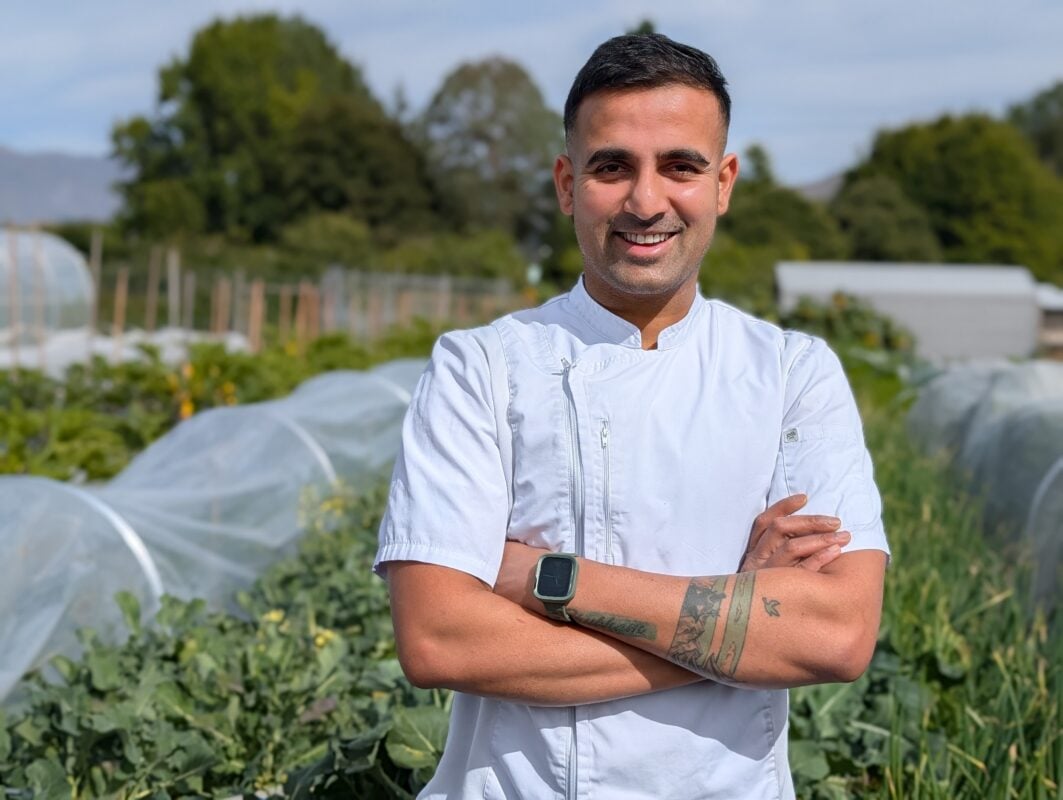
Millbrook Resort’s head chef, Shubham Gupta, in his vegetable garden. (Photo by Aren Elliott)
Growing a greener menu at Millbrook Resort
The nutrient-rich soil fuels the kitchen garden at places like the nearby Millbrook Resort, a luxury hotel where the waste from last week’s guests fertilizes the heirloom tomatoes for next week’s menu.
Head Chef Shubham Gupta walks through a sprawling kitchen garden that has transformed the resort’s dining experience. Gupta says you can tell the difference in the soil immediately.
“The tomatoes are sweeter and juicier than the ones you buy,” he says. “And because we harvest them here on the same day we serve them, they’re also fresher.”
Millbrook is now roughly 70 percent self-sufficient, when it comes to vegetables, growing everything from radishes to winter artichokes.
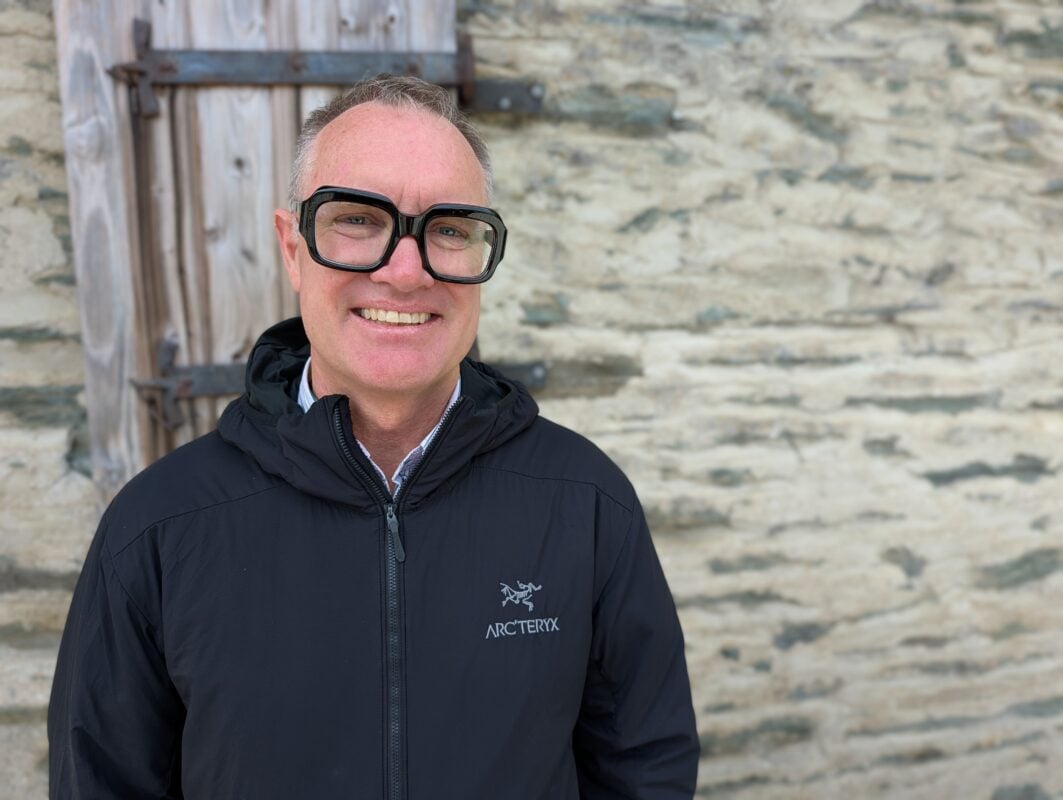
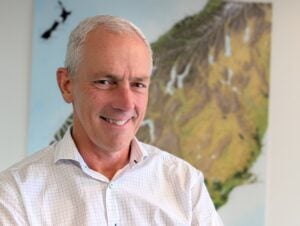
Mat Woods, CEO of Destination Queenstown. “We want to be a place that people look to for innovation,” he says. (Photo by Aren Elliott)
An imminent sustainability deadline
This hyper-local loop is a small-scale version of what the entire region hopes to achieve. According to Mat Woods, CEO of Destination Queenstown, the town is moving away from unsustainable growth and toward a model of what he calls “pioneering bravery.” The goal is to shift from merely sustaining tourism to actively regenerating the land.
The city has set several ambitious benchmarks to meet this 2030 target:
- A carbon-zero goal. Queenstown aims to be the first tourist destination in the world with a completely carbon-zero visitor economy.
- Electrification of industry. This includes showcase projects like the world’s first fully electric jet boats being developed on the Shotover River and Mike Casey’s fully electric cherry farm, which uses 23 electric harvesting machines to eliminate emissions.
- Waste diversion. Regional initiatives are focused on diverting 80 percent of organic waste from landfills to be repurposed for local food resilience.
“We want to be a place that people look to for innovation,” Woods says, noting that Queenstown should be the world’s showcase for how a destination can thrive without destroying itself. He views the shift to a carbon-zero economy not as a restriction, but as an adventure.
“It’s about being a good ancestor,” he adds. “We’re thinking about what this place looks like in the year 2100, not just the next fiscal quarter.”
Mr. Chippy’s lawn lattes
Back at the compost site, Sly is surveying his small fleet of specialized Japanese waste trucks that hauls the table scraps, rescuing them from a landfill. He’s even found a way to make the process marketable with a mix of coffee grounds, biochar, and liquid smoke called a “lawn latte” that helps local gardens flourish. He sells the powder from an unstaffed roadside stand where people pay on the honor system.
For Sly, the value is both in the dirt and in the independence it gives the community.
“We’re importing 90 percent of our food into this region,” Sly says. “By helping 1,000 families grow their own, we’re injecting millions of dollars of value back into the community. This is about local food resilience.”
In a few weeks, it will start to turn cold on New Zealand’s South Island—too cold to grow most garden vegetables. But Sly’s garden will still be growing. He’ll set up a glass enclosure to retain the heat generated from the compost, and the produce will flourish despite the freezing temperatures.
In a town famous for its temporary thrills, this hot transformation is part of a bigger plan. Sure, Queenstown has pretty alpine views and some of the best skiing in the Southern Hemisphere. But it’s also becoming a place that understands how to sustain the land that provides it.
By reclaiming the nutrients from tourism waste, Sly and his team are ensuring that when his descendants look back at the world’s Adventure Capital, they’ll see people who finally learned how to close the sustainability loop.
And the clock is ticking: 2030 is just around the corner.

Have a question about this story? Tell us what happened — we read every comment.
Join the conversation