When hackers cleaned out Amy Pollick’s PayPal account last month, she turned to the company for help. An automated assistant, which cheerfully introduced itself as generative AI and admitted it’s “still in beta testing,” told her it couldn’t process her request, but it offered to connect her to a human.
Did she want to talk to a person? She typed “Yes.”
Then the bot repeated the offer, word for word.
She typed “Yes” again. And again.
Four times, the machine offered a human being and then reneged. Pollick was stuck in a bot loop, a familiar place for consumers these days.
If that same algorithm had denied Pollick’s knee surgery instead of her $125, the law in a growing number of states would have required a licensed human being to sign off on the denial. Because it was about money and not medicine, she got the loop. That shouldn’t be allowed.
Some Americans already have this right
We’ve decided, in bits and pieces, that certain decisions are too important to be left to AI.
Last year, California’s Physicians Make Decisions Act took effect, barring health plans from using an algorithm as the sole basis for denying care. A licensed human provider must make the call.
Other states have followed. Georgia and Utah both passed versions this year. Georgia’s law lets insurers use AI to speed up prior authorization, but when it takes effect in 2027, no adverse determination goes out without a human reviewing and approving it.
Colorado went bigger. Its rewritten automated decision law, SB 26-189, will give consumers the right to request meaningful human review after an algorithm makes a consequential decision that goes against them. “Meaningful” means a trained person who can actually overturn the decision. It takes effect in January.
Europeans have had a version of this since 2018. Article 22 of the General Data Protection Regulation gives them the right to human intervention when a machine decides something about them, though it too applies only when the stakes are high enough.
But what about Pollick?
There’s a tension here because while some customers definitely need a human, many calls to the humans seek information that is easily available on the company’s web site. But sometimes it just isn’t. You want a routing that involves two airlines, even if they are “partners,” that neither web site will display. You want a longer layover to avoid anxiety about making a connection. You want one PNR.
When I recognize I need a human I need to be able to get one. And three more things. When I actually get a human, I don’t want to be asked for my phone number by an agent who has no ability to call me back. Nor do I want to talk with an agent whose shift ends before I complete my business, so I have to start all over. Last, I don’t want to be interrogated about my name, address, telephone number, member number, etc., because the script requires it when the log shows I called in earlier that day and all the information was already verified.
Everything turns on one word
Every one of these laws is keyed to decisions we’ve labeled “significant” or “consequential,” like credit, housing, employment, insurance or health care.
Getting hacked doesn’t make the list.
California’s new privacy rules take this somewhere strange. Starting in 2027, businesses using automated systems for significant decisions have to let consumers opt out, and one way to skip that requirement is to offer an appeal to a human who can overturn the decision. Human review shows up in the rulebook as a loophole for companies, not a right for customers.
It should be a right, though. People like Pollick should have the right to ask for a human review, especially when it involves their money.
Washington almost fixed this two years ago
In August 2024, the White House rolled out an initiative called Time Is Money. Its fact sheet promised the Consumer Financial Protection Bureau would start writing a rule to let customers reach a human by pressing a single button.
The rule never got written. There was no proposal, no comment period, nothing. And the current administration—well, let’s just say it’s unlikely to pass consumer protection like this anytime soon. In the meantime, corporate America is aggressively swapping out its front line for a logic tree.
Look, this doesn’t have to be complicated. If you want to talk to a person, you should get a person. A chatbot promising you an eventual human representative or a callback just doesn’t cut it.
You should be able to get through to a real person with the authority to make a decision. Let’s put it in federal law and let it cover every consumer transaction, not just the ones we’ve blessed or that seem significant.
Companies will say their bots handle most problems fine, and that’s true. Where’s my refund, reset my password, change my address—a machine can do it faster than a person ever could. Fair enough. What I’m advocating applies when the machine gets it wrong.
Companies will say it’s expensive. Yep. That’s the point. Right now the cost of the bot loops falls entirely on people like Pollick, who spent two weeks and an unknowable amount of dignity and frustration chasing a refund to which she was entitled.
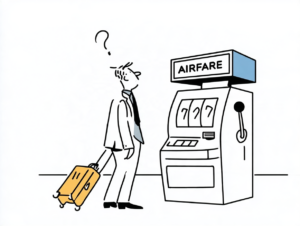
While we’re at it, let’s make it illegal to charge for the privilege. Frontier Airlines bills up to $25 per passenger, each way, for what it calls Airport Agent Assistance, and another $35 if you book your ticket by talking to one of its agents. Those are fees for speaking to a human being. Come on.
Humans 1, Bots 0
I contacted PayPal on Pollick’s behalf and, lucky me, I got through to a real person. The company called her, apologized for how she’d been treated and returned her money.
Her appeal worked because a consumer advocate got involved. She’d already written to PayPal’s executive office herself and heard nothing back. The system didn’t fix her problem, despite its promises of connecting her with a real person.
Pollick typed “Yes” four times and got nowhere. The rest of us should only have to say it once: “I want to talk to a person.” It should be our right.

Have a question about this story? Tell us what happened — we read every comment.
Join the conversation