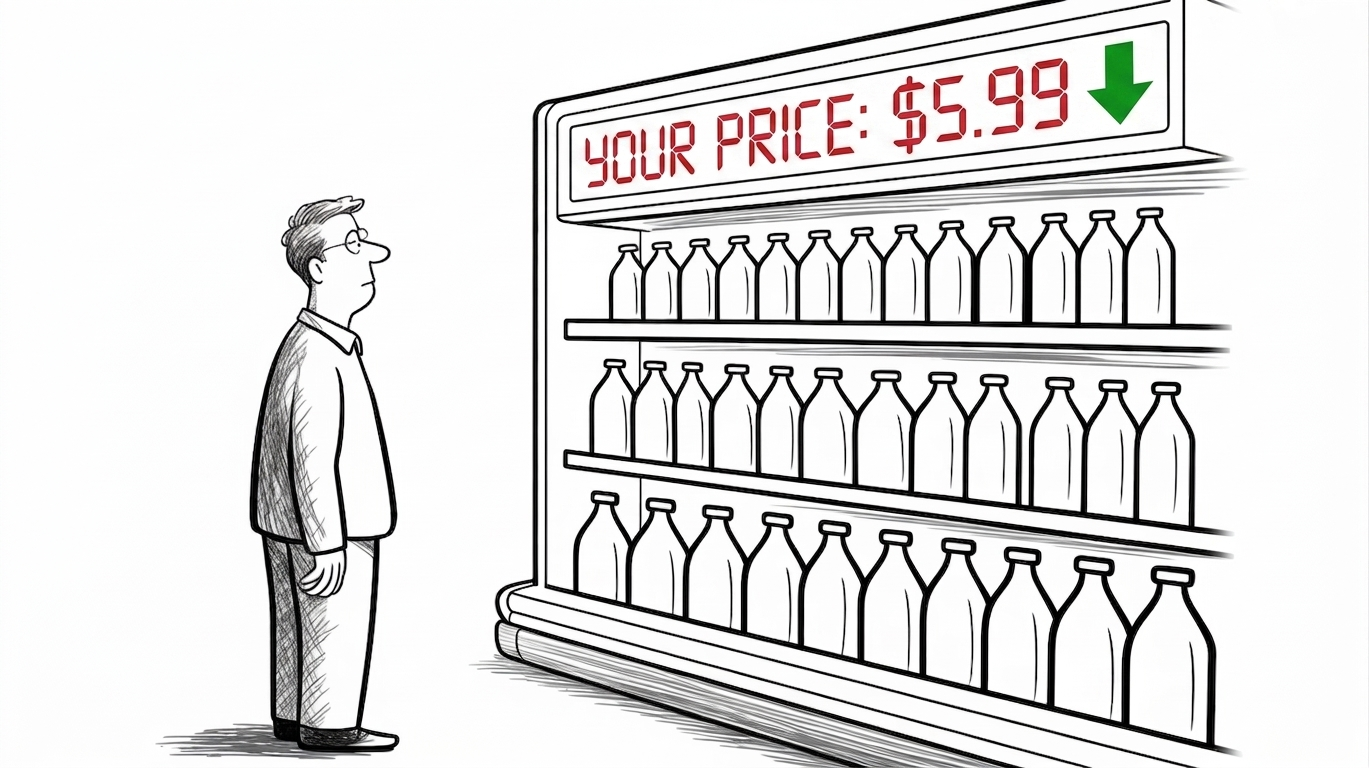
Editorial cartoon showing a man with glasses standing in front of a store shelf filled with bottles, looking up at a digital sign that displays "YOUR PRICE: $5.99" in red LED letters with a green arrow, illustrating how surveillance pricing creates personalized prices based on consumer data

Don’t ban surveillance pricing. Here’s how to fix it.

Surveillance pricing happens when companies use everything they know about you including location, browsing history, income, and device type to decide how much to charge you. The Federal Trade Commission documented eight major companies actively using or piloting surveillance pricing powered by third-party data brokers. Maryland is weighing a first-of-its-kind ban on the practice for groceries while JetBlue faces a federal lawsuit alleging it uses passenger data to raise fares. Disclosure requirements similar to the Equal Credit Opportunity Act would force companies to explain exactly what data they used to set custom prices.
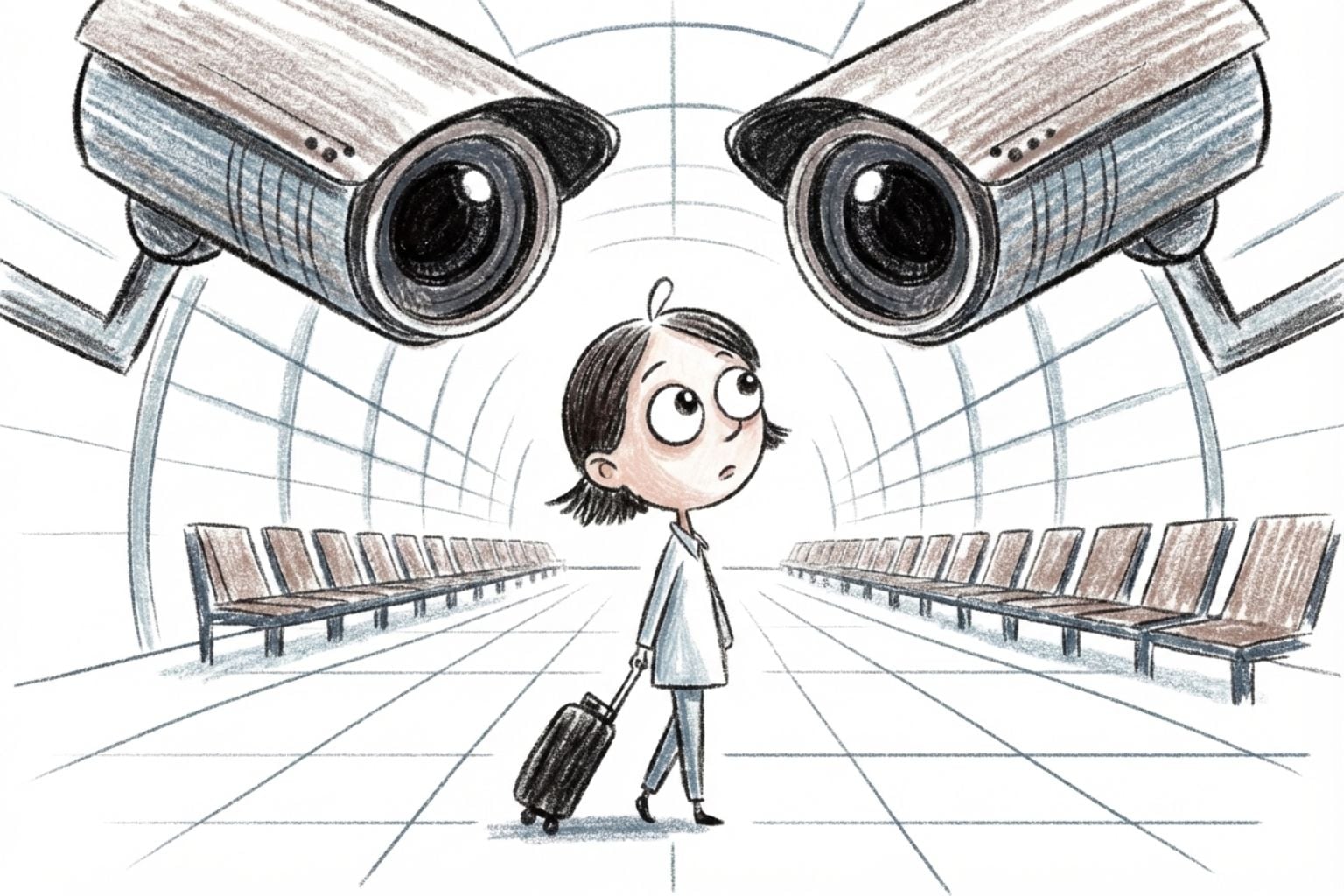
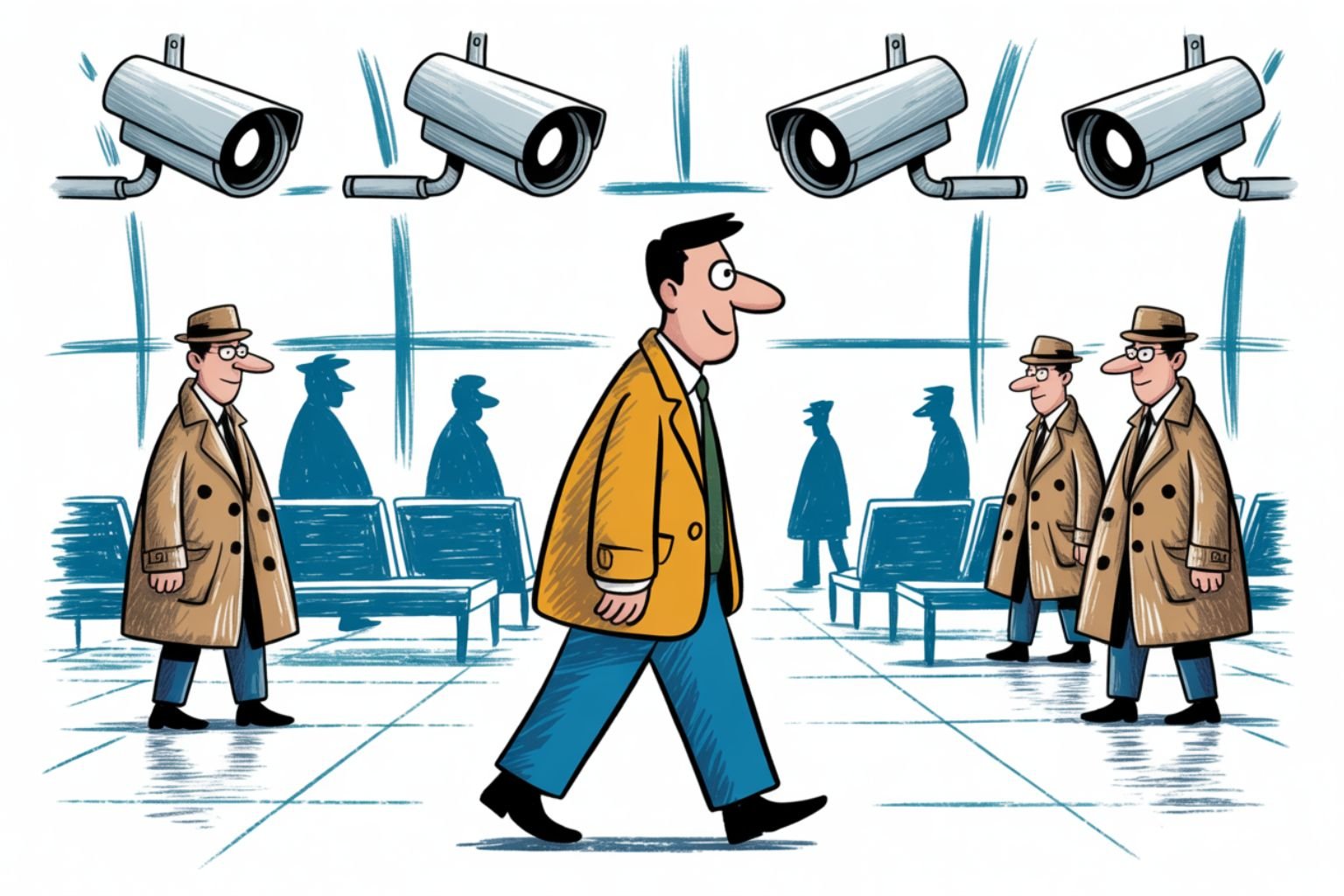
government wants to know

The government wants to know everything about your last trip

Marilyn Kaufman didn’t realize she was inviting an observer into her living room when she signed up for a lower car insurance rate. To secure a discount, her insurance company required her to keep a driving-tracker app active on her phone all the time. It monitored her braking and acceleration, but it also followed her while she walked her dog or sat at her kitchen table.