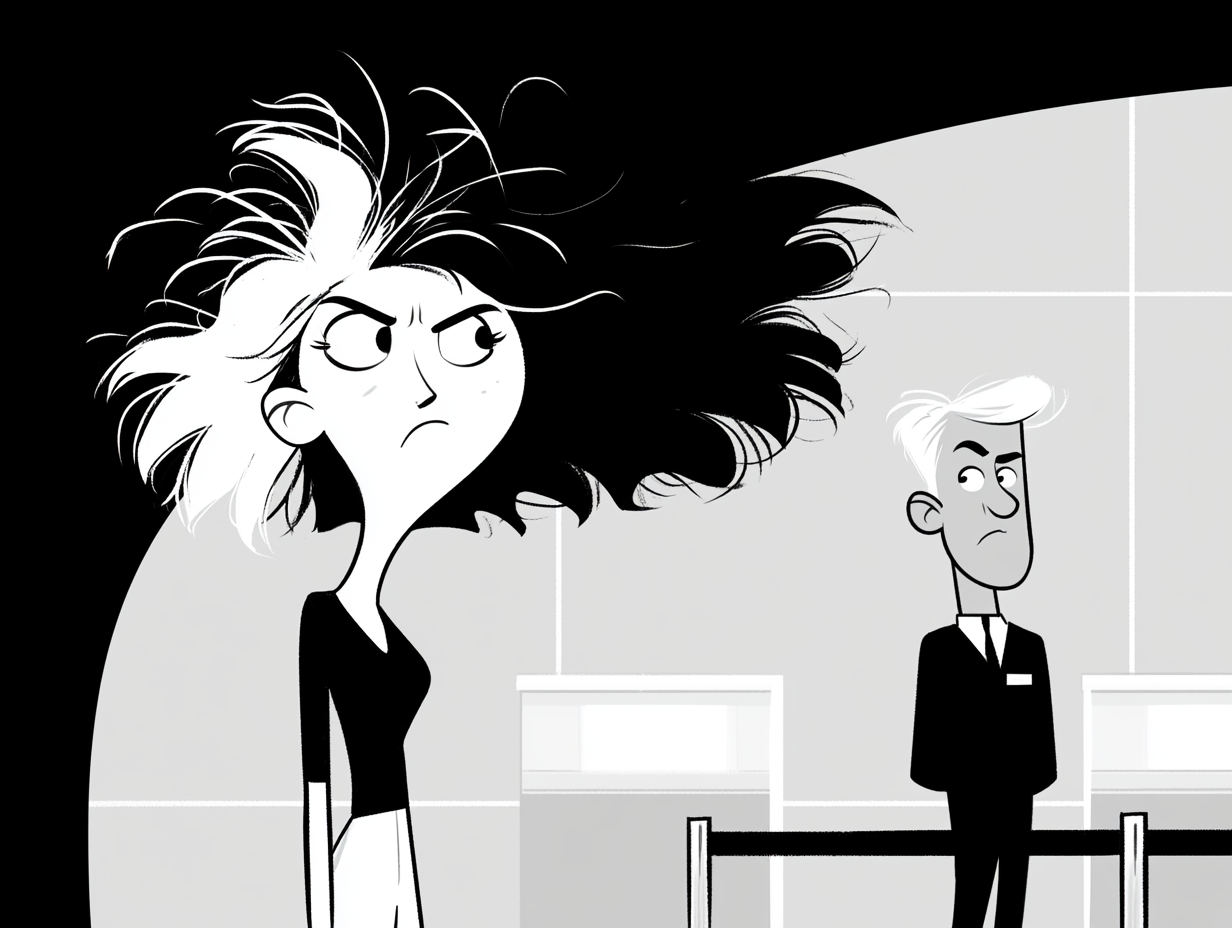
Black and white cartoon of a woman with wild, disheveled hair glaring angrily near an airport check-in counter as a wary uniformed agent watches her from behind the desk. airline blacklist

Is it time for an international blacklist of problem passengers?

If an airline bans you for screaming at a flight attendant or trying to open a door at altitude, you can usually walk to a competitor’s counter and buy a ticket. Britain wants to put an end to that, and its actions may ripple across the Atlantic. The Department for Transport and the Home Office are reportedly working on a national system that would let UK airlines share details of serious offenders, so a person barred by one carrier could be flagged at check-in by another. A trade group has welcomed it, and a budget carrier has been lobbying for exactly this kind of database. On its face it sounds like common sense: keep the dangerous few off everyone’s planes. But a shared ban list raises harder questions than the headlines admit, starting with the ones that decide whether it protects passengers or quietly turns into something else: who decides who belongs on it, what counts as unruly, and if an airline flags you and you think it is wrong, who exactly do you appeal to?
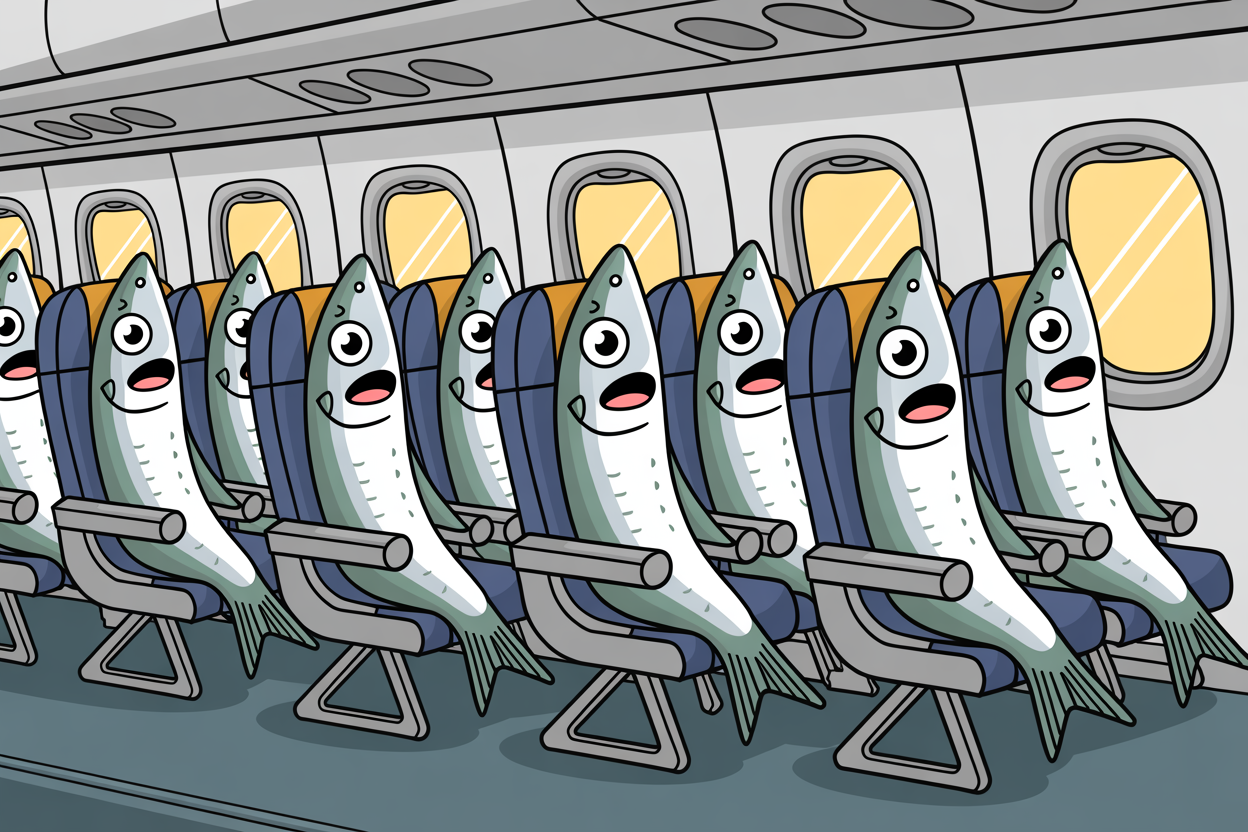
Cartoon of smiling sardines packed upright into narrow airplane seats in a tightly spaced cabin, illustrating how shrinking economy legroom crams travelers in like sardines.

Premium creep: How the travel industry downgraded you for profit 

Remember when you could check a bag, choose your seat, and stretch your legs on a flight without paying extra? It is not an urban legend. You used to be able to do all three at no additional charge. A 34-inch seat pitch was once standard in economy class. Today the industry calls that same space premium economy and charges you more for it, while the 30-inch squeeze becomes the new normal. Call it premium creep, the quiet industry-wide pattern where yesterday’s basics quietly become today’s luxuries, wrapped in marketing language about choice and flexibility. And it is not just airlines: hotels, cruise lines, and even car rental companies have all found ways to strip out what used to be included and sell it back to you. Which raises the question worth sitting with the next time you compare two fares: are you buying an upgrade, or just paying to undo a downgrade the company handed you in the first place?

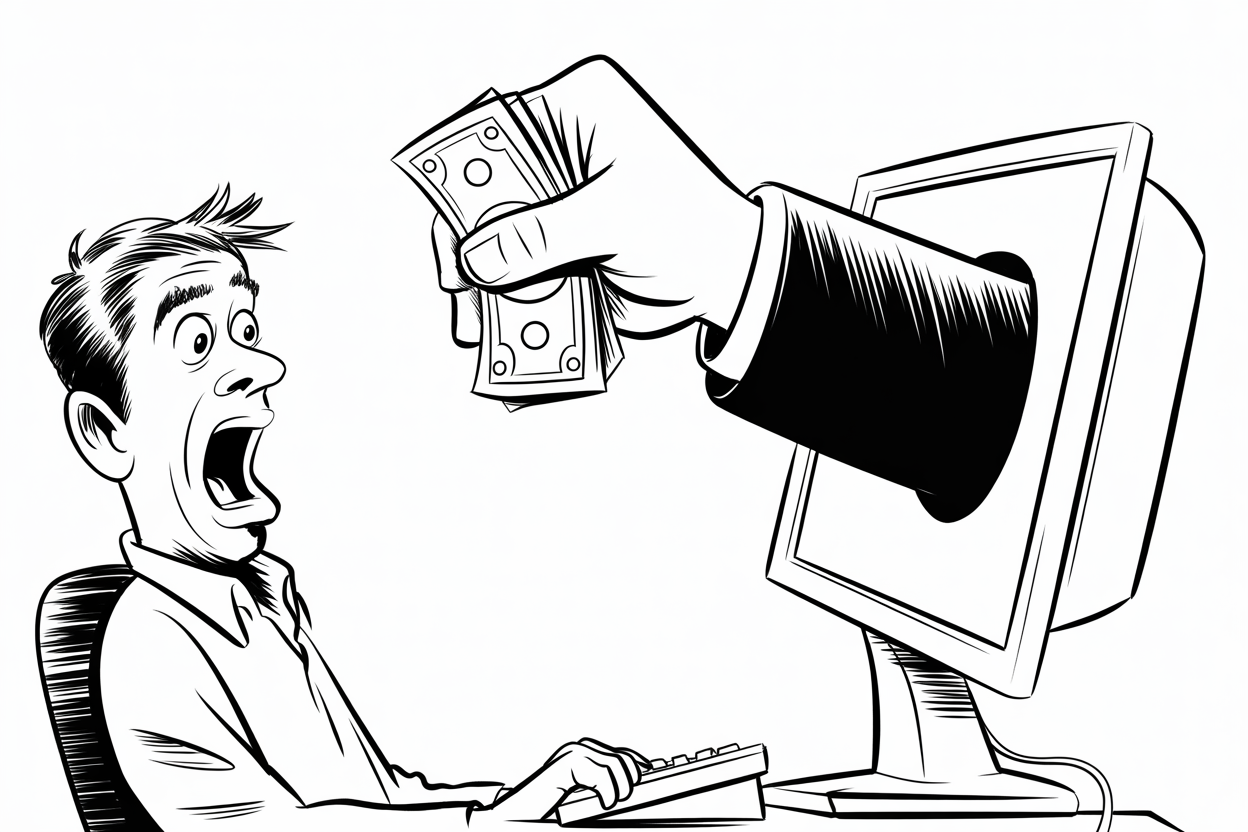
Black and white editorial cartoon of an alarmed man at a desktop computer as a hand reaches out of the monitor screen and snatches cash from in front of him, illustrating online booking scams that drain travelers' money.

Are travel companies doing enough to protect your booking data?

The message arrives by WhatsApp and feels completely real, because it is built from real information: your hotel, your dates, your confirmation number. Someone claiming to manage the property warns that your room is at risk unless you verify your card right away. Security researchers call this reservation hijacking, a targeted phishing scheme that leans on details only you and your hotel should know. The data has to come from somewhere, and the travel industry keeps springing leaks, with booking platforms, cruise lines, and airlines all disclosing breaches that mostly trace back to a third party rather than the company’s own front door. Which raises the question travelers can no longer avoid: when a company collects your whole itinerary and a leak in its network turns that data into a weapon aimed at you, who is responsible for what happens next?

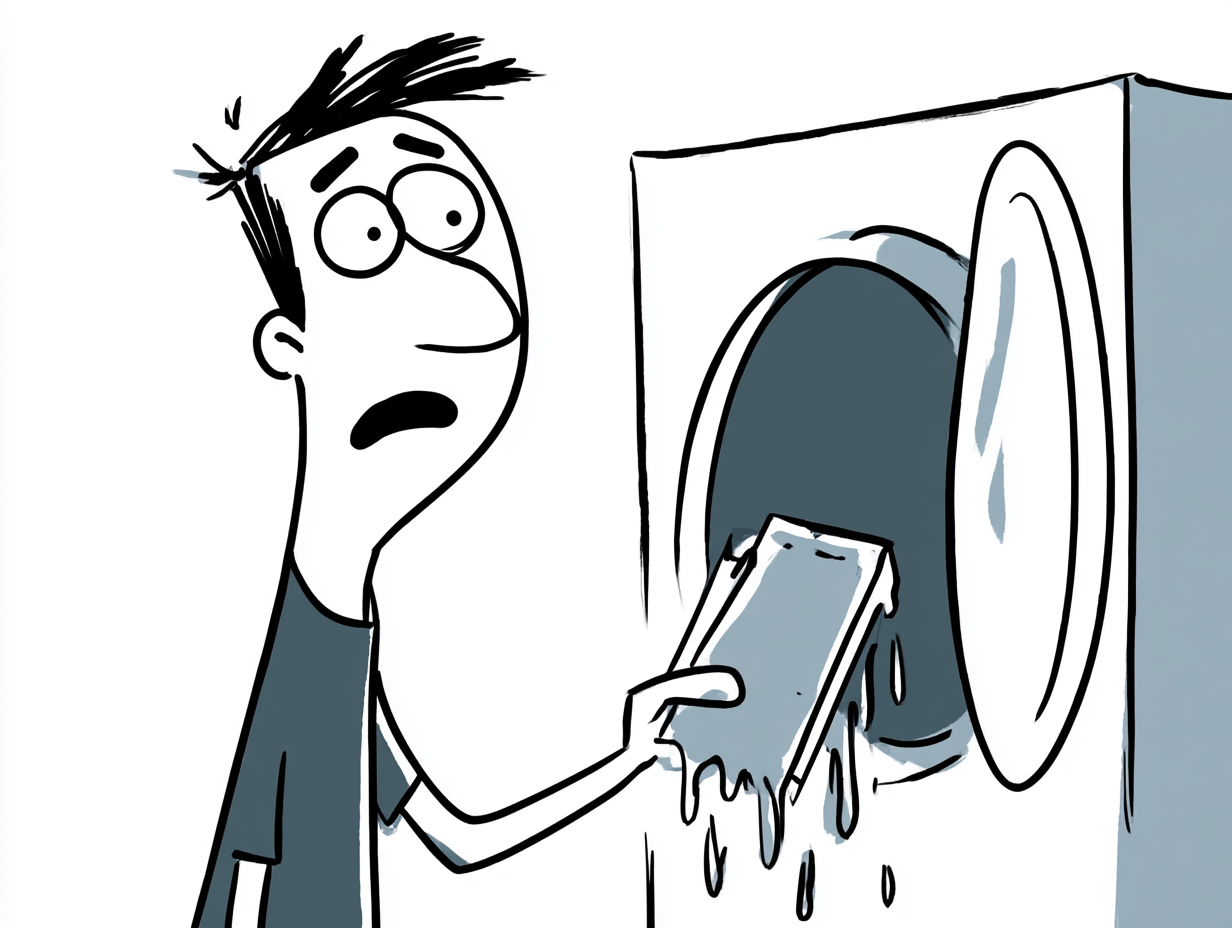
Cartoon illustration of a worried traveler holding a soaked passport beside a washing machine after it accidentally went through the laundry.

It’s time to kill the passport

A U.S. passport went through the wash during a week in Singapore, half a cycle on heavy duty before its owner remembered it was in a back pocket. State Department guidance is clear that significant damage, including water exposure, voids a passport, which means applying in person at a U.S. embassy, paying a $130 fee, and racing to get a replacement before an upcoming border crossing into Malaysia. The mishap raises a larger question: why do travelers still depend on a fragile paper booklet at all? Hundreds of thousands of U.S. passports are reported lost or stolen each year, and modern borders already scan faces, fingerprints, and travel history in milliseconds. More than 150 countries now issue electronic passports with embedded chips, yet those documents remain physical objects vulnerable to washing machines and pickpockets. A few countries have started clearing travelers with facial and biometric checks alone, suggesting the chip, not the booklet, has become the real document. The question is what it would take for the United States to follow.

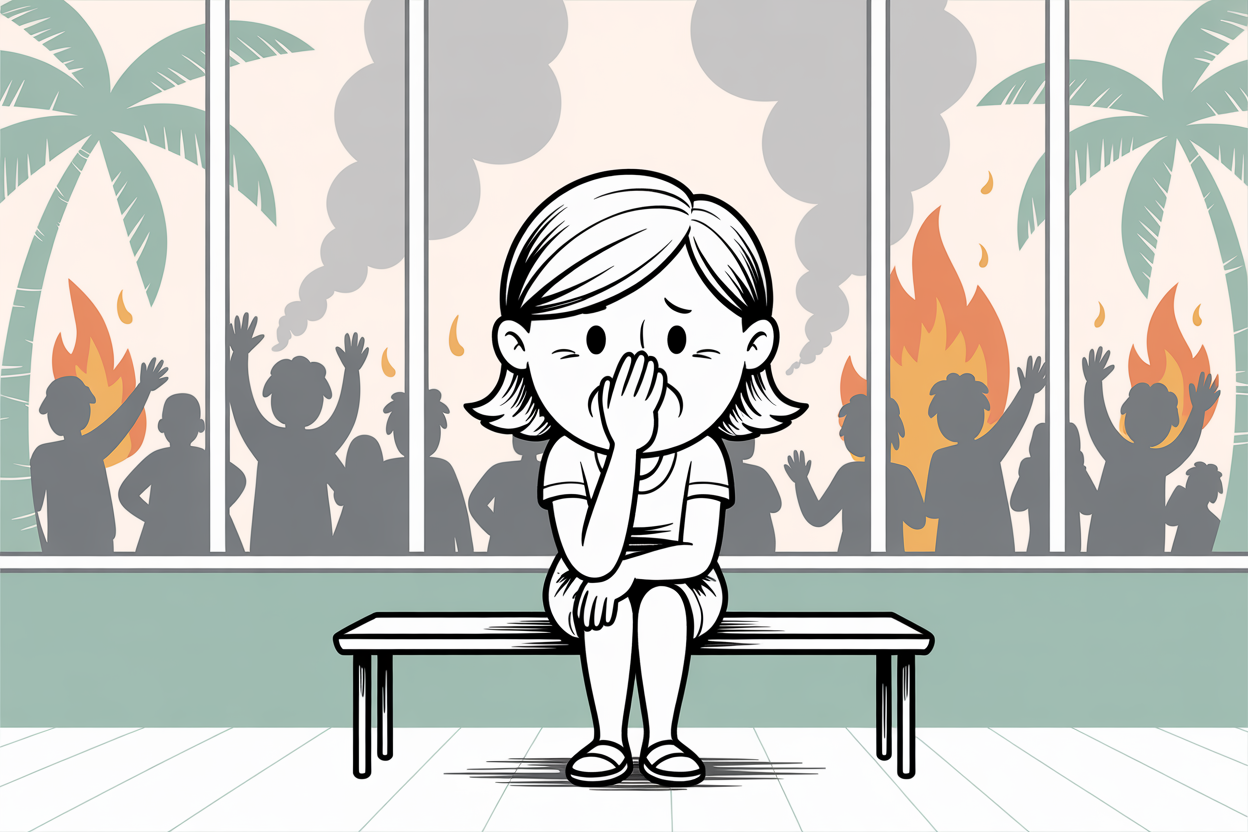
Illustration of a worried young traveler sitting inside an airport as smoke, flames, and panicked crowds appear outside the windows.

When your vacation turns dangerous: How do you know it’s time to leave?

Kate McCulley, a journalist based in Prague, knew it was time to leave Madagascar. Flights were getting canceled, protests had moved outside her hotel in Antananarivo, and the country was on the verge of a military coup. The police blanketed the neighborhood in tear gas. After several days of trying, she finally caught a flight to Réunion. Most travelers face a much harder version of her call. After months of planning and thousands of dollars spent, deciding whether to cut a vacation short when conditions shift is rarely simple. Civil unrest, a natural disaster, a sudden spike in crime, or a slow drift in local sentiment can each push a manageable risk toward a real threat. Government advisories often lag behind reality on the ground, tour operators have an interest in downplaying risk, and standard travel insurance generally will not cover a trip cut short on fear alone. There is no algorithm for the stay-or-leave decision, but security professionals point to clear early triggers that separate a manageable situation from a dangerous one, if travelers know what to watch for.

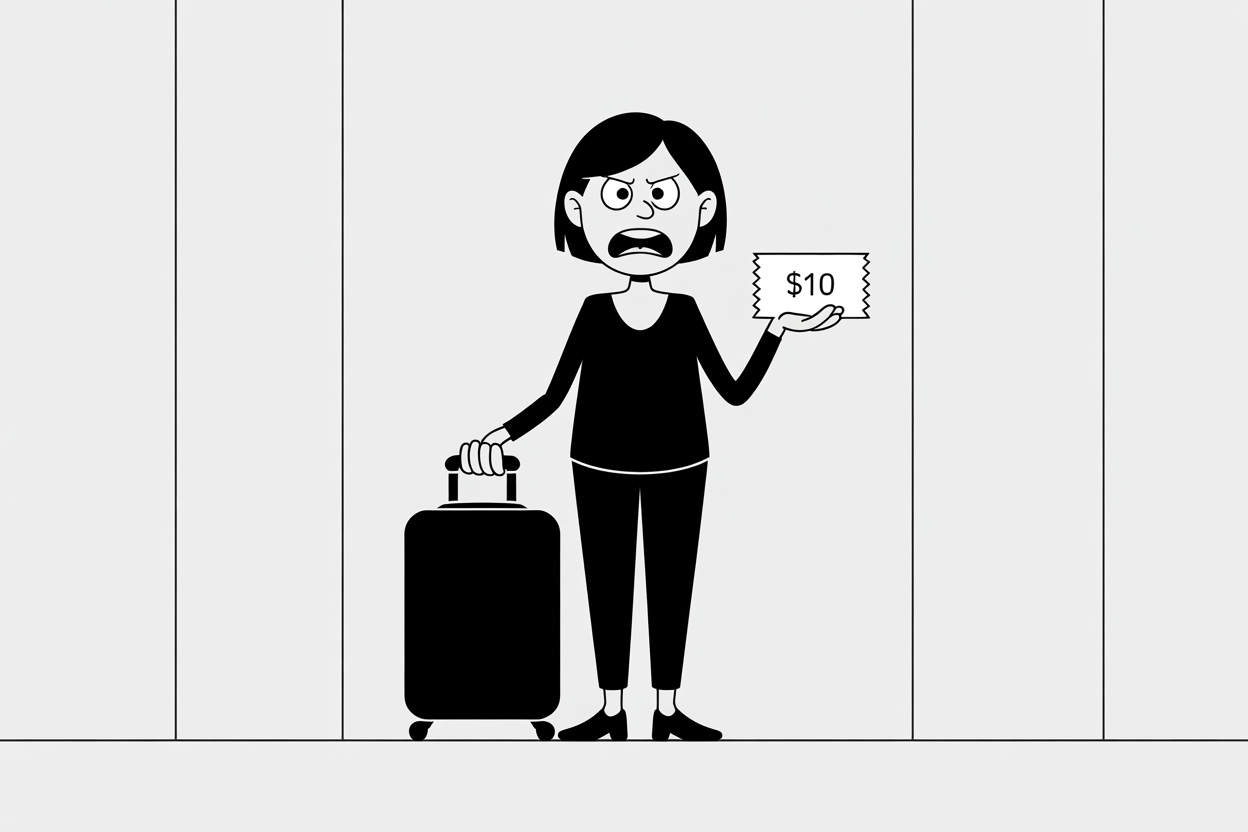
An angry airline passenger stands with a suitcase while holding a $10 voucher after a flight delay.

The delay tax: Why your airline voucher barely covers your expenses anymore 

When a flight is delayed or canceled, airlines cover only what they call duty of care: a meal voucher, sometimes a hotel, or a refund if the flight is canceled. Angela Justice received a $10 voucher after her Boston to Chicago flight was canceled. The real cost, the delay tax, is far larger. It includes nonrefundable hotels travelers cannot reach, lost wages, child care that keeps ticking, and the replacement flights passengers must book themselves when the airline’s rescheduling timeline proves useless. Airlines calculate compensation based on what it costs them to reschedule a flight, not what it costs the traveler to miss the reason they flew in the first place. The official story is that duty of care solves the problem and the Department of Transportation signs off. But the law was written in a different era, when travel was simpler and airlines were more generous, and regulators have not caught up now that delays are chronic and carriers watch every penny.

Fear of travel is at a high, but the data tells a different story. Here's why your summer vacation is still a safe bet, from peace rankings to airline risk.

No, your summer vacation isn’t going to kill you

Fear of travel is running high this summer. A reader named Cindy Smith nearly canceled a Danube river cruise and a week in Croatia after reading headlines about a cruise hantavirus outbreak and crew arrests. She is not alone. In a recent Global Rescue survey, less than 1 percent of respondents said their concerns about personal safety abroad had eased since last year, while 56 percent said they felt more concerned. Travelers cite three recurring fears: airlines collapsing mid-trip, dangerous conditions abroad, and anti-American sentiment. Yet the major U.S. carriers such as Delta, United, American, and Southwest remain profitable, and a conflict on one side of a continent does not make the other side unsafe.

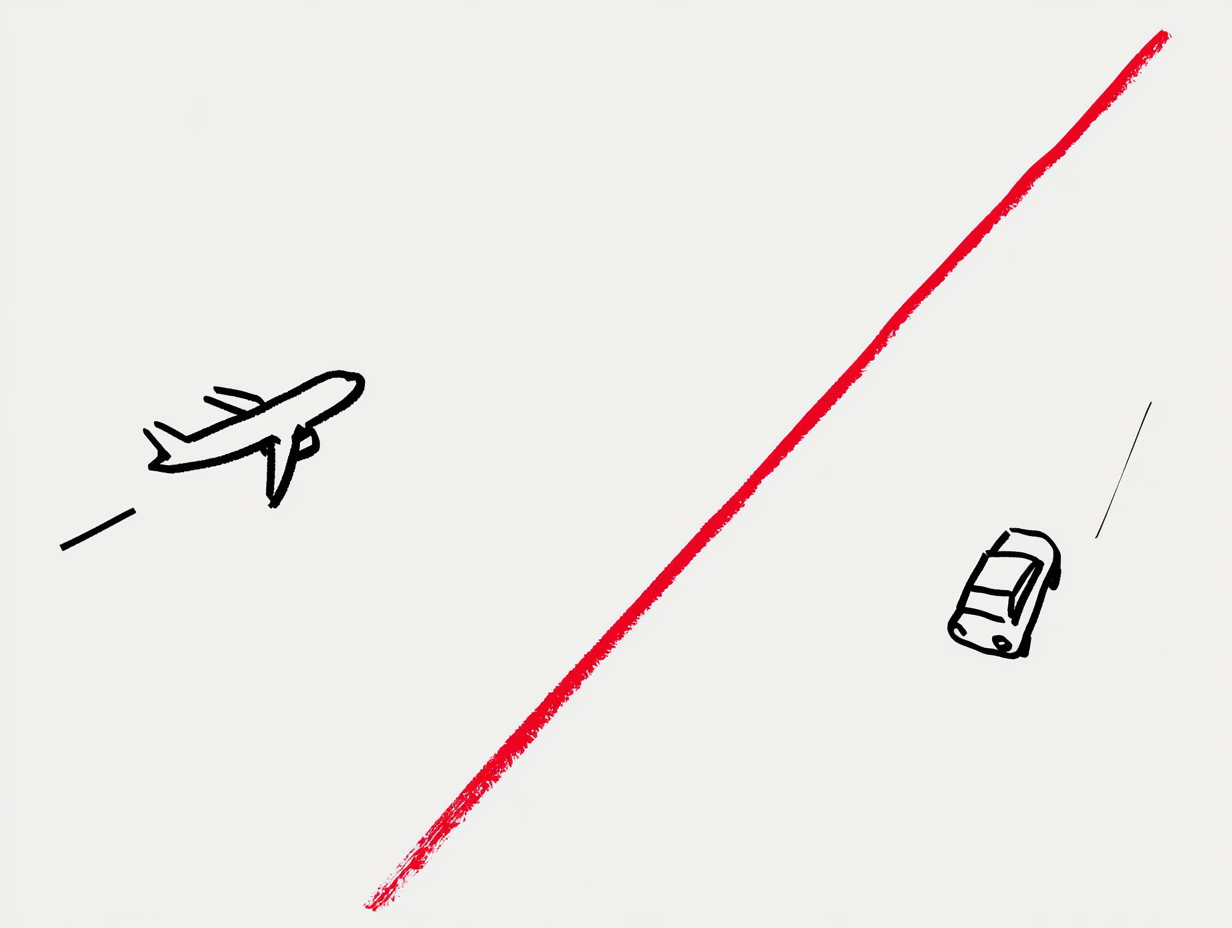
Simple hand-drawn Bauhaus-inspired minimalist illustration on a white background showing a black line-drawing of an airplane taking off on the upper left and a small black line-drawing of a car on the lower right, separated by a single bold red diagonal line running corner to corner, symbolizing the widening divide between affluent air travelers spending more per trip and budget-conscious travelers priced out of summer vacations this year

The summer travel divide: How to find affordable vacations this year

Summer travel intent has hit its lowest point since the pandemic. Deloitte’s latest summer travel survey found only 45 percent of travelers plan a summer vacation with paid lodging this year, the lowest figure in six years. Travel intent fell across every income bracket, but the drop among households earning under $100,000 was twice as steep as the decline among middle- and high-income earners, an 8-point drop versus 4 points each. The travelers still going plan to spend $4,069 on their summer vacations, up 17 percent from last year. Deloitte’s broader 2026 outlook calls this a bifurcation of standard and luxury travel and frames competition for the high-spending traveler as one of the year’s defining trends. Travelers earning between $100,000 and $199,000 show the biggest booking gap, with 37 percent fully booked versus 45 percent last year, leaving a large amount of unsold late-May inventory that revenue managers are aware of.

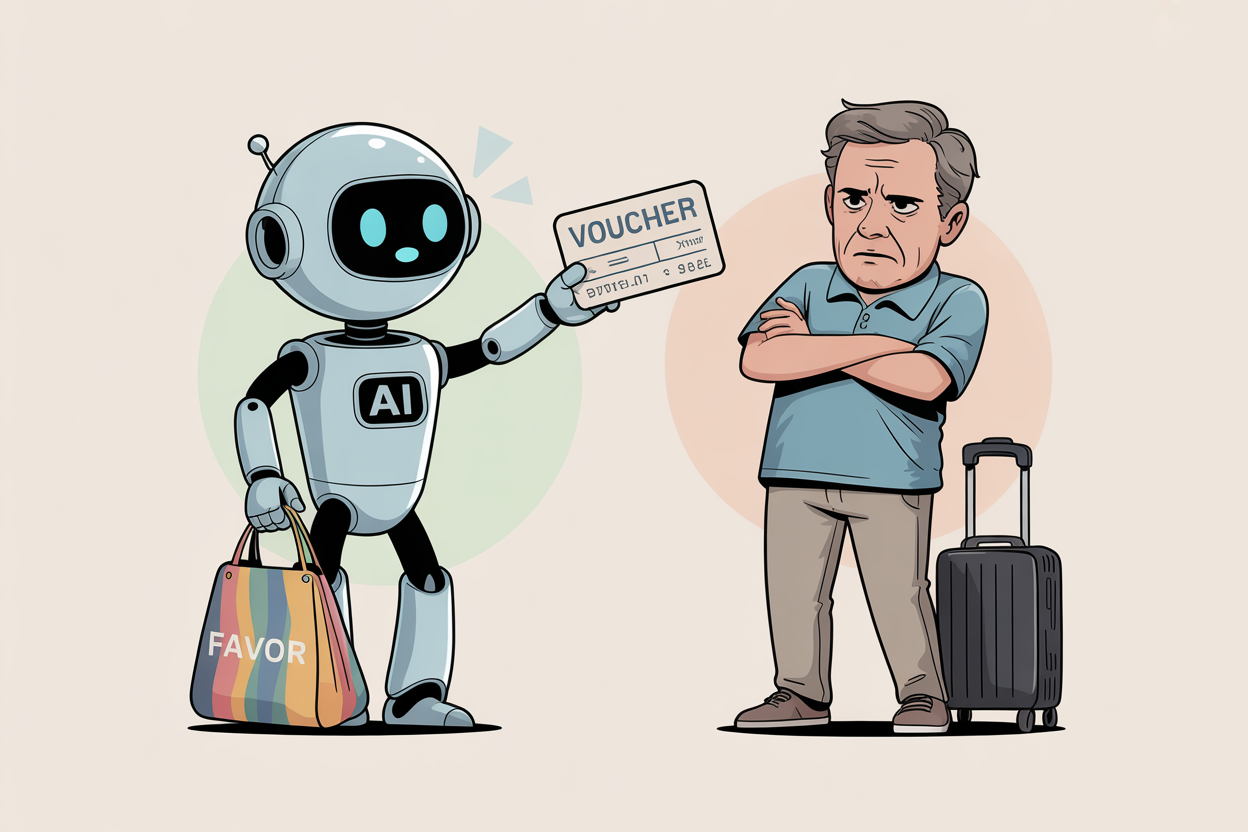
Editorial cartoon illustration of a smiling AI robot with "AI" labeled on its chest holding out a paper voucher in one hand and a colorful striped "Favor" shopping bag in the other, while a frustrated middle-aged man in a blue polo shirt stands with arms crossed next to his black rolling suitcase refusing the offer, illustrating how travel companies use automated systems to push customers into accepting vouchers instead of legally required cash refunds

Why are travel companies replacing real refunds with “coupon justice”?

Travel companies are increasingly replacing cash refunds with vouchers and goodwill credits when flights cancel, hotel rooms fail, and rental cars run out of vehicles. The practice exploded after the pandemic when companies pivoted to vouchers to hoard cash. The actual redemption rate for travel vouchers is below 10 percent, meaning a 90 percent chance the credit goes unused and the company keeps your money entirely. Under U.S. Department of Transportation rules, airlines must provide prompt refunds to your original form of payment when they cancel flights or make significant schedule changes. Airlines offering only vouchers without a genuine cash option violate these legal obligations. Hotels and online booking sites operate in a legal gray zone with few hard rules governing refund practices.

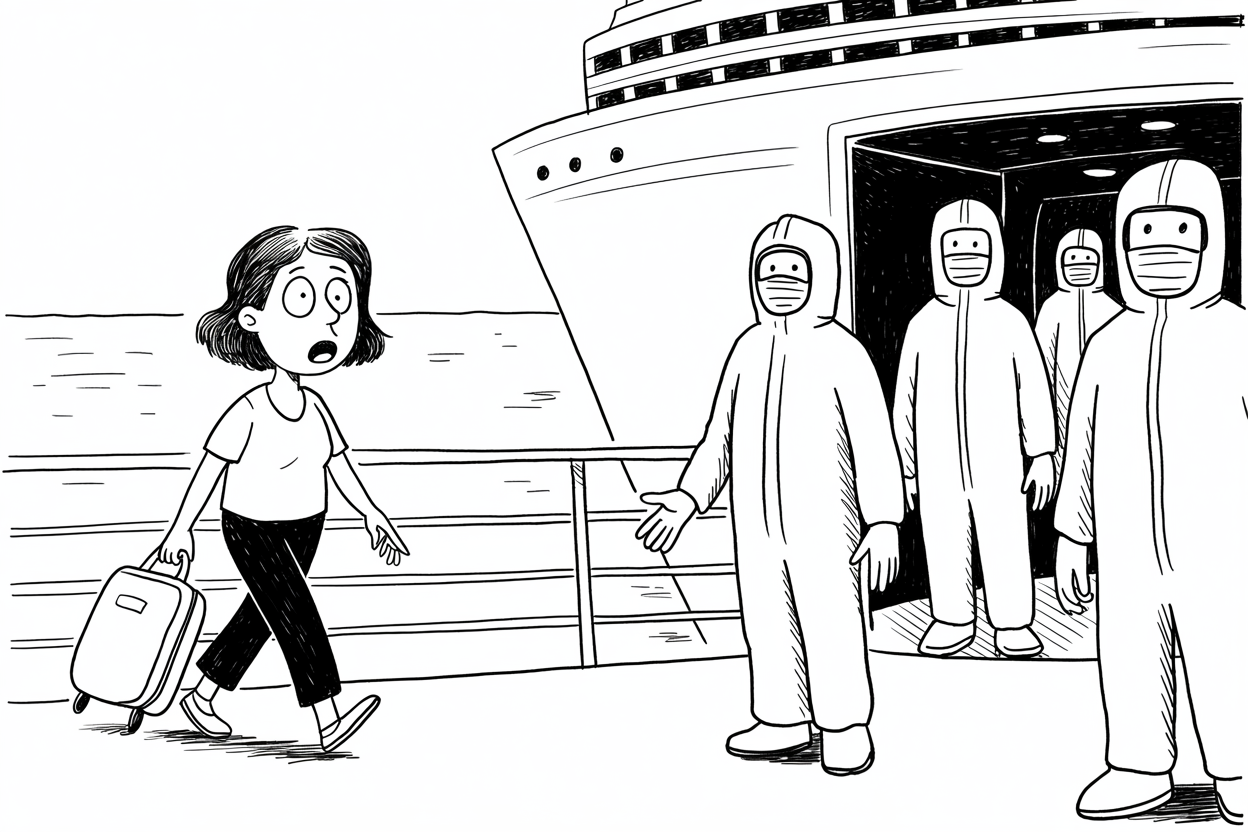
Black and white editorial cartoon showing a worried woman with short hair pulling a small rolling suitcase down a pier with her mouth open in alarm, while four masked workers in white hazmat suits stand in front of a large white cruise ship's open dark hold preparing to board, illustrating the cruise industry's mounting safety crisis of viral outbreaks, deaths, and federal scandals during summer 2026

This isn’t the summer for a cruise

A hantavirus outbreak on the Dutch MV Hondius killed three people and infected at least eight more, caused by the Andes virus strain, the only hantavirus known to spread person to person. The Caribbean Princess arrived in Port Canaveral with 102 passengers and 13 crew members sick from norovirus, the fourth gastrointestinal outbreak on a cruise ship this year. U.S. Customs and Border Protection detained 28 crew members at the Port of San Diego, with 27 allegedly involved in child sexual abuse material. The CDC Vessel Sanitation Program lost its full-time civilian staff a year ago, and its chief retired during the hantavirus outbreak. Most cruise ships sail under flags of convenience like Bermuda, Panama, the Bahamas, and Liberia, escaping U.S. labor, safety, and consumer protection laws.