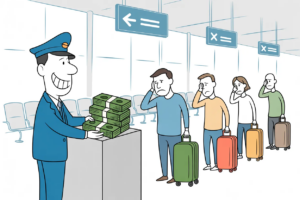
Welcome to August, the month travel goes to die.
Can you feel it? The system has been redlining for months, and now it’s starting to crack.
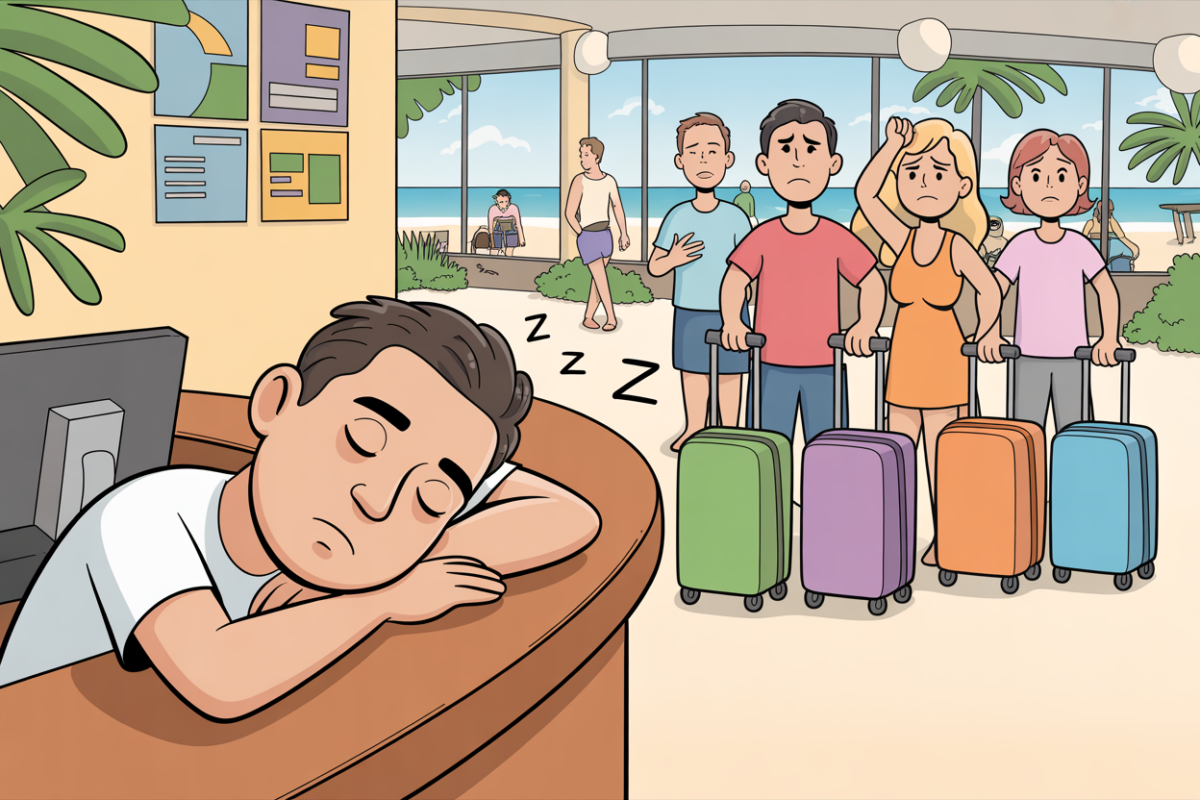
Planes are filthy and hotels look neglected. The staff is exhausted and done with you.
If you’re packing your bags for vacation, here’s what you need to know: You’re buying a product the travel industry can’t always deliver.
Last month, with its storm delays, high cancellations and technology snafus, was just the warmup for air travelers. In good years (like 2025) cancellation rates stay around 1 percent in August. But in 2024, it was running about twice that rate, with the major carriers canceling more than 13,400 domestic flights.
Fortunately, your vacation isn’t a lost cause. You just need to adjust the way you travel, lower your expectations a little, and adopt a few survival strategies.
Why the system is breaking
Delbert Lee has tracked this breakdown for years. He’s a former vice president of sales at a travel agency, and he’s consistently observed a 30 percent jump in service complaints every August.
“The root cause is simple,” Lee told me. “Capacity peaks and starts to degrade by late July.”
He calls it “operational decay.” The service infrastructure is designed for a 60-day sprint, not a 100-day marathon.
By the time mid-August rolls around, the machinery of travel starts to sputter.
You see it in the little things. Or, in Isabella Rossi’s case, the gritty things.
Rossi, a product officer for a social networking company in San Francisco, checked into a vacation rental in Half Moon Bay earlier in the summer. She already saw the cracks forming.
The balconies were covered in dirt and old leaves. The kitchen didn’t have the basics—not even sugar, salt, or coffee.
“It felt like the host had stopped caring,” she says.
It happens at hotels, too. Brian Clark, a nurse anesthetist from Utah, recalls a late-summer trip where the fatigue was on display everywhere.
His hotel room smelled and the carpet had “black traffic spots.”
“The grout in the shower needed a power washer,” he says.
It was a property that had clearly been hammered by guests since May. The housekeeping staff was focusing on turnover, not cleaning.
Definitely avoid August travel if you can! Prices are ridiculous, crowds are huge, and yes, people are burned out.
The great staffing exodus
Dirty carpets are one thing. The real problem with August is the human element.
By this time of year, the college kids who staff the resorts are packing up. They’ve got to go back to school.
“I’ve seen restaurants, golf resorts, hotels, all scrambling to cover for the last few weeks of summer because the staff has up and left,” says Susan Stevens, a retired communications consultant who owns a vacation home in Michigan.
The tourists are still there and the weather is beautiful. But there’s no one left to serve the clam chowder.
The employees who remain are running on fumes. Susan Sherren, founder of Couture Trips, says flight attendants and gate agents are just fellow humans with frayed nerves.
“Everyone goes into survival mode in August,” she says.
Clark noticed this in the sky. He was on a delayed flight last summer, and the airline blamed “crew availability,” a classic burnout excuse. He observed a flight crew that looked “exhausted.”
“They weren’t rude,” he says, “but they weren’t present.”
Why we travel in August anyway
If the carpets are stained and the planes are late, why do we travel in August?
It’s a fear of missing out, says Joe Cronin, CEO of International Citizens Insurance. He says we’re trying to cram in those end-of-summer-break plans. We treat travel like a checklist that must be completed before Labor Day.
And that’s the problem. We have high expectations of a perfect vacation, but the industry can’t really deliver on its promises.
“Service providers are exhausted, service quality declines, and traveler expectations of the perfect vacation are still as high as ever,” he says.
Hotel rates peak in August, so you’re paying Ritz-Carlton prices for a Motel 6 experience.
So why are we surprised when something goes wrong?
How to survive the burnout
I know what you’re thinking. Chris, I already booked the nonrefundable tickets. What should I do?
You’ve got two choices. You can cancel and go in January. Or you can change the way you travel.
- Lower the bar a little. If you travel in August, stop expecting perfection. You aren’t going to get it. If the flight’s on time and the sheets are clean, you win.
- Book the first flight of the day. Sherren advises choosing morning flights. The crews are fresher and the planes haven’t had time to break yet.
- Find a quiet place. Airports are getting more crowded. Chris Gwilliam, an executive with Airport Dimensions. recommends you pre-book a lounge. If you can’t get into a lounge, find a gate that isn’t being used. Just get away from everyone else.
- Pack your manners. I wrote a chapter about this in my book, The Unauthorized Travel Manual. When everyone else is stressed and entitled, don’t add to the noise.
Personally, I’m planning to steer clear of the chaos. I’m in Seoul in August, which is definitely outside of tourist season. Yeah, it’s ridiculously hot, but probably no worse than Las Vegas or Palm Springs.
No matter where you go, here’s some advice you can take with you: Slow down. More than anything else, it’s the frantic pace of an August vacation that’ll kill you. Travel isn’t a race, and there’s no prize for being the first person to board a flight.

Have a question about this story? Tell us what happened — we read every comment.
Join the conversation