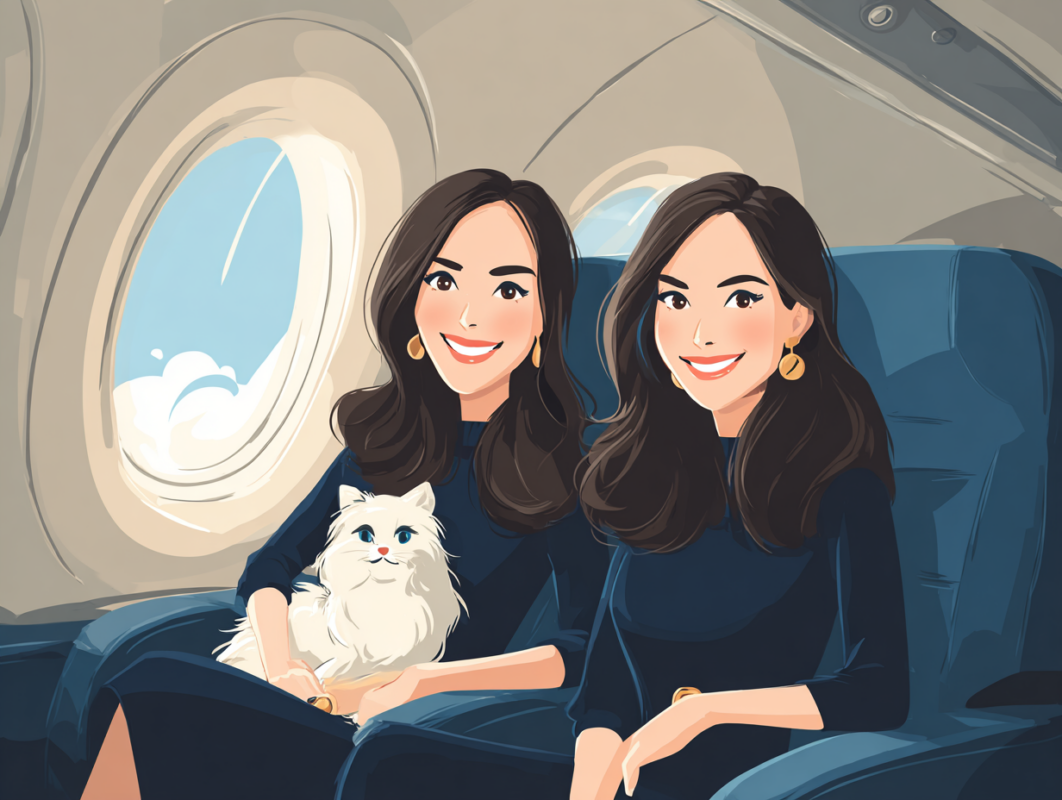
Kim Calla has a superpower. According to her credit card issuer, she can sit in two airline seats at the same time.
At least, that is the only logical conclusion to draw from her recent dispute with Capital One. Calla fell for an old travel scam and booked two identical seats for a flight to Lisbon on TAP Air Portugal.
Common sense suggests a passenger can’t fly twice on the same plane. But when she asked Capital One for help, the bank sided with the airline.
“I’m still asking how we could physically sit in two seats, same flight, same passport number,” Calla told me. “It’s a very confusing situation.”
It’s a cautionary tale for anyone who relies on credit card disputes to fix their travel nightmares. In an era where artificial intelligence often adjudicates financial disputes, unfortunately logic is the first casualty.
A panic purchase
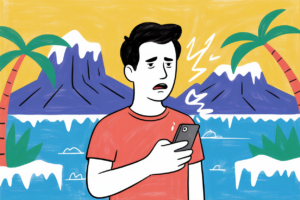
Calla’s trouble began with a Google search. Three days before her scheduled trip to Lisbon, she looked for TAP’s phone number to confirm her reservation. She dialed a number she found online, believing it was the airline.
It wasn’t.
“I was misled by someone posing as a TAP representative stating I had no tickets booked for that flight and I would need to rebook,” she says.
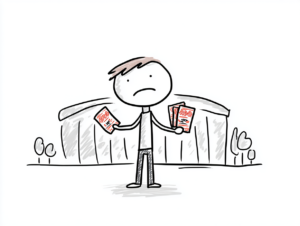
Calla had fallen for the fake call center scam. Her JetBlue Mastercard immediately flagged a fraudulent $16,935 charge, saving her from the initial theft. But the scammers had successfully terrified her. Believing she had no reservation and her trip was ruined, she went online and panic-bought two new tickets for $2,301 using her Capital One card.
Thirty minutes later, after the dust had settled, she realized her original tickets were valid. She called TAP to cancel the duplicate booking.
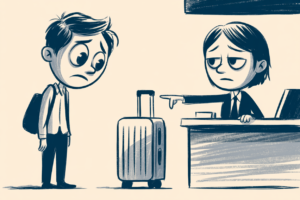
“They would not cancel the ones we purchased online,” she says. “We understand the cancellation policy, however, in this case, there should be exceptions to the rule.”
She’s right. But before we go there, let’s talk about those bogus call centers.
Are fake airline call centers still a thing?
Calla is the latest victim of a still widespread scam: fake airline call centers.
Here is how it works: Scammers purchase ads on search engines like Google or Bing. When you search for “Delta customer service” or “TAP Air Portugal change flight,” the fake number appears at the very top of the results, looking legitimate.
When you call, a “representative” answers. They sound professional. They ask for your booking reference and name. But then, the script flips. They claim your flight is canceled, or your ticket is invalid, or you owe a fee to “reactivate” your reservation.
Panic sets in. You hand over your credit card number. Sometimes they charge you a “service fee.” Sometimes, as in Calla’s case, they try to drain your card for thousands of dollars. And often, they manipulate you into making unnecessary purchases just to fix the problem they invented.
Fortunately, credit card companies are wising up to this problem. But are they smarter than the scammers?
I’m glad TAP refunded her, but I don’t see that Cap One has done anything wrong here. She bought two tickets, using her Cap One card, on TAP. It wasn’t a fraudulent purchase, and there’s no indication that TAP failed to provide her the services promised. The fact that she didn’t need those tickets isn’t a reason for Capital One to reverse the charges.
Read more insightful reader feedback. See all comments.
The breakdown of the chargeback
Calla did what most consumers do when a merchant refuses a refund for an obvious error: She filed a credit card dispute.
The Fair Credit Billing Act protects consumers against unauthorized charges and billing errors. A duplicate charge for the same service usually qualifies as a billing error.
She sent Capital One proof of the double booking, pointing out the absurdity of the situation.
(I’ve exercised restraint in writing about her case. I refuse to crack a joke about her cat or to claim her maiden name is Schrödinger. Let’s just say she doesn’t have any superpowers that we know of. There was only one Kim Calla.)
Capital One closed the case in favor of the airline.
Why? Likely because a human being never looked at it.
Banks are increasingly relying on AI and automated logic trees to handle the volume of chargeback requests. To an algorithm, this didn’t look like a mistake. It looked like a “nonrefundable” purchase that Calla made voluntarily. The AI sees a valid transaction code and a strict airline policy. It does not see that Calla can’t undergo mitosis and occupy seats 18B and 20B simultaneously.
Oh, dear. I did it, didn’t I?
The system works great for banks, which save money on staffing. It works poorly for humans like Calla, who was out $2,301.
Can this trip be saved?
Calla contacted my advocacy team as a last resort.
“I don’t expect you to advocate for us, but I’m hoping you will,” she wrote.
Our advocate, Dwayne Coward, contacted TAP Air Portugal on her behalf. He presented the paper trail, showing the duplicate tickets and the timeline of the scam.
It turns out, the wires had gotten crossed during the dispute process. A TAP representative explained that when Capital One initially opened the dispute, the money was temporarily removed from the account. TAP’s system saw this and assumed the refund had been processed.
When Capital One ruled against Calla and reinstated the charge, the credit card company didn’t notify it to fix the duplicate booking.
After our inquiry, TAP reviewed the case manually—something the credit card company should have done. It acknowledged the flight showed a duplicate booking.
Calla received a full refund.
How to win your next dispute
Calla’s case is a reminder that a credit card dispute is not a slam-dunk. Here is how to protect yourself:
- Don’t Google the airline’s number. The source of this misery was a fake help line. Always look for the contact number on the airline’s official app or your physical ticket confirmation. Our executive contacts are also reliable.
- Don’t panic-buy. Scammers rely on urgency. If someone tells you your flight is canceled, hang up and check the airline’s website directly.
- Appeal the AI decision. If a bank rejects your dispute with a form letter, don’t accept it. Request a manual review and send a physical letter to the billing inquiries address listed on your statement.
Calla says she learned a valuable lesson.
“I don’t care how seasoned you are, anyone can fall prey,” she says.
That’s especially true when the computers are in charge.

Have a question about this story? Tell us what happened — we read every comment.
Join the conversation