Cartoon of a distressed woman at an airport with a red suitcase, reaching toward her boarding pass as it floats away in a glowing puff, vanishing from her hands.

My wife’s airline ticket vanished, then Hawaiian Airlines charged me an extra $575

James Phillips did everything by the book. He booked two first-class, round-trip tickets through the Hawaiian Airlines app, one for himself and one for his wife Linda, purchased one after the other on the same credit card. Within minutes, he had written confirmations for both. Then they got to the Honolulu airport. The agent told him his ticket was fine, but Linda’s, confirmed and paid for, had simply been voided. No one could say why. Her seat had already been sold to someone else. To get her on a later flight, Phillips had to buy a brand-new ticket that cost $575 more than the one he had already paid. The airline first hinted his card had been declined, then tried to pin it on a third-party booking channel he had never used, even though he booked directly and had the confirmation to prove it. Who should eat the cost of a mistake the passenger did not make, and what it took to get a straight answer, is where this case turns.
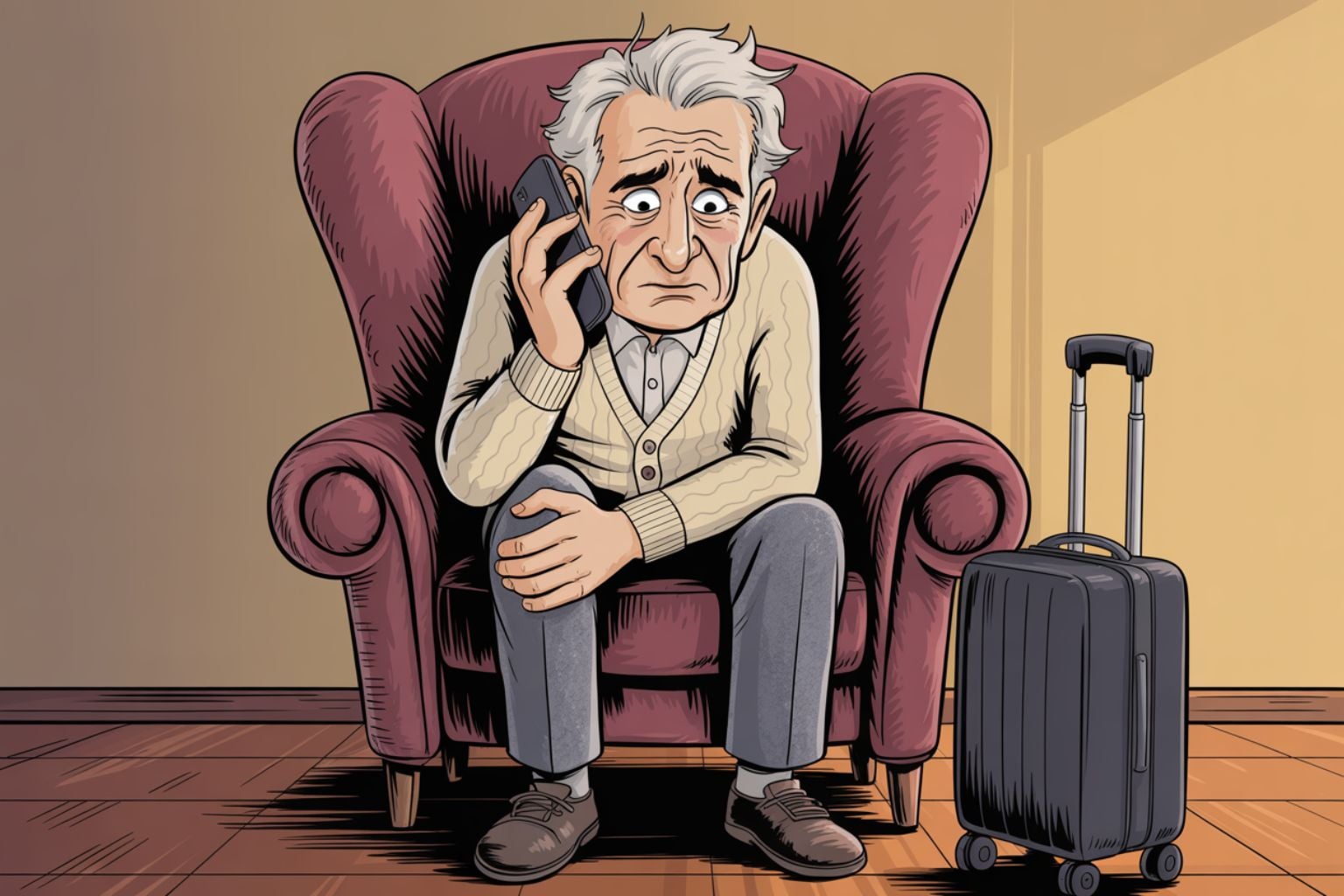

Editorial cartoon showing a worried elderly gray-haired man in a beige cardigan and gray trousers sitting in a dark red armchair with his hand on his sore right knee while holding a cell phone to his ear, with a black wheeled suitcase standing nearby on the hardwood floor, illustrating a senior traveler trying to secure a medical refund after a hip condition forced him to cancel a transatlantic flight

Why is ITA Airways making it impossible to get a medical refund?

Daniel Lichtblau booked two ITA Airways tickets from Chicago to Turin four months in advance. Shortly after booking, he learned he could not travel due to primary osteoarthritis in his right hip. He submitted a medical certificate from his orthopedic surgeon covering the travel dates and requested a refund for his ticket and a date change for his wife’s ticket. ITA Airways initially confirmed receipt of the documentation, then denied the refund claiming the certificate lacked a prognosis specifying the exact dates of inability to travel. The airline refused to specify what additional language was required. Under U.S. and state consumer protection laws, airlines must provide accurate guidance about their refund requirements.

Editorial illustration showing a thin man with brown hair and round glasses standing with arms crossed next to two orange roller suitcases on an airport tarmac with palm trees and a small white airplane visible in the background, illustrating a passenger left stranded after an airline schedule change forced him to buy replacement flights at his own expense

Aeromexico offered him a “free” flight change. Then it refused to give him one.

Jorrit Muller booked Aeromexico flight 335 from Puerto Vallarta to Orlando for a wedding. Three months before departure, Aeromexico shifted his flight one hour earlier, into the reception time. The airline notified him that if the new flight did not work, he could move to another at no additional cost. When he tried to use that offer through Aeromexico’s WhatsApp support, the available flights were operated by Delta as code-share. An agent told him to request a refund instead, then Aeromexico denied the refund. Under DOT rules, a significant change for international travel requires a schedule shift of six hours or more.