A Porter Airlines flight from Victoria, British Columbia, to Toronto never got off the ground last week because a child wouldn’t stay in a seat belt.
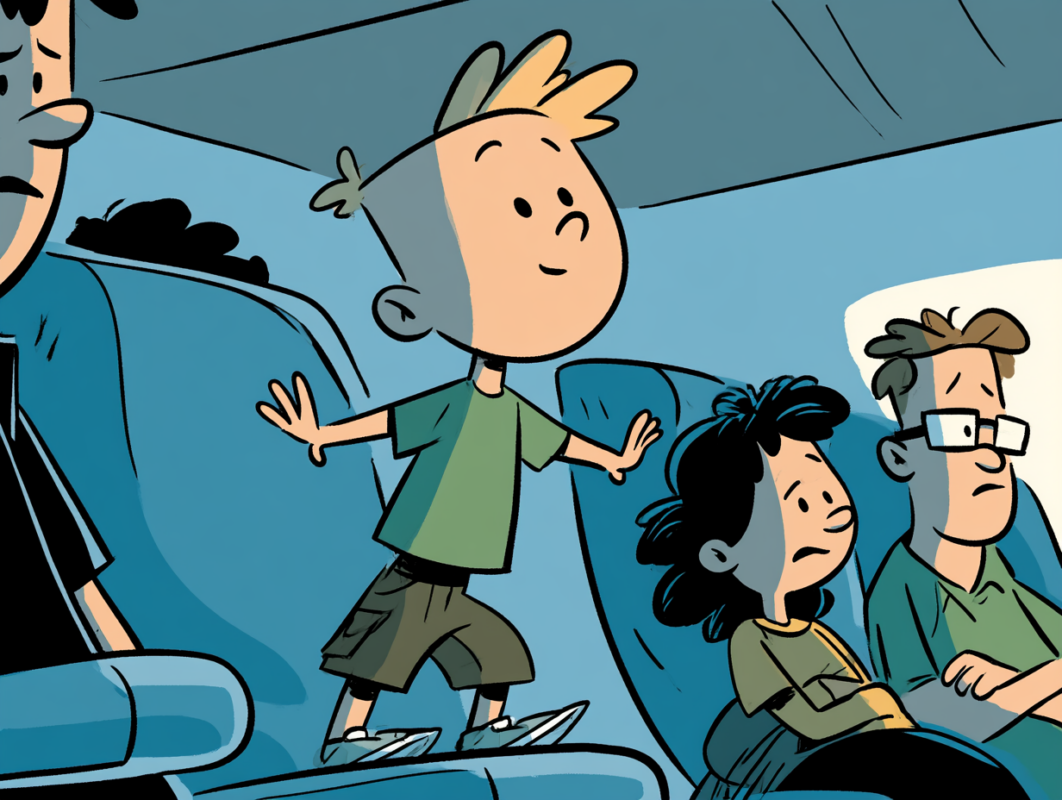
The plane had already pushed back when a crew member noticed the young passenger standing on the seat. Efforts by both a parent and the crew to get the child to comply were unsuccessful.
But if you’re looking for another viral baby-throws-a-tantrum-on-a-plane story, sorry.
This one was decidedly Canadian. Nobody defied a crew instruction and the parents weren’t met by police at the gate. By most accounts, a child got frightened in a pressurized metal tube full of strangers and simply stood up to see what was going on.
Did the airline overreact by canceling the flight? What other issues does this incident raise, and what should you do if you’re flying with a young child?
Before my child was 5 she had been to around 6 or 7 countries and had travelled to Europe several times. I don’t really know what the “airline” could have done differently, but, had it been my child, I would have strapped the seat belt firmly and then held them down so they couldn’t move during take off. Maybe enlisted the person on the other side of the child (spouse?) to also hold down the child. How sad that a parent can’t seem to control their child in such an obvious situation.
What happened on flight PD444?
Porter said the crew elected to return to the terminal because the aircraft couldn’t take off in an unsafe condition.
Brad Cicero, an airline spokesman, said removing only the child and the accompanying parent, retrieving their bags and refiling the paperwork would have taken too long. Victoria International’s airfield closes at 12:30 a.m. Everyone deplaned, and the airline canceled the flight.
Passenger Hillary Hertzberg told CBC the child got off around 11:30 p.m., after passengers had sat on the plane for close to an hour. Another passenger, Aryeh Kozuch, said the child wasn’t misbehaving, and described a kid who kept sliding out from under the straps to hide beneath the seat. The airline rebooked everyone on a flight for the following afternoon.
What Porter hasn’t said is which category it assigned the cancellation under Canada’s Air Passenger Protection Regulations. That answer decides whether anyone gets paid.
Why the airline says it had no choice
An unrestrained passenger is a loose object, and loose objects aren’t allowed to fly. Transport Canada requires everyone seated and belted for takeoff, and a crew that departs anyway is the crew that ends up in front of an inspector. Porter says it followed the rule and lost its runway window by doing so.
So the system worked as designed, resulting in a plane full of people sleeping in Victoria.
The rule nobody wants to touch
Porter’s own policy says an approved child restraint is mandatory for an infant under 2 who occupies a seat, and optional for a small child, depending on the manufacturer’s weight limits. An infant under 2 can also fly on a lap with no restraint. Porter doesn’t supply car seats or harnesses. You have to bring your own.
That isn’t a Porter problem. In the U.S., the Federal Aviation Administration says the safest place for a child under 2 is an approved restraint rather than your lap, then declines to require the seat. The National Transportation Safety Board has been asking for a mandate since 1979.
The Transportation Safety Board of Canada recommended mandatory child restraints after a 2012 crash in Sanikiluaq, Nunavut, killed a 6-month-old who wasn’t secured at all. Regulators on both sides of the border have given the same answer for decades: A mandate requires families to buy an extra ticket, so many of them drive instead, and driving has been known to kill more people.
The result is an industry that recommends a seat it sells you but provides no device to put in it—and then cancels your flight when the arrangement fails.
What to do before your next flight with a small child
- Buy the seat. A ticketed seat is the only way to use an approved restraint on board.
- Check the label. Porter accepts car seats certified to Canadian, U.S., Australian/New Zealand or UN ECE standards, and the label has to say the seat is approved for aircraft use.
- Look at a CARES harness. It’s approved for children at least a year old, 22 to 44 pounds and up to 40 inches tall, and it packs into a coat pocket.
- Leave the booster home. Boosters aren’t permitted on board, because the internal harness has been removed.
- Practice with the belt before you go. A taxiway is a bad place for a toddler to meet a seatbelt for the first time.
If your flight gets canceled for a reason the airline classifies as within its control, Canadian rules put standards of treatment and compensation on the table. Porter routes unresolved claims to the Canadian Transportation Agency. Ask for the classification in writing.
As of today, Porter hasn’t said which Air Passenger Protection Regulations category it assigned the flight. I reached out to the airline on Thursday to find out, but it hasn’t responded. I’ll update this post when it does.
If you said yes:
- Should the airline still owe the other passengers a hotel and compensation?
- Would you answer the same way if a mechanical problem had caused the delay?
If you said no:
- What should the crew have done with a child who couldn’t be secured?
- Would you pay a higher fare if airlines had to carry approved child restraints on board?
My take
I’ve flown with kids who refuse to stay in their seats—mine!—and it’s a terrible feeling of being both powerless and embarrassed. (Mind you, they’re in their 20s now, so the joke is on me.)
Airlines have spent 40 years warning regulators that a restraint mandate for young passengers would price families off airplanes. It’s a fair worry. It would carry more weight coming from an industry that doesn’t blink at charging you an extra $60 to sit next to your kid.
Your turn
Have you flown with a small child who wouldn’t stay buckled, or been stuck on a plane that couldn’t leave because of one? Our comments are open.

Have a question about this story? Tell us what happened — we read every comment.
Join the conversation