|
What's
elliott?
About elliott
Contact us
t o p i c s
Business
Commentary
Destinations
Help
Leisure
Technology
Vault
Read
back issues. Like what you
see? Now you can become an underwriter.
a l s o
Referring sites
Public relations
Visit Tripso
Home
s e a r c h
Find a story.
Copyright Elliott Publishing. All rights reserved. For more information,
call (305) 453-4781 or send e-mail
to us.
|
|
Flying High
Opinion · July 2, 2002
The newest poster
boys for airline terror have a strangely familiar face. Thomas Porter
Cloyd and Christopher Scott Hughes, the America West Airlines crewmembers
arrested this week for trying to fly an Airbus A319 from Miami to Phoenix
while legally drunk, are two decades older and a shade lighter than the
militant Islamists behind the Sept. 11 attacks.
Yet, like the Al Qaeda operatives who leveled the World Trade Center,
the crewmembers who were about to play fast and loose with the lives of
124 passengers did not act alone. Their instigators were the captains
of the airline industry, the executives who are so intoxicated by their
own power that they are oblivious to the danger they're placing their
companies, and perhaps even the nation's economy in.
Their drunken flying is the real problem.
How else can you describe the airline industry's determination to stop
legislative efforts to improve customer service? Instead of supporting
intelligent reforms that would have compelled them to disclose the lowest
ticket prices and to be upfront with passengers about delays and cancellations,
the carriers dispatched their influential lobbyists to Capitol Hill with
instructions to neutralize the bill. They did. As a compromise, the airlines
offered an initiative called "Customers First," a vaguely-worded promise
to do better that allowed them to continue operating with impunity.
Consider, also, what the carriers recently did to travel agents: they
fired them. Only an industry whose leaders are flying under the influence
is capable of laying off all of its loyal distributors at once. In March,
United Airlines announced that it would no longer pay base commissions
for tickets issued by travel agents in the United States. The other major
carriers quickly followed, citing the savings they would pocket by not
having to pay the incentives. What's so mystifying about the decision
is that the airlines assumed these travel retailers, who were responsible
for selling 75 percent of their tickets, would essentially continue working
for them for free. You'd have to be high to arrive at that conclusion.
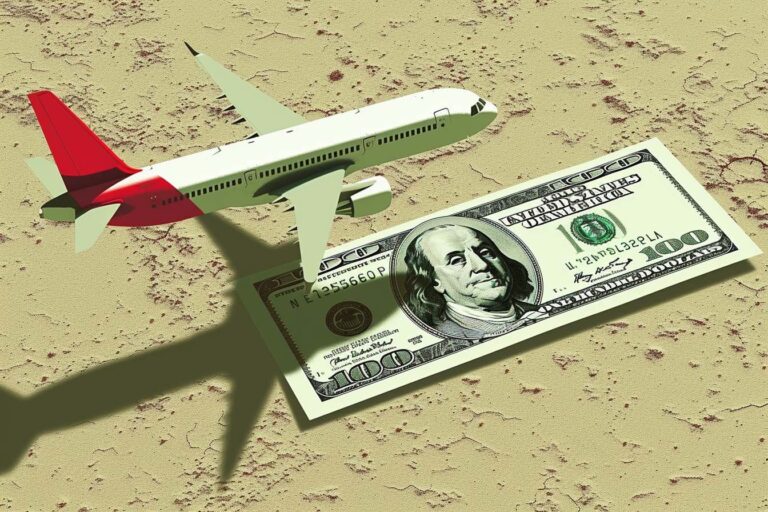
But perhaps the most arrogant act came after Sept. 11, when the entire
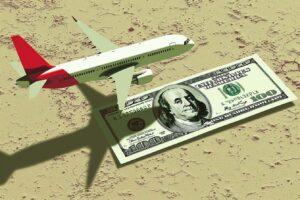
airline industry demanded and received a generous government bailout.
More than $2 billion went to the industry in compensation for the losses
it suffered in the terrorist attacks, and another $10 came in the form
of loan guarantees. There are few airline observers who believe that the
government aid was unneeded. But there are plenty of people - passengers
included - who think the airlines aren't doing enough in exchange for
it. That's especially true of the federal aid, for which the carriers
didn't have to do much more than continue flying long enough to cash the
check.
This could very well represent the height of their excesses - the industry's
belief that it could continue running inefficient, impersonal carriers
that are incapable of making money. That they couldn't fail, because the
government wouldn't let them.
Make no mistake, there's much more than the survival of the airline industry
at stake. Hundreds of thousands of airline employees either lost their
jobs or were furloughed last year and the airline industry lost more than
$7 billion. If one of the major carriers collapses, it could send dangerous
ripples through an already fragile economy.
All of which brings us back to the two pilots trying to fly their plane
while they're loaded. No one can deny that the airline executives who
are making the irrational decisions are role models for the crewmembers.
Is it unreasonable to assume that they thought they could steer their
actual aircraft in the same way the airline executives they look up to
fly their figurative planes? Recklessly. Arrogantly. Irresponsibly.
Maybe.
In the days to come, we'll be fixated on the rare problem of pilot intoxication.
But we'll miss the real story, which is that the airline chiefs have been
flying while inebriated, so to speak, for a while. And that they have
no plans to quit.
Christopher
Elliott is a travel commentator based in Key Largo, Fla. All e-mailed
questions may be edited, condensed or republished at the site's discretion.
|
|
|