What's the book corporate America doesn't want you to read? Find out now -- or you could get scammed.

Transportation Department steps up efforts in aviation consumer protection

January 17, 2010

Attention, air travelers: The government has your back.

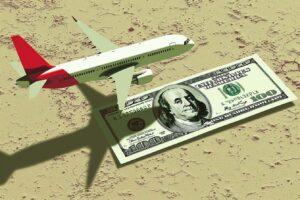
The Transportation Department’s airline cops have written big tickets in recent months, including a $375,000 fine against Spirit Airlines for, among other things, failing to comply with denied-boarding compensation rules, and a $600,000 fine against an online travel company called Ultimate Fares, for advertising violations.

“Aviation consumer protection is one of my top priorities, and we are taking a fresh look at the industry from that perspective,” Transportation Secretary Ray LaHood told me recently.


Even air travelers are impressed with the “new” Department of Transportation, which, if you listen to the buzz, appears to be protecting consumers for the first time in years.

Count passengers like G. Logan Jordan, a professor at Purdue University’s business school, among the converted. Northwest Airlines wanted to charge him for his checked luggage on a recent flight to Florida, even though he’d booked his ticket before the airline added a baggage fee. So he contacted DOT for help.

I’ll get to the rest of Jordan’s story in just a minute. But first, let me ask: Does the government really have your back? Or is this latest show of support for air travelers just a flight of fantasy?

I’m not unbiased on this issue. I’d like the government to take a more active role in helping travelers in general and air travelers in particular. Enforcing the existing consumer protection laws would not only make my job as an ombudsman easier, it would also improve the quality of your next flight, car rental, hotel stay or cruise immeasurably.

In other words, I want to believe.

Jordan now does. After Northwest repeatedly turned down his request to refund the luggage fees, he contacted DOT’s Aviation Consumer Protection Division. An agency employee picked up his case, asking Northwest whether it could review his request.

“Suddenly my logic was crystal clear to Northwest,” Jordan said. “Within a day, I had a refund.”

In fairness, my friends at DOT furnished me with the good professor’s name as an example of someone whom the agency helped. Not every ending is happy. Consider the case of Jan Hoeter, who missed a connection while flying from Pittsburgh to Hamburg, primarily because of a mechanical problem. He waited an extra five hours without any compensation from the carrier.

The agency’s response: Airlines do not guarantee their schedules. “DOT does not regulate this issue, and there is no law that requires airlines to provide you compensation unless it is an involuntary denied boarding,” a representative wrote to Hoeter.

How do you persuade the government to advocate for you? You can call 202-366-2220, contact DOT online (http://airconsumer.dot.gov) or write to the Aviation Consumer Protection Division, C-75, U.S. Department of Transportation, 1200 New Jersey Ave. SE, Washington, D.C. 20590. The division tries to respond “within one to three days,” said a spokesman, and brief, factual queries tend to be most effective.

The question of whether your call for help will do any good can’t be answered with anecdotes. So how about a few numbers? The Aviation Enforcement and Proceedings office had 40 staffers in 2009, more than twice the number it had a decade ago.

In terms of consent orders — the rough equivalent of citations issued to lawbreaking travel companies — the numbers haven’t notably gone up or down. A total of 256 orders have been issued since 2000, and except for that year, in which just nine tickets were written, they’ve fluctuated from a low of 20 (in 2001 and 2008) to a high of 38 in 2004. Last year, the office issued 30 consent orders.

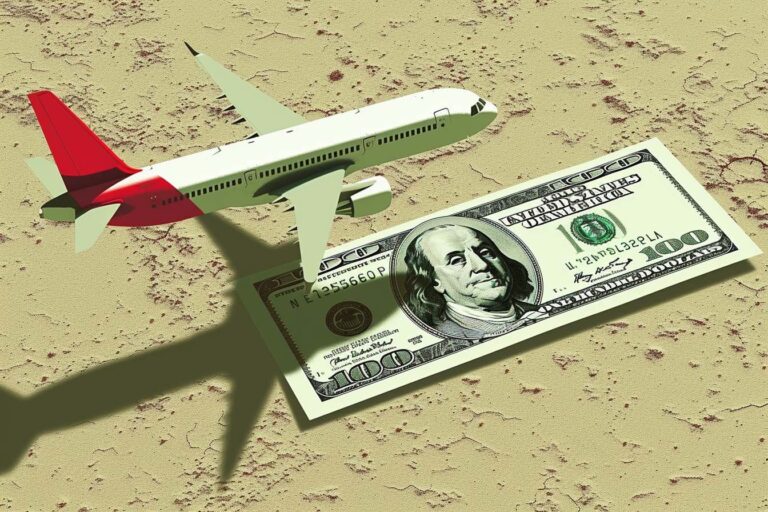
Perhaps the most telling number — and it’s one that undermines the agency’s argument that it has turned over a new leaf — is the amount in fines assessed by the Aviation Consumer Protection Division. The grand total, from 2000 to the present, is only $28 million. Bear in mind that on most consent orders, half the fine is forgiven if there are no future violations.

The fines are up and down year by year in a far more noticeable way, from a paltry $265,000 in 2000 — which, for those of you keeping track, and who think only Democrats care about consumer advocacy issues, was the last full year of Bill Clinton’s presidency — to a high of $8.1 million in 2003. Do I need to remind you who was in office that year? In 2009, the department assessed $2.5 million in fines.

That’s a respectable number, but hardly a record. The division fined airlines and other travel companies significantly more in 2004 and 2005 ($5.6 million and $3.9 million). To DOT’s credit, last year’s fines were the highest since 2005.

All this is a roundabout way of saying that although the Transportation Department can’t quite say that it’s back to fighting the good fight, it seems to be well on its way. But the agency needs to put some big numbers on the board in 2010 if it wants travelers to believe it.

For what it’s worth, I do.

(Photo: hsuyo/Flickr Creative Commons)

Christopher Elliott is the author of Scammed: How to Save Your Money and Find Better Service in a World of Schemes, Swindles, and Shady Deals. Critics have called it “eye-opening” and “inspiring” — it’ll “grab your attention and won’t let go.” Order your copy now on Amazon, Barnes & Noble or iTunes.

12 comments

  • Thomas

    I glad to see our government is increasing the fines, but where does that money go? The traveling public is bearing the brunt of the problems, why are they not receiving the compensation? How about this? 100 passengers stuck on the tarmac for 8 hours. $1000 per passenger per hour=$800K. The fine sounds about right to me.

  • John

    It wont do any good to bankrupt the airlines Thomas, then we’ll all be stuck taking amtrak or greyhound

  • Lisa S

    I completely agree with Thomas (above). Not only should DOT be increasing the fines, but the people who are suffering should see some of that money.

  • LeeAnne

    I’ve been shouting that out for years – ever since I went through my own nightmare tarmac delay. Where DOES the money go? Into the DOT’s budget? Or somewhere else? Who exactly is profiting off the backs of wronged passengers? When we are forced to sit on the tarmac for hours with no fresh air or even basic sustenance, it’s not exactly comforting to learn that somebody made hundreds of thousands of dollars off our suffering. Yeah, the offending company was punished — that’s great — but somebody got a nice fat windfall, while all we got was several hours of misery, screwed up travel plans, and not a penny in compensation.

    When it happened to me, I ended up LOSING money because our friend picking us up from the airport wasn’t able to adjust his schedule to come get us hours late, so I had to pay a couple hundred bucks to shuttle my family to our destination. To add insult to injury, I found out that there was a surprise party to welcome us…which apparently was fabulous, but was over by the time we got there. So what good does it do ME if the airline that did this to us got fined? Hey that’s great that they got their comeuppance, but…where’d the money go??? And why didn’t *I* get a piece of it?

    I can just see the shouts of joy from the government drones who justified their taxpayer-funded paychecks by wrangling several hundred grand out of the offending airline and into their department’s coffers. But in the meantime I’m out hundreds of dollars, we completely missed our own party, and my kids had panic attacks before boarding the flight home, out of fear of once again being denied food and water for hours.

    Yeah, those fine work out great for us, don’t they. :-/

  • Roxy

    Time for the government to invest in high speed light rail. The airlines keep fighting it because their business of 500ish mile flights would plummet, but hey, competition is good.

  • Justin

    Call me a skeptic but 375,000 is not a HUGE FINE. You are talking about airlines who might be losing money but still remain largely and heavily profitable. Matter of fact, the airlines know that these fines will be a slap on the wrist, compared to the revenue generated. How many simply pay and DON’T complain? It seems until we see MILLIONS of dollars in fines and HIGH dollar, airlines will continue their bad behavior.

    I once got stuck in Atlanta. Our flight from Dayton to Atlanta was delayed due to deicing. We arrived in Atlanta with 10-15 minutes to spare. Think our plane was there. Of course not. They sold off our seats on the expectation we wouldn’t arrive and it left EARLY! No kidding. Sat around for 6 hours while they TRIED to find a crew to cover a flight. After 4 crews agreeing than changing their minds, we finally made it.

    Seriously… If i ran a company like this.. inept and like a chicken with its head cut off.. I would not last. Somehow the airlines seem to continue going, simply because we have no other choices and the government does a dog and pony show. They PRETEND to care but actually due little to solve the problems. … Have never used Airtran since.

    Contintental so far and been happy as a clam.

  • Jo

    High speed light rail! YES!!! We could have had this a long time ago! Why does it take so long for anything to get done in this country??? I HATE flying. Train travel is so much more relaxing.

  • Ando

    I have a case pending in Federal court since June 2008….its in US Third Circuit…..monitor this case….Denied boarding INVOL from NWA….Kalick v. Northwest

  • Mona

    Instead of wondering where the fine money goes, have you thought about where the airlines get that money to begin with? This is just one more thing that the passengers end up paying out the wazoo that they just don’t itemize on the fare schedule.

  • Pingback: Transportation Department steps up efforts in aviation consumer … | Tailspin

  • Pingback: Is the Transportation Department about to turn up the heat on airlines?

  • Pingback: Is the government letting airlines off easy? Let’s do the math

Previous post:

Next post: