




Every now and then I come across a case that leaves me deeply conflicted. This is one of those times.
Joel Pomerantz is a doctor who did the right thing, no question about it. A passenger on a US Airways flight needed help, and he volunteered his services. What happened next — and what to do about it — is less clear.
I could use your help, readers.
Here’s what happened to Pomerantz in his own words. It’s a letter he wrote to US Airways after the flight:
On July 12, 2009, I was traveling with my wife, Judy, in celebration of her 50th birthday on USAirways FLIGHT #718 (Philadelphia to Rome), SEATS 20G & 20H. I had just fallen asleep when I was interrupted by an emergency call from the crew asking for a doctor to assist with one of your passengers.
I am a practicing physician in Philadelphia. After hearing the flight crew’s request for medical assistance, I volunteered to help.
The passenger had overdosed on prescription sleeping medication. Interestingly enough, the flight attendants had allowed her to consume at least four bottles of wine and at least one small bottle of liquor. She attempted to breach the door of the flight crew and to turn on her cell phone to call the President of the United States to tell him she was being kidnapped. In addition, she exhibited other psychotic delusions.
Simultaneous to asking me for my medical help, the flight crew initiated a call to the ground. The on ground physician thought that the plane should make an emergency landing. I believe we were over Scotland or Ireland at the time.
I assessed the passenger, examined her and treated her in the air. I started forced hydration, induced vomiting, and sat with her for the next four hours until we landed. I personally monitored her vital signs every 15 minutes. This was done in conjunction with the on ground physician.
During the same time I was treating the passenger, I was asked to attend to another passenger who was experiencing headaches and dizziness due to increased blood pressure. I reviewed her medications, examined her, and treated her blood pressure (240/140) with extra doses of her medication.
When we landed, I was offered a bottle of champagne for my services. Neither my wife nor I drink. No alternate compensation (meal, transportation, or hotel voucher) was offered to us.
Although I am astonished that the passenger could be allowed to consume so much alcohol while in flight and/or be allowed to board the plane in such condition, I am a physician and personally feel a duty to respond to such situation as occurred on our flight to Italy to celebrate my wife’s birthday. That being said our “vacation flight” was interrupted to our detriment by non-sleep and exhaustion upon arrival in Italy. In reality, our long-awaited vacation, (I work about 80 hours a week and had planned to relax) which was supposed to begin on arrival after a nights sleep on the plane, did not start until the next day after we had caught up on our rest.
In consideration of the above and as some compensation for my assistance, I would ask for two round trip tickets for a trip that my wife and I are planning in October 2009 to Tel Aviv, Israel.
You might think that this request is a bit bold. After all, no one at US Airways had agreed to compensate me for my services as I was rendering them. And, I did not ask for compensation at the time. However, it is one thing to spend five minutes checking up on a person who needs medical assistance. It is quite another to spend four hours in the middle of the night being a psychotic passenger’s personal physician.
The physician on the ground had strongly recommended an emergency landing. However, due to my treatment of the patient, the flight continued without interruption to its final destination. If I had not been on board and if I had not offered to help, Flight #718 would most likely have been forced to make an emergency landing. I saved US Airways the cost of this emergency landing, the re-booking of passengers, the cost of feeding them, and probably the cost of accommodating some of them in hotels. This savings does not include the costs of missed connections once they arrived in Rome.
Thank you in advance for your anticipated prompt attention to this matter. It was my pleasure to be of service to US Airways.
So Pomerantz’s vacation didn’t get off to a good start. He had to work on his flight to Rome and was offered a bottle of champagne, even though he doesn’t drink. Does he deserve more? Yes, I think so.
Here’s what US Airways said:
Thank you for contacting Customer Relations at US Airways. It is our pleasure to be writing this letter to you, and to have an opportunity to express our heartfelt thanks for the compassion you showed in a recent medical emergency on July 12, 2009 onboard US Airways Flight 0718.
Although these situations are rare, it is always of great comfort to our crew and passengers when individuals with integrity, experience and commitment to the medical profession offer their assistance. You exemplified these admirable characteristics and we commend you.
Regrettably, we are unable to honor your request for two free round trip tickets as US Airways does not use the requested means of compensation as reparation for the flight incident that occurred. In addition, we are unable to offer compensation unto your wife.
In appreciation, we have authorized a $175.00 Electronic Travel With Us Voucher(s) (E-TUV). Your E-TUV is valid toward the purchase of travel on US Airways. Please be advised the E-TUV is not valid with Internet bookings and must be redeemed within one year from the date of this letter.
In other words, thanks, you’re a hero, but we’re not giving you and your wife a free ticket. How about a $175 voucher?
So here’s where I’m conflicted: I can see the doctor’s point. He saved US Airways a lot of money by volunteering his services on that flight.
At the same time, he volunteered his services, meaning that there was an assumption he would work without pay.
The bottle of champagne was not an appropriate token of the airline’s appreciation, given that Pomerantz doesn’t drink. The voucher was a more fitting gesture, but it was one he shouldn’t have had to ask for.
Should I send this case back to US Airways? Did the airline fail to reward Pomerantz for his services? Or did it do enough?
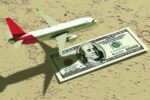
(Photo: superciliousness/Flickr Creative Commons)
✓ Get the latest travel news, tips and commentary from Elliott’s E-Mail, the subversive newsletter from industry gadfly Christopher Elliott. You’ll travel like a pro. Sign up here. It’s free.

Sign up for my 


{ 1 trackback }
{ 210 comments… read them below or add one }
← Previous Comments
As a physician myself, I feel embarrassed that one of my colleagues would cheapen our profession (or any profession) so much as to demand compensation for an activity that he VOLUNTEERED for. Not to mention that he had benefited from it himself by preventing a potential diversion. What would have happened to his vacation, if the plane had been diverted? While I sympathize with him that he may have lost a day of vacation due to lack on rest on the plane, it likely would have been even worse had the plane been diverted.
Many of my physician colleagues volunteer their time and provide free medical treatment to the needy and uninsured, but Dr. Pomerantz apparently feels his volunteering should come with a price tag?
Sounds like those that needed the medical attention should be buying the doctor a ticket. If the airline had diverted the good doctor would have been even less rested.
His points are logical and well conceived. I have no doubt he saved the airline $1000’s in ancillerary costs. The problem really occurs if this Dr. is faced with another medical emergency in the future he may be disinclined to help. I do not think Mr. Elliott should involve himself but the Dr. was perfectly entitled to make the request. I am not a doctor and I personally would find a demand reprehensible but a request is another matter. If folks looked at this unemotionally I believe the airline would offer more than $175. But not everyone can see the forest from the trees. I won’t assume this doctor does not volunteer services as he did answer the call for help.
@Jim:
Oh, come on, let’s be serious here. It’s highly unlikely that the passenger was needy or uninsured (although he or she may be in need of some counseling on drug and alcohol abuse — remember, both were apparently consumed in excess). It’s silly to imply Dr. P. would ignore the plight of those who are truly in need, often through no fault of their own.
The facts are that US (at the corporate level) did nothing to recognize the doctor’s heroics… and that he was so put off by it that he wrote his letter. His specific request may well have been over the top, but the fact that they failed to take any initiative to recognize him despite his saving THEM tens of thousands of dollars (let alone a passenger they had not properly cared for, by serving excessive alcohol) would be sufficient to motivate most reasonable people to react the same as he did.
I seriously doubt that his sole motivation for helping was to avoid his own delay. But since neither of us was there, we’ll never know for sure. What we do know are the facts as presented, and the overwhelming consensus here seems to be that while his request may have been excessive, US’s trashy recognition reflects that they are, indeed, a lousy airline ruled by as inept a management team as can be found in any business, let alone an airline. My condolences to not only the doctor, but to the many decent US Airways employees on the front lines who try their best despite their leaders.
While the doctor volunteered his services initially, he could not have known that he would be required to work for the remainder of the flight. I would certainly contact US Airways on the doctor’s behalf to reconsider their paltry offer.
I personally think that his request is excessive. However, the airline’s attitude is just as repulsive. I think that there is a middle ground somewhere in between that is fair for both sides. I would put the ball back in the airline’s court, and see what can be worked out.
Did the airline ever get back to you Chris? I’d say two weeks is sufficient time for them to either craft a reply or decide to ignore and just hope the matter drops.
If he’s an MD, he signed on years ago via the Hippocratic Oath. If he has expectations, outrageous or not, he is setting himself up for disappointment, especially from US Airways. (Maybe he should have thought twice about volunteering if he “expected” compensation.) It’s his profession to “practice medicine”.
I live in the PHL area and hardly EVER fly US Airways. I could offer up 3 more examples of how US Airways is NOT inclined to be generous with ANY sort of compensation for any of their passengers.
Don’t do something thoughtful or considerate if you want to be “paid” for it, bottom line. A “Thank You” should be enough in the real world.
Without considering the “philosophical” matters related to this matter, I basically see two major “issues” here…
*US Airways should have proactively provided some sort of appreciation to the Dr. without him having to “ask”.
*It is unreasonable for the Dr. to ask for TLV vouchers as consideration in this matter. October is the high holidays season in Israel and the monetary value of 2 non-stop PHL-TLV vouchers during that time would be approximately $2,500. That said, US Airways was probably kind of “cheap” in its offer of $175, something in the range of $300 seems more appropriate – but $2,500 is rather exaggerated in my opinion.
Any updates on this? Did the good doctor ever hear back from US Airways? Did he have to buy his tickets for the October trip?
← Previous Comments