



What's the book corporate America doesn't want you to read? Find out now -- or you could get scammed.

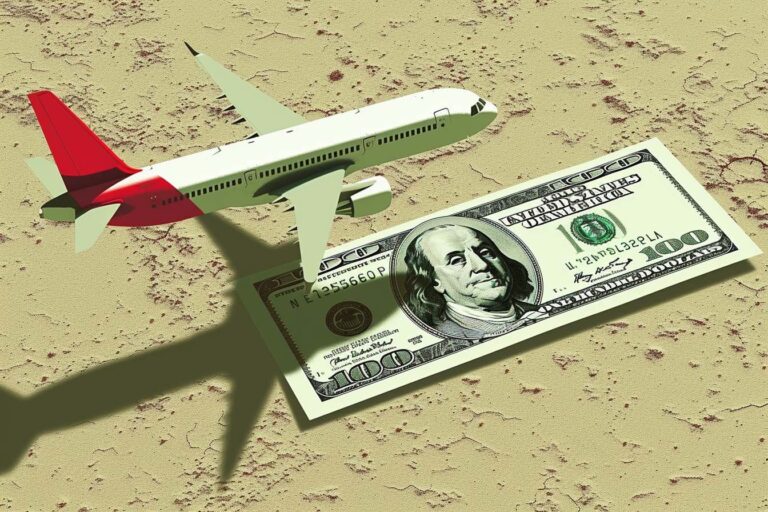
The airline industry is profitable again — really profitable — and here’s one reason why

July 21, 2010

In a word: fees. Lots and lots of fees.

Alright, it isn’t just the baggage surcharges and change fees. Airlines have cut capacity and raised fares, and business travelers are coming back after a long absence. But with United Airlines posting its first profit in three years and Delta recording its best quarter ever, you’ve gotta wonder — how much do fees and surcharges have to do with it?

We have an answer, thanks to Amadeus and IdeaWorks. Disclosed ancillary revenue activity from the world’s airlines jumped 43 percent to $13.5 billion in 2009, compared to a year before, they reported.

The ranking reveals United, America, Delta, Qantas, and Ryanair as top overall ancillary revenue producers for 2009.


For 2009, United has taken the lead in finding so-called “ancillary” revenues. US Airways and Alaska Airlines have joined the list.

As a percentage of revenue, however, two smaller American carriers — Allegiant and Spirit — take the top spot. Something to remember the next time you see a “bargain” fare on one of those airlines.

Another carrier to watch: Alaska Airlines, which is getting more than 13 percent of its revenues from fees.

On a per-passenger basis, Allegiant again socks it to passengers, racking in more than $30 per passenger. Spirit holds its own, while United and American pull in some impressive numbers.

And hey, look who made the per-passenger list for 2009? That’s right, Alaska.

Watch that airline.

I’m deeply troubled by these numbers. There’s no doubt that ancillary pricing is forcing passengers to spend more for their tickets than they normally would — almost certainly more than they intended to when they first booked the ticket.

The airline industry insists that a la carte pricing gives its customers choices. Indeed. The only choice we’re really being offered is: American Express, MasterCard or Visa.

The sooner this nonsense is regulated by the government, the better it will be for all of us.

(Photo: Gisela Giardino/Flickr Creative Commons)

Christopher Elliott is the author of Scammed: How to Save Your Money and Find Better Service in a World of Schemes, Swindles, and Shady Deals. Critics have called it “eye-opening” and “inspiring” — it’ll “grab your attention and won’t let go.” Order your copy now on Amazon, Barnes & Noble or iTunes.

39 comments

  • http://www.airlinereporter.com David Parker Brown

    Hey Chris!

    You are making it sound like airlines are forcing people to pay these fees. Yes the baggage fees can be a little tricky sometimes and I constantly forget what airlines charge what, but no one is forcing the other fees of better seating or food on the flight.

    The fees are out there, passengers should know about them and if they don’t like them, don’t pay them or fly another airline. The thing is passengers complain about them, but they still pay them…this isn’t the airline’s fault.

    David

  • http://www.pulsefactors.com Malcolm Kaufman

    Really? I get that they may be profitable on fees, but I question the really part. Sooner or later those fees are going to get trashed by the consuming public and then what do the airlines do for money – real money? As an industry, they have never ever earned money combined. probably don’t now, notwithstanding their fees.

  • cjr

    “but no one is forcing the other fees of better seating or food on the flight.”

    And no one is better a better flight even when they are paying these fees. In fact, one could argue that service continues to get worse, even as we pay more.

    So, why are we really paying these fees, and why are folks like you defending them?

  • Jake

    You forgot the other choice…fly Southwest, as I do. Can’t remember the last fee I had to pay them.

  • Bill

    I know the fees are annoying. I’d rather pay for a ticket that included whatever I was doing, rather than pay for baggage, food, etc. separately. However, I do pay the fees. If an airline makes an upgrade offer to me and the price appears reasonable, I also pay for that.

    It is in everyone’s interest to have the airlines make money.

  • http://www.advantagetravel.co.uk Murray Harrold

    Good piece. There is no unbundling of fares at all. There is a (partially successful?) attempt to gain extra revenue, having offered coach class passengers unviably low fares, but no unbundling. If there was true unbundling – a la carte – fares – why should this be restricted to coach? Let’s say I travel trans-atlantic in business or first class – why do I have to pay for 30kg of luggage, food, drinks, a special check-in and of course, use of lounges – I don’t need all that, so how much do I save on my fare? Nada!

    Of course, what goes around, comes around. Who will be the first airline to offer a higher fare using the marketing tag: “We include 2 bags, a meal, a drink – nothing extra to pay!”

  • Martin Toher

    “The sooner this nonsense is regulated by the government, the better it will be for all of us.” I doubt it. You, of all people, should know the best way to exert pressure on the airlines is by being informed and exploiting competition between them. Information gathering and dissemination is your job and why people subscribe to your blog. You’re asking the government to step in and solve the problem for you? So you don’t have to gather information and disseminate it anymore?

  • David Z

    Who will be the first airline to offer a higher fare using the marketing tag: “We include 2 bags, a meal, a drink – nothing extra to pay!”

    Frontier Airlines? Not exactly they market it, but how they display their fares and what comes with it on their web site is probably a start.

  • Liz

    One thing to note is that United’s Economy plus is most likely included in those numbers. Yes, you can say it’s a “fee” but you are getting a superior product for your money – it’s not a situation where they airline is charging for something that was previously free.

  • http://Pelillas04@aol.com P.J. Zornosa

    I can certainly belive the figures as far as these airlines’ profit surge.

    Yes, flights are chock full and the number of them continues to dwindle. Interestingly enough, American has now switched to using commuter (regional jets) for much of their “regular service”. In fact, 71% of the flights to/from PHL to ORD are now these commuter jets. AND they have the gall to designate the first few rows as “First Class” with mixed nuts and occaisional meales “served on china” commencing 1 July 2010.

    Has anyone over the height of 5’9″ tried to use the ONLY lavatory in the rear of the aircraft? In addition, 50% of their ORD flights to/from EWR are ALSO these same American Eagle regional jets.

    I checked their direct competitors. One has 8 flights per day on the same route and only ONE is a regional jet. The other has 7 and not one is a regional jet. (I didn’t even check with Southwest.)

    AA fares have risen dramatically in the last 9 months and the flights are packed full. Plus, more significantly, their fares tend to be higher than their competitors. Oh, and one must pay for their upgrades on American, earning 4 (four) 500 mile upgrades for every 10K miles flown at $30 each.

    I am a Platinum Member, (Lifetime Gold) but I really don’t like paying substantially more to fly AA when they use these aircraft so profusely. Maybe they’re on the waiting list for the B-787??

    I am seriously considering switching my airline loyalty.

  • Tom Thornton

    Just fly Southwest whenever and wherever possible. You always know what you are going to get and how much you are going to pay for it.

  • Arizona Road Warrior

    The reality is that fares are lower today than what they were 10, 15 and 20 years ago. My first flight was in 1984 on US Airways between IND and LGA. I still have the receipt for that ticket. The fare was $ 325 (it was purchased three weeks before departure). On June 28, 2010, I did a quick fare search on Orbitz (departing on 7/19 and returning on 7/22) and the fares were:

    Delta: $ 185
    US: $ 186
    Air Tran: $ 192
    CO: $ 223
    UA: $ 223
    AA: $ 332
    Midwest: $ 333
    Frontier: $ 389
    Southwest: $ 445.80 (see note)

    Note: I went to the Southwest website since Southwest does NOT allow its fares to be included in most if not all of these fare search engines, the cheapest fare was $ $445.80.

    Since 1984, inflation was been 85% based upon the consumer price index (Source: http://www.inflationdata.com). The $ 325 fare should be $ 601.25 (325 x 1.85) today. It is my guess that the these $ 185 and $ 186 flights from Delta and US Airways are at least 80% capacity if not more. If these flights were priced at $ 600, it is my guess that these flights will be ‘empty’ and a lot of people will be driving to New York from Indiana as well as not having 9 airlines servicing this route.

    Why are the fares lowers and why are there fees?

    Why have the airlines started these fees? It is simple the legacy airlines need to generate additional revenues because it isn’t a level playing field for legacy airlines (since they are the ones that charges most of these fees). The playing field is slanted to the discounters like Southwest Airlines, Jet Blue, etc.

    Southwest and the other discounters have ‘cherry-picked’ their routes…choosing their routes with the most passengers to fly. They have avoided some airports with high fees and costs. JetBlue got a great financing deal from Airbus so Airbus could get market share from Boeing. If I was starting up an airline, I will do the same thing that Southwest and JetBlue have done.

    One common statement that is used on why Southwest Airlines has been profitable is that they have one type of plane (737) so their maintenance costs are lower. That is true but why do they have only 737s? Why are there are no Dash-4s, Dash-8s, CRJs, etc. in their fleet and the answer is very simple, they don’t serve the small and medium airports where only the turbo-props and CRJs can land or the volume of passengers can only fill a Dash-4, Dash-8, CRJ, etc.

    Recently, I flew into the Tri-City Airport (PSC) in Pasco, WA. This airport is served by Allegiant, Delta, Horizon and United plus code share flights by AA, CO and US Airways. If you want to have a level playing field, there should be legislation that will tax or penalize the other airlines such as Southwest, JetBlue, AirTran, etc. that doesn’t fly to PSC; serve the small markets, etc.

    If the legacy airlines actually charge the real costs plus a marginal ROI for them, the fares to PSC and other small airports will be very expensive. Another option for the legacy airlines is to stop flying these ‘unprofitable’ flights to these small airports. I have been told twice by two different airline executives which I don’t know to be true or not but the revenues from the popular routes subsides the flights to these small markets.

    The legacy airlines had to slash the fares on the popular routes to compete with Southwest, JetBlue, etc. on price which what the majority of the US public want, no wonder why all of the legacy airlines have filed for Chapter 11 as least one time in the past ten years.

    I am happy that the UA, US and DL are making profits. Isn’t that the purpose of a company to make a profit?

    If the airlines will charge fares that will cover their costs as well as a marginal ROI, these fees will disappear and the level of service will return. The bottom line is that the American public has voted with their wallets…they don’t want service or don’t want to pay for it…I call it the big box syndrome.

  • Clifw

    Qantas? I fly them between the US and Australia fairly regularly and there don’t seem to be any additional fees beyond the idiotic ‘booking fee’. The only thing I can think of is that it is in fact the ‘Qantas Group’ which includes their low cost, and very successful, airline Jetstar. From memory, Jetstar charges the usual baggage, meal, good seat fees.

  • KF

    As annoying as the fees are, I don’t see them disappearing anytime soon – at least not without government encouragement (such as ruling that they are subject to tax). At this point, I’m not willing to pay more to include luggage fees and food – I can travel with a single carry-on and I’d rather bring my own food since I can bring something healthy and that, as a vegetarian, I can actually eat.

    I do see in the coming months airlines getting even more creative with fees – I’m waiting for stricter carry-on rules or for them to start charging for gate-checked bags (with certain exceptions like RJs).

  • Vanessa

    I agree with Liz, United’s economy plus is extremely affordable and comes in handy on those long flights where the regular consumer can’t afford 1st class. Absolutely fantastic actually for the long haul.
    In all other instances I still fly Southwest.. free baggage, free snacks, typically great flight attendants, decent seating, and good prices.

  • Ken

    Man, this used to be a pretty good site I enjoyed reading every day. If someone ran into a situation that previously was showcased on this site, they would have possible options (learned from this website) to go on. Now, it has apparently become a “let’s just whine and complain about everything the airlines do” site.

    Mr. Elliott: May I please ask that you go back to writing the previous way and stop riling up the lemmings and jumping on the airline complaint band wagon? I know you want to increase your readership, but come on. Why come to this website if it’s just going to be complaint fest? What does that accomplish?

  • Arizona Road Warrior

    @ Jake – “You forgot the other choice…fly Southwest, as I do. Can’t remember the last fee I had to pay them.”
    - – - – - – - – - — – - — -
    That is correct but their fares are higher. In the fare example (IND to LGA) that I listed, a passenger will have to encounter $ 260 in fees for their round trip flight before the fare from Southwest will be equal to the fares from DL and US.

    Southwest used the ‘Wal-Mart’ marketing. They entered a new market with super low fares making everyone believes that their fares are the lowest. Then they raised their fares. The reason why Southwest does NOT allow its fares to be included in most if not all of these fare search engines is that they don’t want the public to know that their fares are not the lowest.

    It has been my experiences that the fares for US are lower than the fares for Southwest here in PHX. For example, I have an upcoming trip to BOS…the fare on US from PHX to BOS is $ 454 and the fare on Southwest is $ 555…a difference of $ 101.

    I am sure that Southwest, in some markets, their fares are lower.

  • Chris in NC

    We fly WN as much as possible. But the cold hard truth is that WN doesn’t fly everywhere that we need to go and their schedules aren’t always favorable. This fall, we need to fly from ECB to SEA, and our choices are DL and WN. Price is about the same, but with DL it is a 1 stop (via ATL), whereas WN is 2 stops (via BNA and LAS). WN takes 4 extra hours. Which flight do you think we will take? BTW, DL has the actual lower base fair but will be higher than WN when all fees are taken into account (luggage fees vs Early Bird option)

  • Sice

    @AZ Road Warrior

    Great points and some that just plain haven’t made sense to me for the past 15 years or more. Flights from SLC – JFK/LGA in 1990 were high $300s. Today I can fly SLC – JFK for $319 (fare + tax, no fees in that number). Those numbers just plain don’t make sense and I should be paying more for my ticket. The reason airlines are closer to the Black again is that they’ve found a new revenue source in fees. Good for them for making it happen, to stay in business. It’s just a shame that they were forced to ‘unbundle’ the fees in order to justify them.

    And Southwest/JetBlue/other discount carriers are just a joke, their prices are at least on par with the major carriers in most markets if not more expensive. Yet somehow they’ve managed to stay on the public’s good side while the legacy airlines haven’t. It’s just a scam, offering less at the same price.

  • Arizona Road Warrior

    @ Murray Harrold – “Of course, what goes around, comes around. Who will be the first airline to offer a higher fare using the marketing tag: “We include 2 bags, a meal, a drink – nothing extra to pay!””
    - – - – - — – - – - – - – - – - – -
    The US public has already voted with their wallets. They want low fares or the illusion of low fares (in the case of Southwest and fees from the legacy airlines).

  • Lisa S

    I love flying Southwest. I just wish they went more places while accepting that they have strong, practical, business and marketing plans that help them remain profitable and therefore avoid markets that are unprofitable. It is true that Southwest is not in tiny local markets, but I believe it is not true that legacy carriers MUST offer 5 flights a day in and out of tiny markets. Surely one flight in and one flight out is reasonable in a market that doesn’t have many people, say Pierre, South Dakota. I would think the use of regional jets should offset the cost somewhat–that is the trade off when one chooses to live in a tiny town. I don’t mind being corrected and would appreciate the comments of anyone who would like to tell me I am mistaken. I used to fly Sioux Falls to ORD a lot and half the flights were canceled for mechanical reasons, which generally meant that they didn’t have enough people. I suggested to the agents that they reduce the number of flights and at least let people know they can count on those scheduled flights flying.

    I have not experienced the gross price differences that Arizona Road Warrior has described, although I have noticed that occassionally Southwest is more expensive. Southwest has always been cheaper than AA when I fly from Chicago to Austin, Texas. I get to check in my bags, I know what to expect, and the flight attendants have generally been very nice. When I flew Southwest from Chicago to Seattle, they were also the cheapest and provided all the junk food I could eat for the entire flight (not necessarily a selling point, but at least one didn’t starve). Once again, I knew what to expect.

    I think the real complaint is that when I am quoted a price, I want to know immediately what the full cost is. Thus, websites should let you indicate the flight you want to take, the dates of the flight, the number of pieces of luggage you want to check in, if you will have one carry-on, and any other things for which there are fees. Then when you click on the button you receive the full cost on the next screen. This allows you to compare apples to apples and save time by not wasting it pursuing a fare that seem cheaper than another airline only to find out that over $100 has been added to the price because of all the ancillary fees which requires you to go back or start all over again to find that fare that seemed $50 more expensive but was actually $50 cheaper. It is that simple. The question is why won’t the airlines do it? I mean, if they really want to claim they provide customer service, it seems pretty obvious to me that such a website provides customer service and anything else does not. Other wise, fraudulent claims of customer service should not be allowed.

  • Jason

    I agree with posts above:
    - In my experience Southwest’s fares are always higher if you take long haul or connecting flight or the same as other carrier if it’s a short non stop flight.
    - United has fees on many optional products like Economy Plus or Premier Line which are probably included in the stats and those fees are ‘absolutely’ oprional: it is not like you have to check bags, you don’t have to have an extra leg room, in fact many airlines don’t even offer extra leg room.

  • Arizona Road Warrior

    @ Lisa S – “I have not experienced the gross price differences that Arizona Road Warrior has described, although I have noticed that occassionally Southwest is more expensive. Southwest has always been cheaper than AA when I fly from Chicago to Austin, Texas.”
    - – - – - – - – - – - – - – - – -
    It is unfair to compare fares for flights from MDW to AUS with fares for flights from ORD to AUS. To be fair, you need to compare fares from the airlines from the same airports. Airports have different fees, taxes, surcharges, gate fees, etc. that are charged to the airlines…which these fees, taxes, etc. are passed on the consumer in the fares.

  • Arizona Road Warrior

    @ Lisa S – “I have not experienced the gross price differences that Arizona Road Warrior has described, although I have noticed that occassionally Southwest is more expensive.”
    - – - – - – - – - – - – — – – - –
    It depends upon your ‘hometown’ airport. When I check fares…the fares from US is lower than WN 80% of the time and the remaining 20% of the time, the fares are the same or within $ 20 or less.

    Southwest does NOT allow its fares to be included in most if not all of the various airfare search engines…this has been their policy for a very long time (years before the legacy airlines started their fees for checked luggage, etc.). Why? Their fares are NOT the lowest as they have marketed themselves.

  • David

    Qantas sure do charge fees on their US routes. Five round-trip tickets from Washington DC to Australia that my family and I will use next week cost $1,100 each plus $175 each for fees, taxes, and charges (not all of which goes to Qantas) and then a ridiculous $160 per ticket fuel surcharge that entirely goes to Qantas.

  • Clifw

    “Qantas sure do charge fees on their US routes. Five round-trip tickets from Washington DC to Australia that my family and I will use next week cost $1,100 each plus $175 each for fees, taxes, and charges (not all of which goes to Qantas) and then a ridiculous $160 per ticket fuel surcharge that entirely goes to Qantas”

    I wasn’t clear enough- I meant the ancillary fees you see flying domestically in the US such as preferred seating, meals, checking baggage, using the armrest etc etc… The additional airport levies, Sept 11 surcharge, booking fees I think are common to every airline (the booking fee is perhaps the one that irks me the most- charging me a fee to use your service).

  • Steve

    @ArizonaRoadWarrior: While your point that Southwest is not always the cheapest is valid, I have to take issue with some of the data you’re using that implies that Southwest is comparatively more expensive than it is. One of the (many) reasons for differences in price among carriers is that they all have different hubs/focus cities. In the case of IND-LGA, neither city is a focus city for Southwest, and in fact you can’t get a direct flight from IND to LGA. That is definitely one route where I probably wouldn’t look to Southwest as my first option.

    However, a route like MDW-BWI is probably a better representation. Using arbitrary dates of 8/16-8/19, you can fly round-trip for as low as $241.40 (and most flights are nonstop). The next lowest price from MDW is $260 on AirTran, which does not include bags and I think does not include a seat assignment (yes, you don’t get a seat assignment on Southwest, but you can check in early and get a good place in line; an airline that assigns seats but makes you pay extra to pick one is worse, IMHO)…and that includes a plane change in Atlanta. Even if I had no bags to check, Southwest would be the clear choice there. Looking at ORD-BWI, there are some nonstops on United and American that are competitive, but still slightly more expensive ($257, plus bag fees).

    Also, your point that comparing MDW and ORD isn’t quite apples-to-apples because of different operating costs makes sense, but from a passenger’s standpoint I don’t care: all that matters to me is which one is more convenient and/or pleasant to travel through. I can tell you that the fact that Southwest only flies out of MDW is viewed as a definite plus by most of my family and friends who live in Chicago; in fact, I have a couple relatives who will only fly out of MDW even when ORD is cheaper specifically because they hate ORD so much. (I can’t say I really blame them…the only significant delays I’ve ever experienced have been at ORD).

    @Sice: “And Southwest/JetBlue/other discount carriers are just a joke, their prices are at least on par with the major carriers in most markets if not more expensive. Yet somehow they’ve managed to stay on the public’s good side while the legacy airlines haven’t. It’s just a scam, offering less at the same price.”

    Less than what, exactly? I have not flown JetBlue, but from my perspective, Southwest offers me *more* than the legacy carriers. They at least still pass out snacks and a couple of checked bags are free. IMHO, the interiors of their planes are comparable to coach on the legacy carriers. I’d say as long as Southwest is the same price or less than the competition (which is true some of the time, but not all of the time), it’s hard to argue they’re a poorer value.

    As for why they’ve got a better reputation than the legacy carriers, I think a lot of it just comes down to the way they run their business. One of the intangibles to consider is that every single ticket you buy on Southwest can be changed with zero penalty; you can’t get a refund on their cheap fares but you *can* apply 100% of what you paid to another flight within the next year, with no change fee. Contrast that with the punitive change fees that the legacy airlines charge. I can tell you that is one of the biggest factors that influences my decision to fly Southwest, when I do: the fact that I can lock in a fare even if I’m not 100% sure about what flight I want, or even if I’m going to take the trip at all. My wife and I planned to fly to the East Coast for a trip in May, but decided it would be more fun to take a road trip out there instead: if we’d booked on any other carrier, that would have been a pricey change of plans. Instead, we just cancelled those tickets and applied the money toward tickets for a wedding we’re attending in Arizona in the fall.

  • Aaron Gold

    David:

    >You are making it sound like airlines are forcing people to pay these fees.

    Of course they are. I think a lot of casual travelers book a fare on Expedia or some similar site. They buy the cheapest fare, then get to the airport only to discover that their two suitcases will cost $50 to bring along. What are they going to do – not travel? Nope, they’ll just pay up. They are being forced to pay the fees. And because they are casual travelers, who cares if they are upset? They aren’t a regular source of income.

    I’m a business traveler, and most regular business travelers (like me) have status on American and are exempt from things like baggage fees. See, the airlines don’t try to gouge the people who are in the know. They go after the easy marks.

    The concept of “a la carte” pricing is ridiculous. If I am going on vacation, and I book an airline ticket to Florida, it’s perfectly reasonable to expect that I’m going to bring a suitcase – probably a big one. The idea that my airfare doesn’t cover my luggage is, if you’ll pardon the term, nucking futs. That’s like buying a toaster and discovering it doesn’t have a cord or buying a chair and finding out it doesn’t have legs.

    I’m with Chris. This is bait-and-switch pricing designed solely to get better rankings in the sort-by-fare categories on travel web sites. The legality is questionable. It’s time for the government to step in.

    Good for you, Chris, for running this story.

    Aaron

  • Aaron Gold

    Correction to the above… most business travelers have status on some airline. Not just American. :)

  • thomas h white

    As far as cherry picking routes and not going to smaller airports is concerned, it only makes sense. If you are a new airline that wasn’t formed through a regulated environment and you were going to choose where to launch, would you go to a city where you might be profitable or to east podunk where only 3 people a day fly? That being said, the legacy carriers are leaving the east podunk city’s on a regular basis. Many of the small city’s here in New York have lost their carriers and many city’s across the country are being forced to subsidize the airline service they still recieve. Therefore, those city’s are still profitable from the standpoint of the airline. If they weren’t they wouldn’t be going there. Actually, I think the only routes they choose to maintain that aren’t profitable are the ones where they are in cutthroat competition and are trying to drive out a startup airline.

  • rootie

    I understand how passengers want everything included in their fare,no fees. But why should the business man who is going to NY only for the day, have a bag fee included in his fare versus the girls who each have two bags going for a long weekend? Or passengers who choose not to eat an airline meal ,and bring their own? Its kinda like going to the movies, you are paying for your seat! Want popcorn? Buy some! Want a drink? Buy one! Its not included in the price of your ticket. Why should I have to pay for your bags and meal, if I am only going somewhere overnite and bring a carryon? You purchase what you need!

  • Steve

    @Aaron: “The concept of “a la carte” pricing is ridiculous. If I am going on vacation, and I book an airline ticket to Florida, it’s perfectly reasonable to expect that I’m going to bring a suitcase – probably a big one. The idea that my airfare doesn’t cover my luggage is, if you’ll pardon the term, nucking futs.”

    I both agree and disagree with you. I think we all agree that it’s reasonable to put some kind of a limit on how much baggage is included in the price of a ticket; I have never heard someone argue that buying an airline ticket should mean they can pack their entire wardrobe into 10 suitcases and bring it along for free. ;) Thus, the question becomes: at what number of bags should we draw the line between “an integral part of the ticket that virtually everyone uses” and “something extra.” IMHO, that line for me is the carry-on. I don’t think airlines should be allowed to charge extra for bringing a single carry-on onboard, like Spirit is doing. Personally, I see nothing wrong with assessing fees for each checked bag, because I would argue that not everyone wants or needs to check a bag. I never check a bag on business trips, for instance; I don’t need to and it expedites getting through the airport. I also don’t check bags on short (2-3 night) leisure trips, for the same reason: I can fit everything I need into a carry-on.

    So then what it comes down to is: do I want to pay extra for something I may or may not use, even if I choose not to use it? My answer to that is a resounding “no.” Given the choice between a $25 fare increase and a $25 fee for checking a bag, I’ll take the fee every time, because I don’t check a bag every time so I come out ahead.

    I think what was lost on a lot of people when airlines started charging fees for baggage is that it’s not like the airlines had no other option. Nothing legally prevents them from raising fares. Frankly, I think they’d have been smarter to just quietly raise fares, rather than introducing a new fee; I bet it would have provoked less of a backlash.

  • cjr

    “You purchase what you need!”

    Except, that isn’t really happening here. This isn’t ‘unbundling’ or ‘a la carte’ pricing. It’s simply tacking on fees to things that used to be included in the fare, while the fare itself hasn’t changed.

  • Steve

    “Except, that isn’t really happening here. This isn’t ‘unbundling’ or ‘a la carte’ pricing. It’s simply tacking on fees to things that used to be included in the fare, while the fare itself hasn’t changed.”

    No…you’re arguing that it can’t be called unbundling if the base fare stays the same and does not decrease. That ignores the possibility that if they had not introduced the fees, they might have increased the base fare. Given the dire financial straits of the airlines, I don’t think it’s a stretch to suggest that.

    For simplicity’s sake, let’s say a ticket used to cost $300. Now it costs $300, but you have to pay $25 to check a bag. On the face of it, that doesn’t look like unbundling, that looks like a price increase. But what if that fee enabled the airlines to hold the base fare at $300, rather than increasing it to $325?

    Given my example above, is it worse to pay $325 or $300 + $25? Mathematically, they’re the same. Moreover, unless you check a bag every single time you fly, the $300 + $25 fare is in fact the better option.

  • Gabe

    Shame on the airlines for making a profit and find a business model that works. And shame on them for doing it in a way that gives some customers an opportunity to avoid additional charges and take advantage of lower fares. We need to make sure that the airlines continue taking heavy losses, so that Congress will have no choice but to re-regulate.

    You fail to mention that profitable companies are good for consumers, because they have money to invest in quality and infrastructure. But I have a suspicion you just think the CEOs will take it all.

  • http://nodebtworldtravel.com brian

    I hate additional fees, but if this allows more airlines to keep flying and maintain healthy competition in the airline industry, I’ve got to be for them. Really pains me to say that.

  • Pingback: Travel News Update (7/28/10) | Tales Told From The Road

  • JlhPsi55

    The airline industry is a government supported oligopoly that effectively  killed competition and raised fares substantially over the past five years.  The choice given the traveling public is “high” higher” and “highest of all”. If there was real competition, baggage fees would have disappeared after the price of jet fuel dropped in 2009.

  • JlhPsi55

    The airline industry is a government supported oligopoly that effectively  killed competition and raised fares substantially over the past five years.  The choice given the traveling public is “high” higher” and “highest of all”. If there was real competition, baggage fees would have disappeared after the price of jet fuel dropped in 2009.

Previous post:

Next post: