



For years, airlines have had an unofficial policy for passengers who couldn’t make it to the airport because of circumstances beyond their control. The so-called “flat tire” rule allowed them to be booked on the next available flight at no extra charge.
It looks as if the air has been taken out of that rule.
During the last few days, in response to a recent Troubleshooter column, I’ve heard from numerous readers who say that airlines are taking a hard line on people who don’t show up in time for their flights.
A few travelers reported being stuck in long check-in lines (even though they arrived at the airport hours before their departure) missing their flights, and having to buy new tickets.
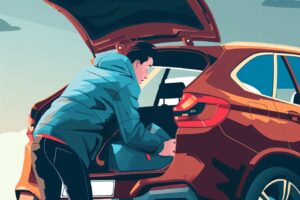
Others had the proverbial flat tire on their way to the airport, and were told “tough luck” when they tried to check in. They, too, had to buy new tickets.
Getting rid of the flat tire rule makes perfect sense if you’re an airline shareholder. It makes no sense if you’re an airline passenger.
The airline contract of carriage allows a carrier to cancel a flight when there are circumstances beyond its control — any thing from bad weather to political unrest. Airline passengers are pretty understanding when that happens. After all, you shouldn’t be responsible for something you can’t control.
Should airlines be similarly compassionate when their passengers can’t make a flight?
Well, the good news is that since the “flat tire” rule was never part of the contract of carriage, it’s still possible to invoke it. Ticket agents have a lot of latitude when it comes to enforcing policy (written or not). Here’s what I would do:
Call before you get to the airport. If you’re delayed, call your airline immediately and let it know what has happened to you. It’s better than waiting until you get to the airport. An agent might be able to rebook you on the phone without charging you more.
Mind the paperwork. If a ticket agent says he or she will put you on the next flight, be sure to get it in writing. A boarding pass, record locator or even a printout is better than a potentially empty promise to take care of you. Having something in writing strengthens your case if there’s ever a billing dispute.
Appeal to their sense of decency. You aren’t trying to get around any of the rules when you’ve had a flat tire. You’re asking the airline to cut you a break. Passengers give airlines a break all the time when a flight can’t leave because of bad weather or a mechanical snafu. A polite request could put you on the next flight out without having to pay extra.
Good luck. And here’s hoping you don’t have any flat tires on your way to the airport.
Note: As many of you know, I’m a big fan of Joe Brancatelli’s writings about the airline industry. His debut column in Conde Nast’s Portfolio magazine is now available online, and it’s definitely worth a read. I’m actually delighted that Portfolio appears to have dedicated some of its resources to business travel, a segment of the industry that is more or less overlooked by the mainstream media.
✓ Get the latest travel news, tips and commentary from Elliott’s E-Mail, the subversive newsletter from industry gadfly Christopher Elliott. You’ll travel like a pro. Sign up here. It’s free.

Sign up for my 


{ 2 comments… read them below or add one }
My wife broke her leg April 5, our first day of a ten-day trip from Anchorage to Quito, Ecuador. Her leg was placed in a restraining device that kept it straight, and she was instructed to keep it elevated as much as possible.
I called Continental Airlines soon after to arrange bulkhead seats for our return trip, and I was told all would be changed. Our return trip consisted of three segments: Quito-Houston, Houston – Denver, and Denver – Anchorage, on April 14. But when they printed our boarding passes in Quito, the Denver-Anchorage segment still had us in our original seats. I didn’t realize when I called (my omission), and nobody told me, that the final segment was on United. The Continental agent in Quito informed us that she was unable to change our seats for the United flight, and that we could do that upon our arrival at the United gate in Denver.
Our flights via Continental went fine; everyone both on and off the plane was solicitous and helpful. Our bulkhead seats, while not perfect, provided enough legroom to keep her leg straight.
When we got to the gate in Denver, the agent refused to change our seats, instead summoning an “SD”, apparently some kind of manager, at my insistence. Eric Scott (“With two t’s. Make sure you get it right,” he snidely instructed me as I wrote down his name) was pompous, arrogant, and entirely unhelpful. He claimed the flight was full and refused to do anything but put us on a different flight, if there even was one. At this point my wife was exhausted and sobbing, which affected him not a bit. Finally, another supervisor “found” her a bulkhead seat, but United sells these seats as “Premium Coach” or somesuch, so I had to fork over $54 to seat her there. He then miraculously “found” me another seat next to her and ahem, generously waived the fee for my seat. When we boarded the plane, there was still insufficient leg room for her, which was slightly alleviated by angling her leg into my seat space.
It turns out the plane was only about 60-70% full (our six bulkhead seats had only two others sitting in them), and they could have easily given my wife an entire row to use by only moving one or two people. It would have cost United not a penny, and it would have earned our eternal goodwill.
The final insult came from the flight attendant, who insisted that she not use her backpack to prop up her leg during takeoff and threatened to call the captain if we did not comply. We did; she and I spent the next fifteen minutes holding her leg up with her hands.
United Airlines broke no regulations, except for an unwritten one: treat people with kindness and compassion. Were this an isolated incident involving only one rude employee, I could write it off as such. But the behavior we encountered was pervasive; an indication of a culture of indifference, if not outright hostility, to the traveling public. I have flown many different airlines, and I have never encountered behavior like this. Furthermore, this was not the first incident of this nature I have had with United. I don’t know why or how this corporate culture evolved, but I can only hope that if it doesn’t change, the traveling public will go elsewhere, and United will be forced to change its culture or go bankrupt.
Maybe the airlines think too many people have heard of the “flat tire rule” and are abusing it (i.e. making up a story). I’ve been lucky enough never to have had a flat tire or other emergency on the way to the airport. But here’s an idea if you ever do have one, and happen to have a camera phone or digital camera with you: Take a picture of yourself next to the flat tire! If the agent sees it (with you obviously wearing today’s clothes) they might be more likely to believe you!