


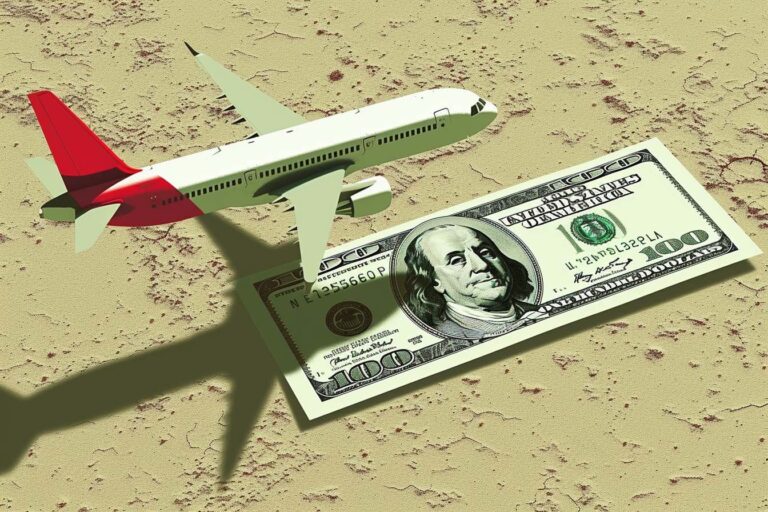
Word that United Airlines is mulling a plan to price its tickets a-la-carte — called “Bare Fares” — probably comes as no surprise to frequent air travelers. After all, United was among the airlines that tried to persuade the Department of Transportation to allow it to quote an incomplete fare (minus certain expenses, such as insurance) earlier this year, a request that was denied.
But United’s stripped-down airfares, which look a little bit like a me-too after Air Canada’s recent re-do of it ticket options, are unlikely to fly, and not just because they’ll confuse air travelers.
No, it’s because funny math on airline tickets has been tried before.
Remember net fares?
In 1994, Kevin Mitchell introduced an idea to strip airline tickets of frequent flier miles, overrides, and commissions. His company, the Business Travel Contractors Corporation, was way ahead of its time, as I noted then. But only one carrier, Southwest Airlines, signed on to the proposal.
BTCC died but was later reborn as the Business Travel Coalition, a lobbying group for corporate travel interests.
The problem with net fares, bare fares, nude fares, or whatever you call them, is that air travelers don’t want to have to whip out a calculator when they’re buying a ticket.
They want to know how much they’re going to pay for their ticket, and they want to know what it will include without having to read the fine print or consulting an astrologer.
Bare fares are certainly creative, I’ll give you that. They’ll generate a lot of money for United and Air Canada, no doubt about it.
But they also expose how disconnected airlines are from their customers.
✓ Get the latest travel news, tips and commentary from Elliott’s E-Mail, the subversive newsletter from industry gadfly Christopher Elliott. You’ll travel like a pro. Sign up here. It’s free.

Sign up for my