
Minimalist editorial cartoon of a frustrated couple sitting back-to-back on a single gray suitcase in an airport terminal with their heads bowed, both staring at their smartphones with downcast expressions, surrounded by blurred information board signs in the background, illustrating a Cleveland couple's stressful return trip from Greece after Delta and Sky Express cascading booking errors forced them to pay for a new $435 ticket and recheck their luggage in Athens

An agent error turns a simple return trip into a costly odyssey. Will Delta fix it?

Robert Kempke and his wife flew from Cleveland to Athens with a return through Thessaloniki on Sky Express, a regional carrier booked through Delta. Their online check-in for the Sky Express flight was blocked because of a 185 euro balance linked to a duplicate third passenger using Kempke’s name. Sky Express refused to fix the error and told them Delta had to correct it. The Delta agent canceled and rebooked the Sky Express segment, which collapsed the entire return itinerary including the Athens to Cleveland flight. The Kempkes paid $435 for a new Aegean Air ticket to Athens, retrieved and rechecked their luggage, and rebooked their U.S. return. Delta initially promised a refund plus 12 euros for seat assignments, then denied the claim. Under U.S. Department of Transportation rules, passengers are entitled to automatic and prompt refunds for flights canceled by the airline. EU Regulation 261/2004 applies to flights within or departing the European Union.
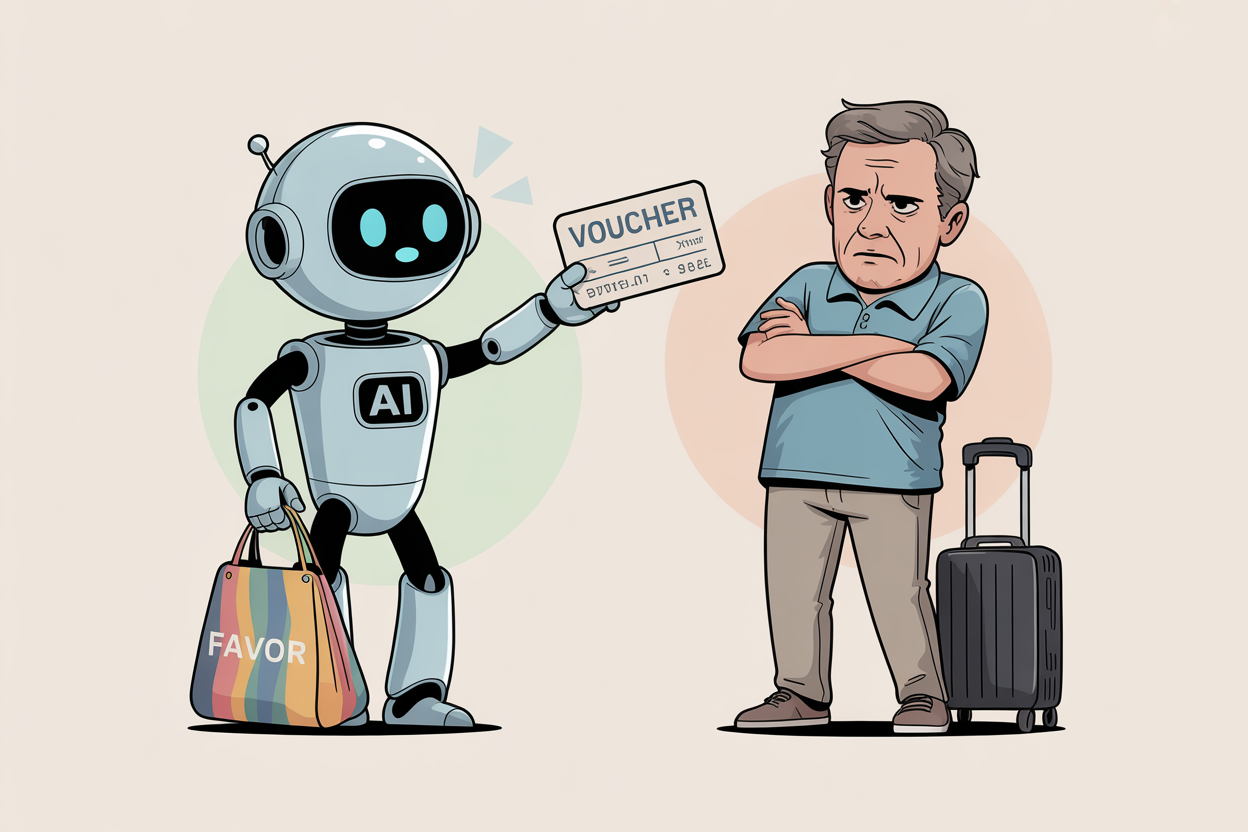
Editorial cartoon illustration of a smiling AI robot with "AI" labeled on its chest holding out a paper voucher in one hand and a colorful striped "Favor" shopping bag in the other, while a frustrated middle-aged man in a blue polo shirt stands with arms crossed next to his black rolling suitcase refusing the offer, illustrating how travel companies use automated systems to push customers into accepting vouchers instead of legally required cash refunds

Why are travel companies replacing real refunds with “coupon justice”?

Travel companies are increasingly replacing cash refunds with vouchers and goodwill credits when flights cancel, hotel rooms fail, and rental cars run out of vehicles. The practice exploded after the pandemic when companies pivoted to vouchers to hoard cash. The actual redemption rate for travel vouchers is below 10 percent, meaning a 90 percent chance the credit goes unused and the company keeps your money entirely. Under U.S. Department of Transportation rules, airlines must provide prompt refunds to your original form of payment when they cancel flights or make significant schedule changes. Airlines offering only vouchers without a genuine cash option violate these legal obligations. Hotels and online booking sites operate in a legal gray zone with few hard rules governing refund practices.

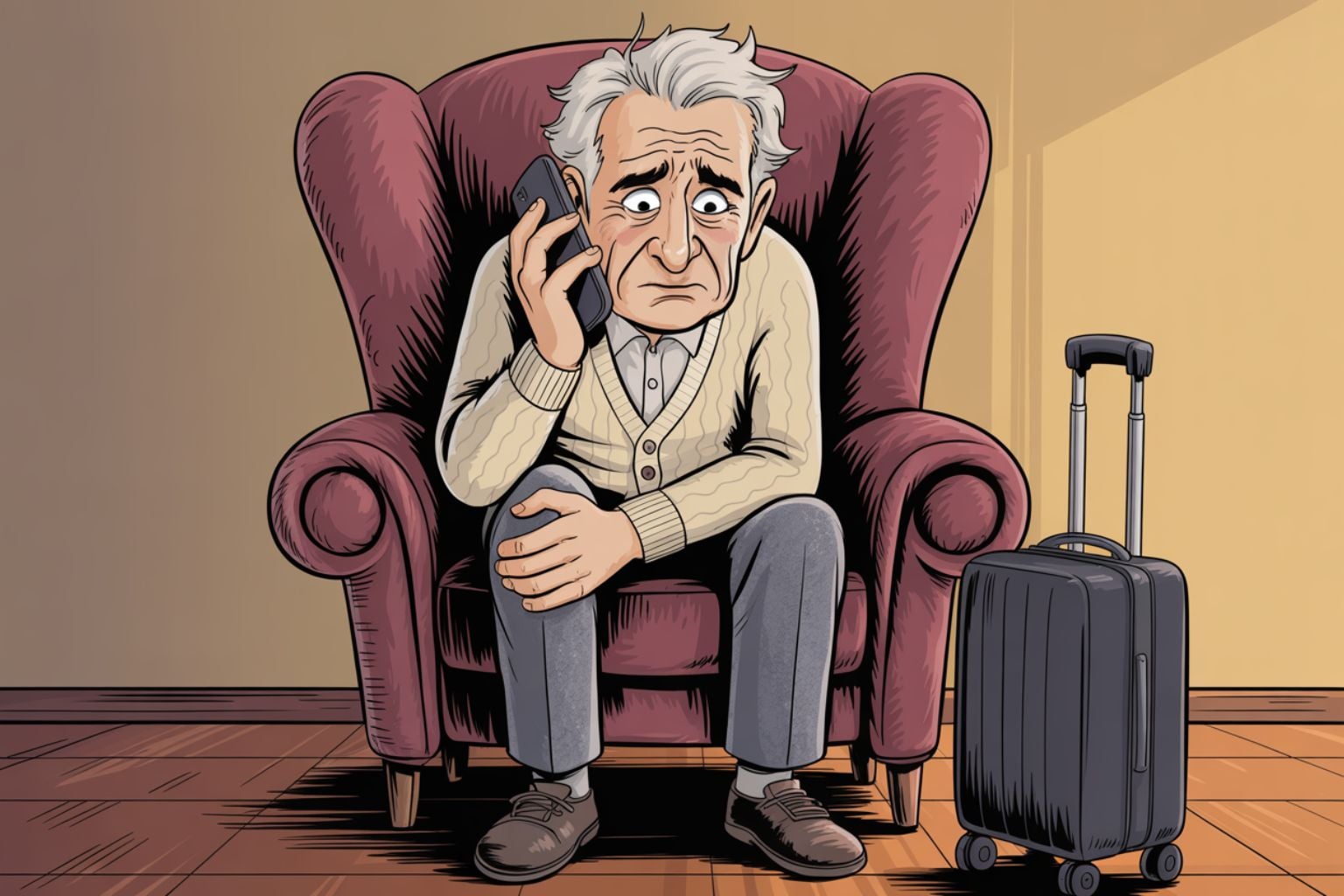
Editorial cartoon showing a worried elderly gray-haired man in a beige cardigan and gray trousers sitting in a dark red armchair with his hand on his sore right knee while holding a cell phone to his ear, with a black wheeled suitcase standing nearby on the hardwood floor, illustrating a senior traveler trying to secure a medical refund after a hip condition forced him to cancel a transatlantic flight

Why is ITA Airways making it impossible to get a medical refund?

Daniel Lichtblau booked two ITA Airways tickets from Chicago to Turin four months in advance. Shortly after booking, he learned he could not travel due to primary osteoarthritis in his right hip. He submitted a medical certificate from his orthopedic surgeon covering the travel dates and requested a refund for his ticket and a date change for his wife’s ticket. ITA Airways initially confirmed receipt of the documentation, then denied the refund claiming the certificate lacked a prognosis specifying the exact dates of inability to travel. The airline refused to specify what additional language was required. Under U.S. and state consumer protection laws, airlines must provide accurate guidance about their refund requirements.