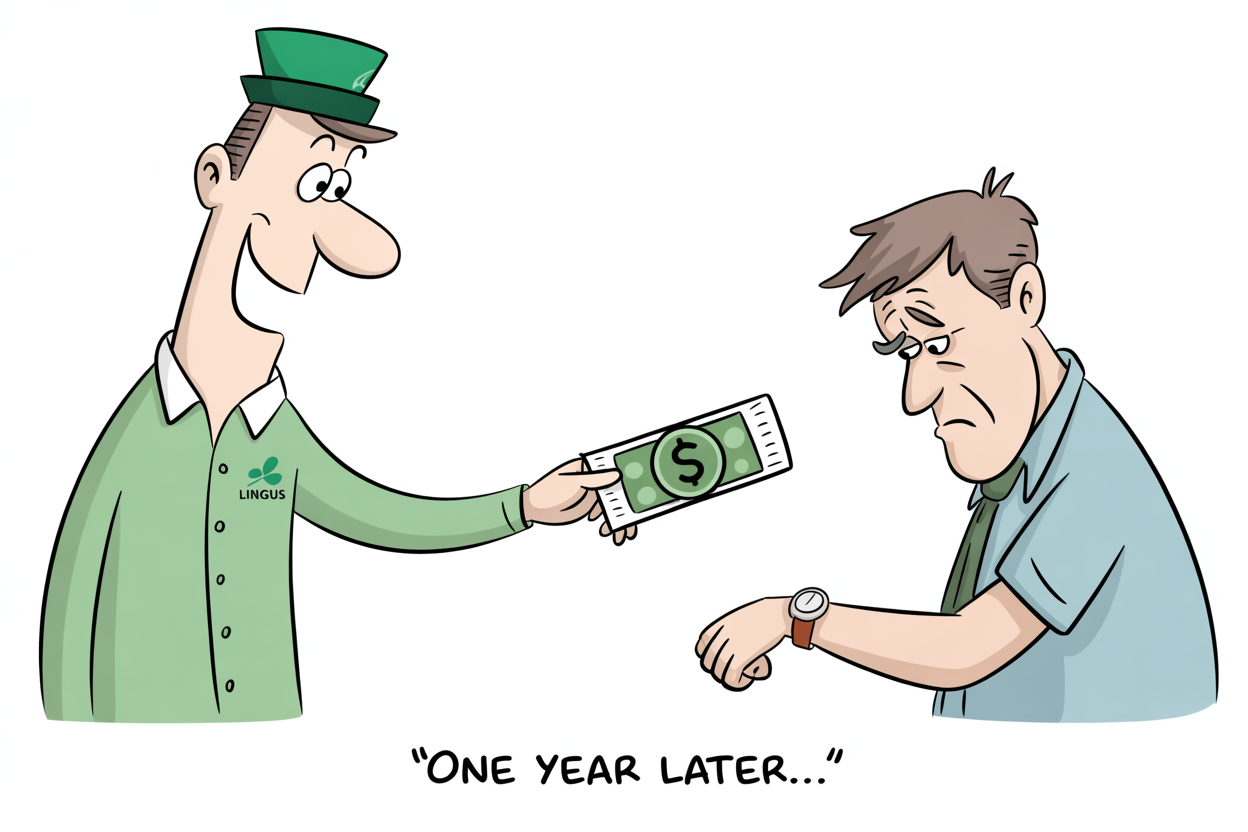
Illustration of an Aer Lingus representative offering a voucher to a frustrated customer checking his watch, with the caption “One year later…”

Aer Lingus issued her voucher but ghosted her husband for over a year

After a death in the family, Beatrijs Albarran and her husband Jorge had to cancel their Aer Lingus flights. The airline issued their refunds as vouchers, $938 for her and $925 for him, and emailed that both had been processed. But when Beatrijs called the next month to book a new trip, an agent told her Jorge’s voucher was never actually issued. The couple, who live in Buffalo, New York, wanted to fly from Toronto to Scotland because the fares are better, and asked whether the vouchers could be reissued in Canadian dollars. Beatrijs received hers in U.S. dollars within a reasonable time. Jorge’s never arrived. For more than a year she called repeatedly, hearing the same response that a supervisor was working on it, while automated emails said the case was under review. More than 15 months after Aer Lingus said it processed the voucher, it still had not appeared. Under Aer Lingus policy, vouchers are issued in the same currency as the original booking, so no conversion was needed to book from a Canadian airport, and the Department of Transportation requires airlines to process refund and credit requests promptly.
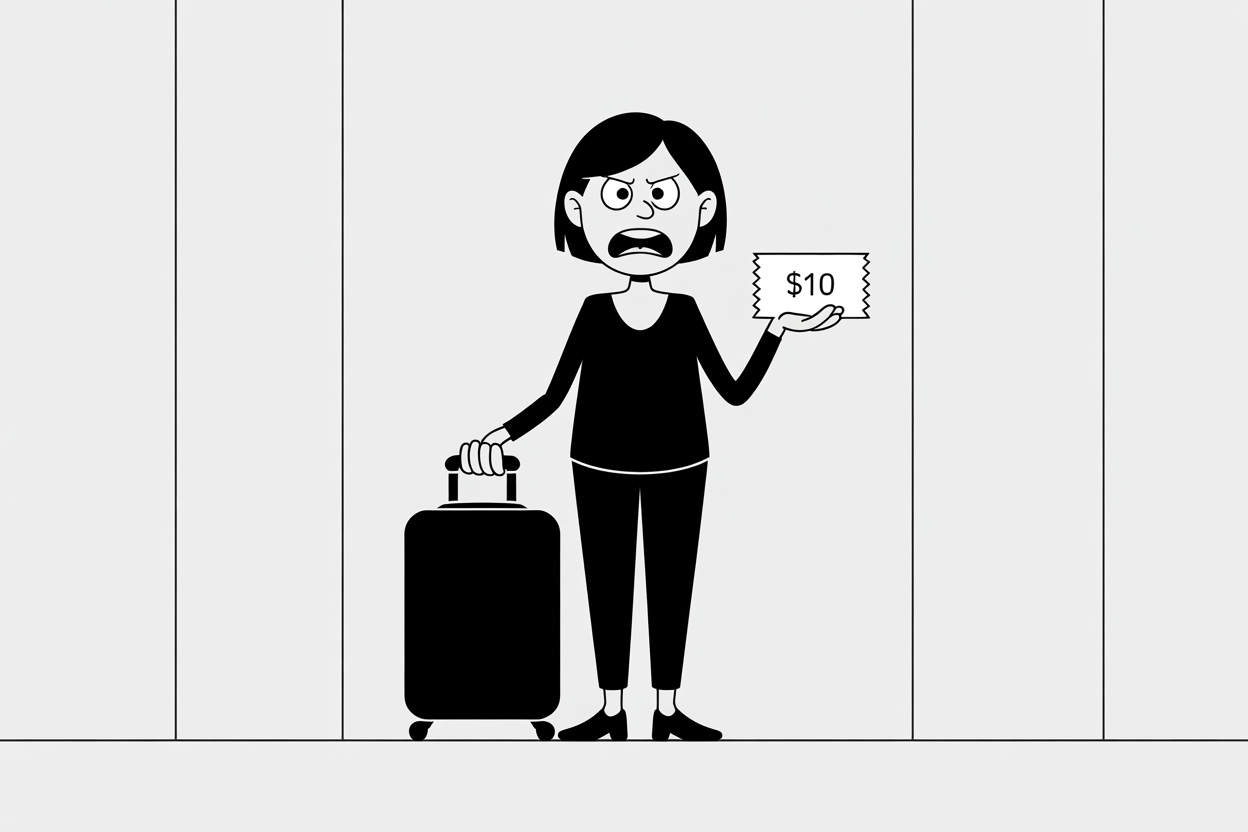
An angry airline passenger stands with a suitcase while holding a $10 voucher after a flight delay.

The delay tax: Why your airline voucher barely covers your expenses anymore 

When a flight is delayed or canceled, airlines cover only what they call duty of care: a meal voucher, sometimes a hotel, or a refund if the flight is canceled. Angela Justice received a $10 voucher after her Boston to Chicago flight was canceled. The real cost, the delay tax, is far larger. It includes nonrefundable hotels travelers cannot reach, lost wages, child care that keeps ticking, and the replacement flights passengers must book themselves when the airline’s rescheduling timeline proves useless. Airlines calculate compensation based on what it costs them to reschedule a flight, not what it costs the traveler to miss the reason they flew in the first place. The official story is that duty of care solves the problem and the Department of Transportation signs off. But the law was written in a different era, when travel was simpler and airlines were more generous, and regulators have not caught up now that delays are chronic and carriers watch every penny.