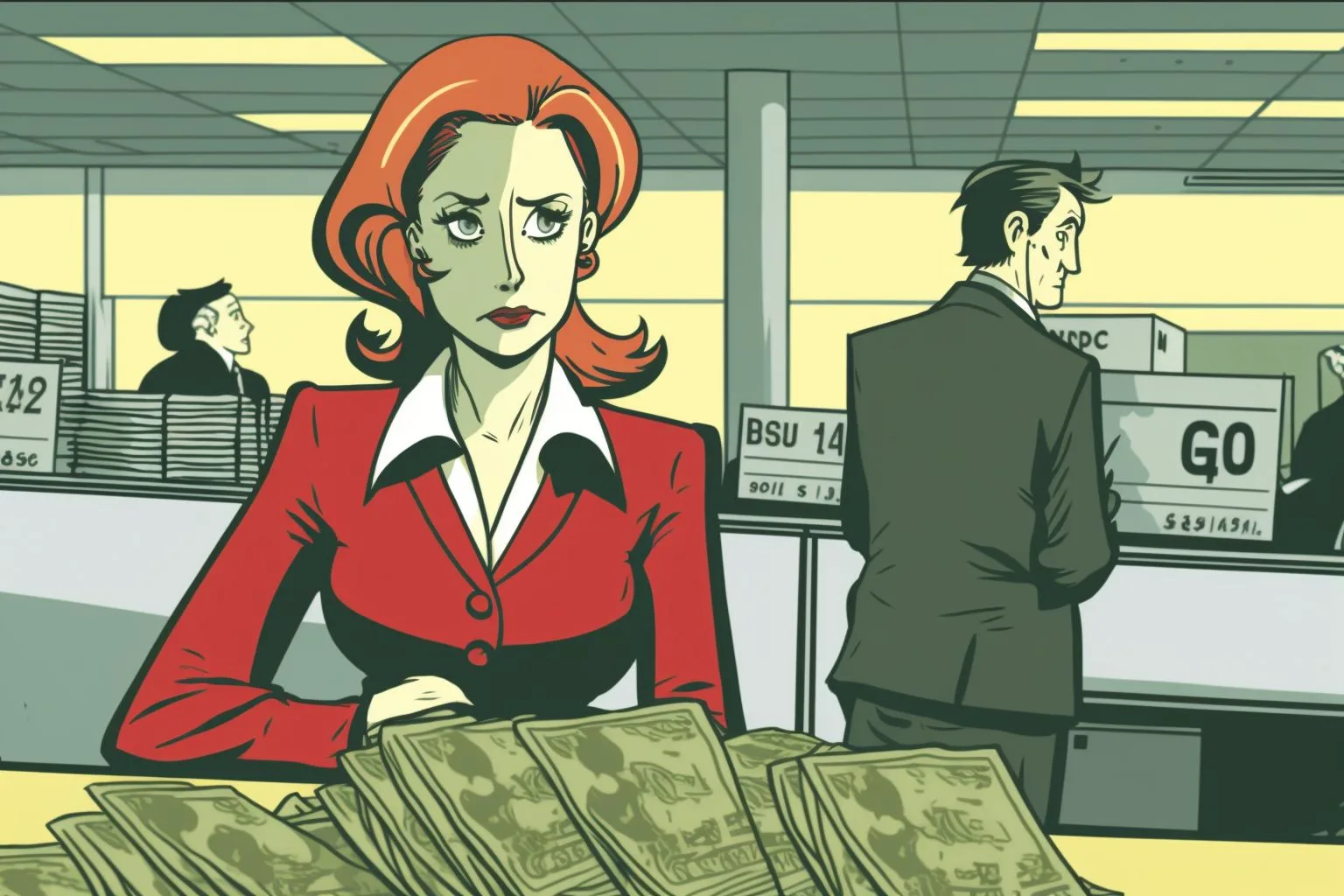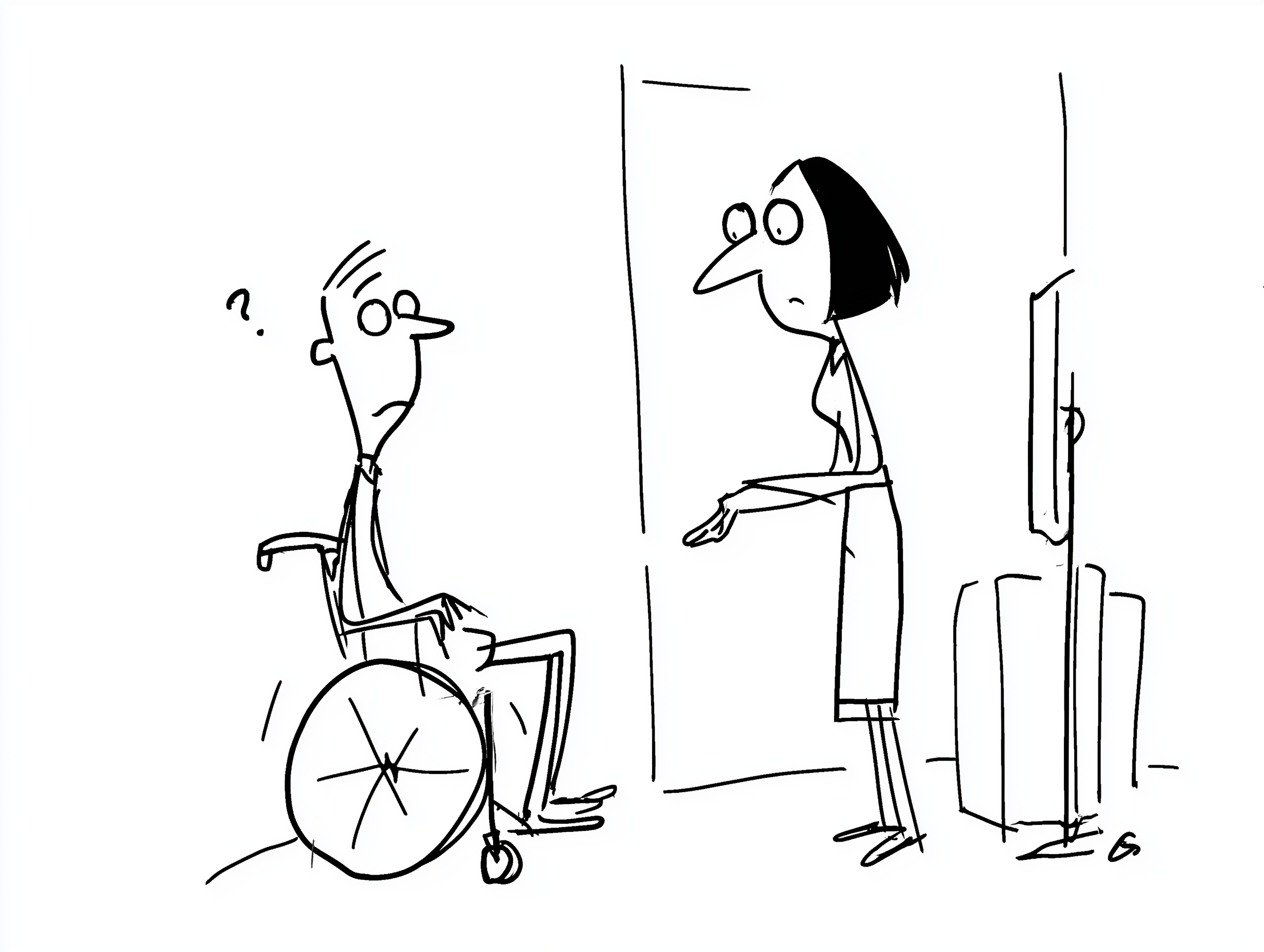
Black and white line cartoon of a puzzled man in a wheelchair on one side of a barrier looking toward a standing woman with a rolling suitcase on the other, suggesting a divide over who boards or pays. Ryanair family seating

Where’s the red line on airline fees?

If you are flying with kids, here is a little good news: you will not have to pay extra to sit together, even on Ryanair, the notoriously fee-crazy Irish carrier. Europe’s largest discount airline adjusted its family-seating policy this week after a UK regulator forced its hand, having spent years charging parents a fee just to sit beside their own children. But it did so “reluctantly,” and that one word says everything about how the industry sees fees in 2026. A fee is not a problem to be fixed. It is territory to be defended. Which raises a bigger question, one that goes well past family seating to the water on a long flight, the bag already in your hand, and the seat you already bought a ticket to sit in. What kinds of fees should be off limits, and is there a line an airline should never cross?
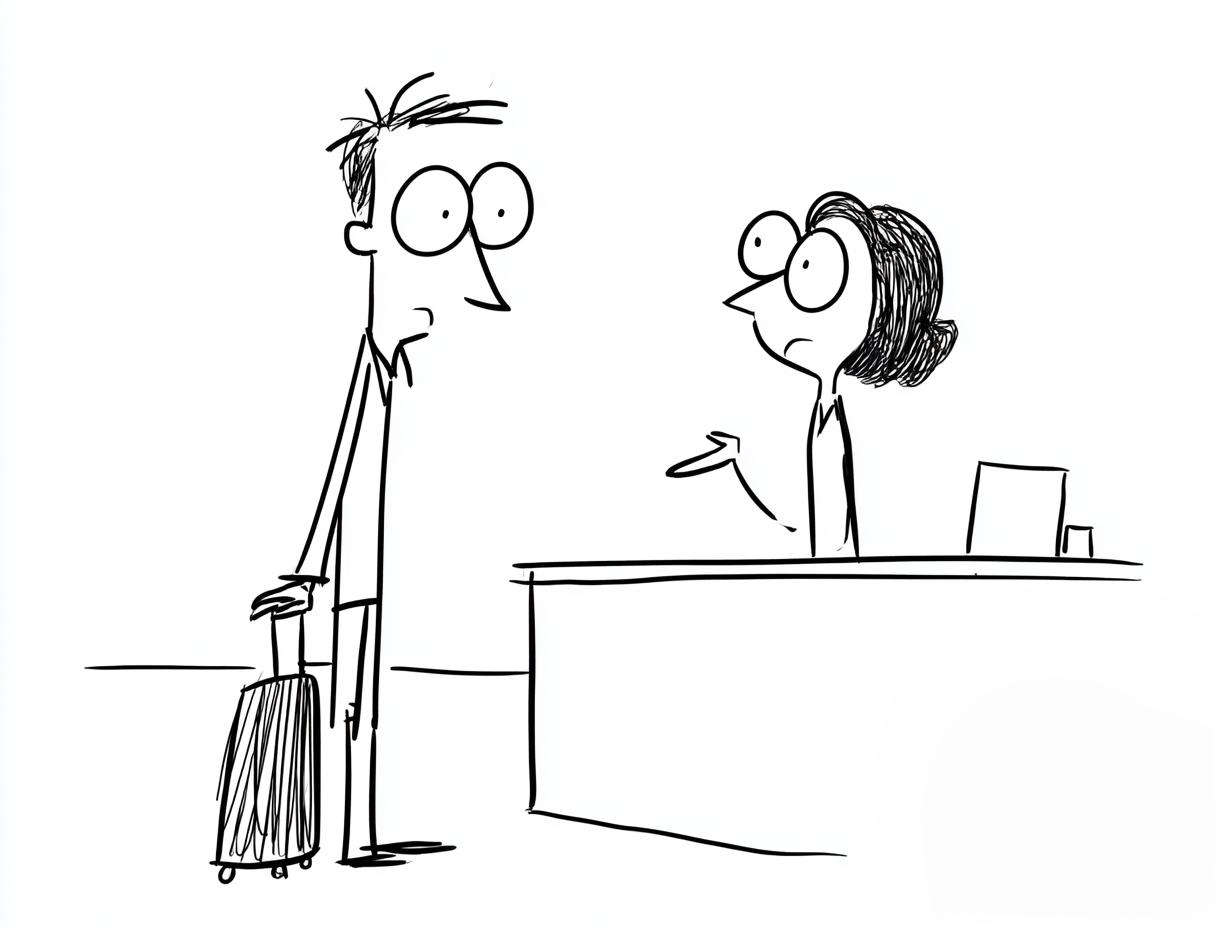
Minimal black and white line cartoon of a wide-eyed traveler holding a rolling suitcase at an airport counter while an agent behind the desk gestures, suggesting a conversation about baggage.

The war is over. Let’s bring airline baggage fees down now.

Peace negotiators may be dotting the i’s on a deal to end the Iran war, but air travelers are paying attention to something else: the cost of their checked bags. Remember when jet fuel prices spiked after the fighting broke out earlier this year? Every major American airline rushed to raise its checked bag fees. United, American, Delta, Southwest, JetBlue, they all went up. The airlines blamed the war, and at the time they had a point, since fuel had roughly doubled. But then the ceasefire came, oil pulled back from its highs, and guess what? Not one airline has announced it is bringing its luggage fees back down. There is a name for this pattern, and once you see how it works, and what Europe just did about bags while U.S. carriers went the other way, the summer ahead at the airport starts to look very different.

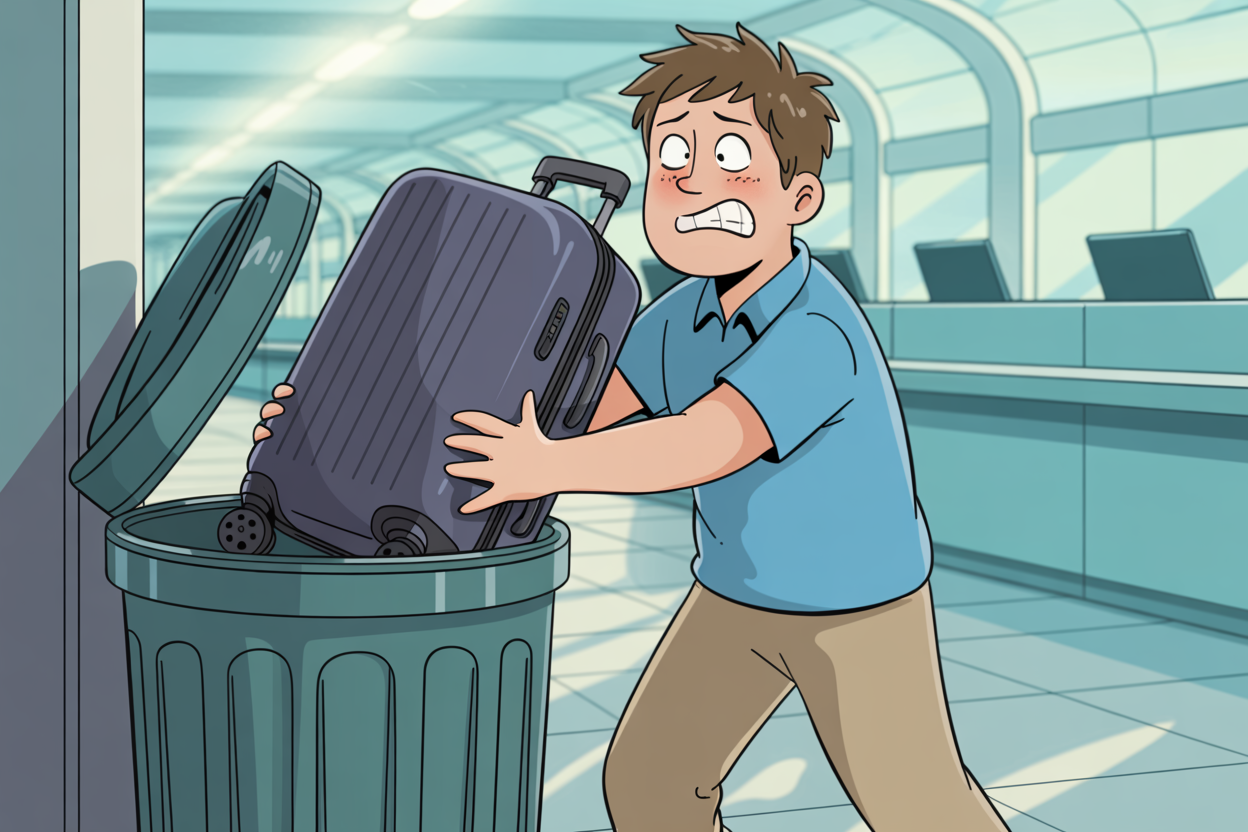
Editorial cartoon showing an anxious traveler in a blue polo shirt grimacing as he stuffs a large purple roller suitcase into an open green airport trash can, with empty seating areas and large glass windows visible in the background, illustrating the increasing trend of travelers abandoning their luggage at airports to avoid baggage fees

The great luggage abandonment: Why travelers are ditching their bags at the airport

Travelers are increasingly abandoning their luggage at airports and hotels to avoid baggage fees that can exceed the value of the bags themselves. Hotels in Tokyo and Osaka now post warning signs about luggage abandonment fees while Narita Airport reportedly stores dozens of unclaimed bags daily. Kansai Airport in Osaka and Chubu Airport in Nagoya report similar pile-ups. Asian carriers known for strict baggage fee enforcement contribute to the trend, along with Japanese tourists buying cheap rolling luggage for shopping trips and abandoning it before flying home. Airports hold abandoned bags 30 to 90 days before disposal.