



|
What's
elliott?
About elliott
Contact us
t o p i c s
Business
Commentary
Destinations
Help
Leisure
Technology
Vault
Read
back issues. Like what you
see? Now you can become an underwriter.
a l s o
Referring sites
Public relations
Visit Tripso
Home
s e a r c h
Find a story.
Copyright Elliott Publishing. All rights reserved. For more information,
call (305) 453-4781 or send e-mail
to us.
|
|
A Summer
of Surcharges
Opinion · August 1, 2002
After Brad Power
clicked the "buy" button on the American Airlines Web site recently, the
price of his airline ticket took off. The carrier suddenly wanted $50
more for his flight.
Funny airline math? No. Power was using his airline miles to pay for the
ticket, so American added an expedite fee because he made a reservation
less than 21 days in advance. "The fee was snuck in after I approved my
purchase," he claims. "If I go to an ATM, they ask me before they charge
a $1 transaction fee when I get cash. Why can't American do that?"
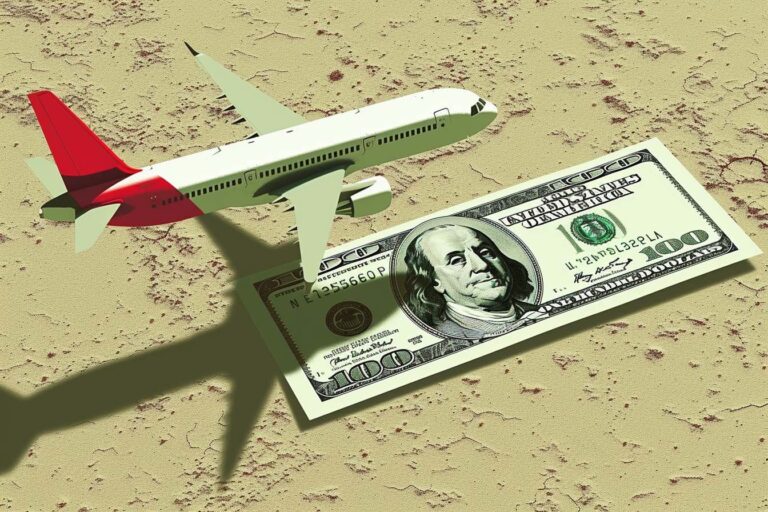
This is shaping up to be a summer of surcharges. Just about every part
of the ailing travel industry, from car rental companies to cruise lines,
is lowering prices but adding creative fees to in order to make up the
difference.
Charging travelers over and above the agreed-upon rate isn't unusual.
But this summer's fee frenzy is significant in that the number of extra
charges has never been higher while the disclosure of these extras has
never been worse. The result: Travelers such as Power are ticked off.
American Airlines spokesman Tim Kincaid said the fee covers the cost of
the transaction and expenses "associated with developing the technology
for electronic tickets and other enhancements," but he agreed that the
carrier's disclosure was inadequate. "We are in the process of revising
award expedite fee information on AA.com," he told me.
Not all surcharge stories have a happy ending. When Louise Andrew bought
a book of EasyPAK tickets on Alaska Airlines recently, and tried to get
a paper receipt for one of the portions, the airline demanded $20. Asked
about the surcharge, an Alaska Airlines representative said the carrier
sees "no reason" to offer additional receipts - unless someone is willing
to pay for them.
It isn't just the airlines that are having disclosure problems. Heather
Flynn, a Galveston, Texas, college administrator, remembers a Carnival
Cruise. to Mexico she recently took with her husband. "At lunch on the
Lido deck, we were handed a rum punch," she says. "Only after I had it
in my hand was I asked to sign for it."
Surchages are everywhere you turn. Hotels tack on fees for the use of
a phone, swimming pool or coffee maker. Car rental companies bill you
for the cost of your tags, for operating an airport van, and even to cover
other customers' parking tickets. No one that I know of tracks all the
surcharges, but the anecdotal evidence suggests these fees are fast becoming
a favorite way for travel companies to generate extra revenues.
Many of the fees are nonsense. For example, most major airlines still
impose a fuel surcharge of up to $40 on tickets - a remnant of the soaring
petroleum prices of two years ago - even though jet fuel prices have since
dropped. Only a few carriers have admitted that they intend to keep the
fuel surcharge to offset other expenses; most don't talk about it in the
hopes that no one will notice the add-ons.
Why all these fees right now? Robert Mandelbaum, a hospitality industry
analyst for PKF Consulting in Atlanta, says travel earnings are falling
and firms are looking for new revenue sources.
Earlier this month, the major airlines, such as American, Delta and Northwest,
all reported continued losses in the second quarter. The major air carriers
lost $2.4 billion in the first quarter of this year. Overall hotel profits
also plummeted 27% last year to $16.8 billion, according to PriceWaterhouseCoopers.
Every penny counts now.
Mandelbaum estimated that the average hotel will make 2.2% of its total
revenue on guest use of telephones. "The surcharges used to be like found
money," he says. "Now they're counting on them."
To be sure, some of these fees are justified. A hotel, for instance, has
every right to bill guests for long-distance phone calls. Car rental companies
should be allowed to cover their expenses, including the costs of operating
at an airport. And even though cruise ships may bill themselves as "all-inclusive"
experiences, no one is expecting them to offer an open bar to passengers.
Most travelers have no argument with a reasonable charge. It's the lack
of clear, upfront disclosure that vexes them.
By surprising guests with these fees, the companies may make more money
in the short term. But they risk damaging their relationship with their
customers in the long term, a result that could hurt these businesses
even more. The most recent example of this backlash: hotel chains that
imposed an "energy surcharge" during last year's energy crisis in California
- in properties thousands of miles away from the Golden State. Many guests
took their business elsewhere in disgust, or didn't travel at all, which
only deepened the lodging industry's current troubles.
A solution probably isn't up to the industry, but government. The Department
of Transportation and the Federal Trade Commission, which regulate most
of the travel businesses in question, already have broad rules prohibiting
unfair or deceptive practices. Maybe it's time to take a page from the
Food and Drug Administration's rulebook. Under the Nutrition Labeling
and Education Act passed in 1990, most food manufacturers must disclose
the ingredients in their products. Why not do the same for travel?
Christopher
Elliott is a travel commentator based in Key Largo, Fla. All e-mailed
questions may be edited, condensed or republished at the site's discretion.
|
|
|