




|
What's
elliott?
About elliott
Contact us
t o p i c s
Business
Commentary
Destinations
Help
Leisure
Technology
Vault
Read
back issues. Like what you
see? Now you can become an underwriter.
a l s o
Referring sites
Public relations
Visit Tripso
Home
s e a r c h
Find a story.
Copyright Elliott Publishing. All rights reserved. For more information,
call (305) 453-4781 or send e-mail
to us.
|
|
Cabin
Fever Rages
The
Travel Critic · February
23, 1998
A
flight attendant is slapped while he serves dinner. A crew member gets
punched before takeoff. And a drunken passenger blows his stack after
he's denied a martini, then uses a meal cart as his lavatory.
Sound like scene from an Airplane sequel?
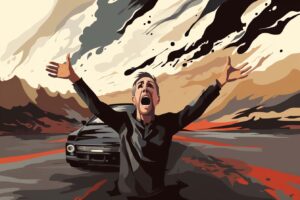
If only it were. Passengers are losing their cool more than ever on planes.
Assaults on crew members rose 5 percent from 1995 to 1996, and although
the numbers aren't yet in for last year, the Association of Flight Attendants
in Washington, D.C., confirms that the trend shows no sign of slowing.
"Maybe it's the fuller planes or the reduced service," says union spokeswoman
Jill Gallagher. "But we've had several very serious incidents recently
that have been compared to road rage."
Cabin fever, as some are now calling it, is infectious.
Last month, on a flight from Los Angeles, a passenger walloped a flight
attendant's thigh because there were no more chicken entrees for dinner.
"Yeah, I punched him hard with my fist," the traveler reportedly laughed
afterwards.
Another recent case involved a traveler who was asked to remove his radio
headset while the aircraft taxied on the runway. He struck the male flight
attendant so hard that he sent him into the next row of seats. The passenger
was escorted off the plane by deputies in Boston.
Patient zero of modern-day cabin fever was a man police reports describe
as "Mr. Finneran." On Oct. 20, 1995, when crew members denied him another
drink, the already intoxicated man "pulled his pants and underwear down
and proceeded to defecate on the floor, cart and in the lav sink in the
bathroom," according to the report.
What's happening here? Chris Marquet, a New York-based senior managing
director for corporate travel consultants Kroll Associates, believes cabin
fever is the inevitable result of airline greed.
"Space is tight. Planes are full," he explains. "When there are delays,
when the flight's crowded, and you've got a lot of people in a small area,
you've got the potential for some airline rage."
Doctors agree. Edward Hallowell, a psychiatrist at Harvard Medical school,
and author of the book Worry: Controlling It and Using it Wisely says
cabin fever is spreading because of poor flying conditions.
"Not only am I seeing this in my practice, but I'm also seeing it in my
life, when I get on a plane," he says. "Vulnerability, decreased power
and control, can lead to unplanned, irrational and sometimes violent reactions."
Whittier, Calif.-based road rage expert Dr. Arnold Nerenberg even suggests
that cabin fever is the first sign of a breakdown in society. "Passengers
have lost respect for the pilot, the flight attendants and each other,
and this is what happens," he says.
Still, why is this becoming a problem now? Airlines have always cared
more about profits than people. And many flights, even when load factors
were way down, operated at full capacity.
Alcohol and cigarettes may offer one answer. Drinks are freely available
in-flight. Flight attendants estimate that about half of the passenger-related
incidents are related to alcohol consumption. Eight years ago, smoking
was banned on all domestic flights, depriving many passengers of a nicotine
fix-and making them more irritable.
But these are partial explanations at best. One of the most disturbing
theories about the outbreak of cabin fever belongs to US Airways flight
attendant Kenji Nozawa, the crewmember pummeled by the earphone-wearing
passenger last year. He thinks frequent flier programs are indirectly
triggering the aggressive behavior.
"It's the business travelers who are misbehaving," he says. "The more
frequent flier points they build up, the worse they get. They think they
have unlimited power. They don't think the rules apply to them."
The road warriors haul too many carry-ons on board-"sometimes five or
six at a time," says Nozawa-harass other passengers and make outrageous
demands on the crew.
I never thought of mileage programs as hazardous. Addictive, yes. But
dangerous?
Christopher
Elliott is a travel commentator and author of A
Bridge to Nowhere: A Year in the Florida Keys. All e-mailed questions
may be edited, condensed or republished at the site's discretion.
|
|
|