



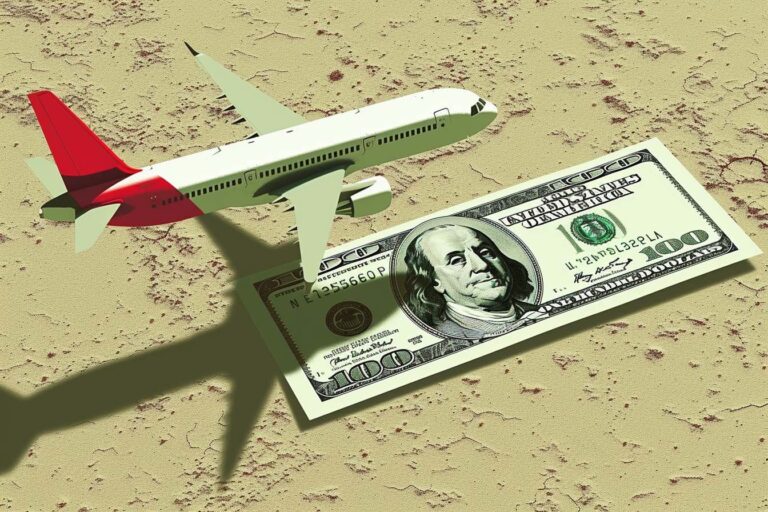
The travel industry wants you back.
But before you say “yes,” listen to Laura Salisbury, a teacher from San Jose, Calif. She mistakenly typed the wrong return date when she booked a vacation for her and her mother through Expedia.
“All I wanted to do was give my mom a trip of a lifetime to celebrate the successful end of her cancer treatment,” she says. The two women planned to visit Yellowstone National Park and Grand Teton National Park in Wyoming.
When she asked Expedia for help, it deferred to Delta Air Lines. “A representative at Delta said that the tickets were non-refundable, but that the company would change the flight dates for me for a $200 fee per ticket,” she says. “I said the flight change charge is more than what the tickets even cost, and that new tickets would be cheaper. I was then told that I was welcome to order new tickets if I did not wish to pay the fees.”
Before all of you airline apologists pounce on Salisbury for booking a nonrefundable ticket — and on me for being naïve enough to give her a platform (what part of “nonrefundable don’t I understand?” I can almost hear you saying) — let’s take minute to think about this.
The vacation package she bought didn’t offer a prohibitively expensive, fully-refundable airfare. But more to the point, why couldn’t Expedia go to bat for her? Why couldn’t Delta change her ticket if she made an honest mistake? Is the $400 it would pocket in change fees worth the lifetime of business it will probably lose from her?
There’s no better time to be asking “why” than now. That’s because things probably can’t get any worse for the travel industry. Hotels are in foreclosure, airlines are once again on the verge of bankruptcy, tour operators are selling their products at ridiculous discounts, and destinations are resorting to publicity stunts to attract visitors.
For example, Southwest Airlines held a two-day blowout sale a few weeks ago, in which tickets were offered for less than it costs to fill the tank of an average SUV. The Copley Square Hotel, a luxury hotel in Boston, was hawking rooms for less than the price of a cab ride to Logan Airport. And in a move that can only be described as utter desperation, the notoriously unfriendly Parisians, in an effort to “show that Paris loves its tourists and knows how to welcome them,” strapped on rollerblades and formed an enormous human smile at Place Vendôme.
I’ll give you a few moments to ponder that image.
The fare sales and sideshows may lure some of us back in the near term. But over the long haul, they do nothing to fix the real problem. Basically, we’ve concluded that the travel industry is largely comprised of money-grubbing opportunists, and no fire sale is going to fix that.
But here are a few things that might:
1. Try “yes.”
Instead of gimmicky sales and two-for-ones, why not just stop saying “no”? For instance, why can’t you change the name on airline tickets? Well, airlines insist it’s for “security reasons.” So why do carriers like Allegiant Air allow name changes? Granted, there’s a $50 fee, and Allegiant throws an obscene amount of other surcharges at its passengers. But why not allow the name on a ticket to be changed? Simple thing, really.
2. Roll back recent rule changes.
Some of the recent rule changes, which appear to be designed solely to make a quick buck for travel companies, need to be nullified in order to make us come back. For example, why did car rental companies abbreviate the one-hour grace period for late rentals to half an hour? Why did some of them eliminate it altogether? Answer: They wanted to make more money. But it only made customers upset. Are these ridiculous new policies worth the frustration they cause? Short-term, yes. They do boost revenues. Long term, no. They’ll drive us away.
3. Enough with the fees, already.
It’s time to say it: A la carte fees are a failure. Sure, they bring in lots of money — just look at how much the airlines have made this year from luggage fees — but a closer look reveals an often-negative correlation between fees and profitability. In other words, the more an airline charges in fees, the less profitable it is. Put differently, travel companies aren’t just killing us with their fees. They’re killing themselves.
4. Common sense, please.
Why does a one-way airline ticket cost more than a roundtrip ticket? Why is changing a ticket sometimes more expensive than the ticket itself? These rules make no sense whatsoever to customers, even when you explain the apparent logic behind them. Believe me, I’ve tried. People like Katerina Naumenko, a medical student in Grenada who missed her American Airlines flight and had to pay $544 for the last leg of her flight — which was more than the cost of the entire roundtrip ticket — don’t buy it. (Here’s more on her experience.) “I explained the situation to them and they still insisted that I had to purchase another ticket,” she told me. How about a new rule? The change fee can’t be more than the value of the ticket.
5. No more double dipping.
Ever canceled a hotel room or cruise, and forfeited the entire value of your reservation because of a nonrefundability policy? If you have, maybe you’ve wondered if the travel company ever resold the room or berth, and effectively cashed in on the room twice. It’s a legitimate question: Should a company be able to collect the money two times, or should it offer a refund if it can find someone else to fill the room? Giving the money back, particularly when the room is resold, would go a long way to restoring the goodwill between travelers and the travel industry.
6. Show some compassion.
Here’s a summer travel paradox: Travel companies are bending backward for your business, yet at the same time, they’re throwing the book in their faces when we run afoul of one of their “gotcha” rules. Let’s say you’re delayed by a flight problem and arrive a day late for your vacation. Don’t even bother asking your hotel to adjust your rate. It probably won’t. What if you missed the flight? You’ll lose the value of your ticket, plus you’ll have to pay for a new one. Ditto for your rental car, if you’ve pre-paid for it. But when the tables are turned — when the hotel is oversold, the airline can’t take off because of air traffic control problems, or a hurricane shuts down your hotel — travelers cut the companies a lot of slack without demand for compensation. Why shouldn’t those same companies give us a break? It’s only fair.
I can almost hear those of you in the travel business saying, “Never. We’re not running a charity.” (And a note to the travel agents reading this — take a deep breath. I don’t think of you as being part of the travel industry for the purposes of this discussion. You’re on the traveler’s side, when it comes to fighting these silly policies. You are often victims, too.)
To those of you who think hotels are just lodging and airlines are nothing more than transportation, I have just one thing to say to you: You’re in the wrong business. There’s a reason they refer to the hotel industry as the hospitality business, and it’s a reason you’ve apparently forgotten.
Only now, in a moment of desperation, are travel companies rediscovering what their customers want.
And it’s simple, really. We want a reliable product at a fair price. We don’t want to be taken advantage of. And we want to feel loved.
✓ Get the latest travel news, tips and commentary from Elliott’s E-Mail, the subversive newsletter from industry gadfly Christopher Elliott. You’ll travel like a pro. Sign up here. It’s free.

Sign up for my 


{ 3 trackbacks }
{ 11 comments… read them below or add one }
Pesky change fees – because of business my husband spent over 5K on air fare in September alone on his preferred carrier (based on location not service). When a business trip overlapped a previously booked, fairly cheap round trip ticket for our vacation had to be changed. Round trip cost had been 250.00. New fare – one way – 274.00 they were happy to charge me change fees and everything else….
Surprisingly, I agree with most of what Chris states here. One of the most distasteful elements of traveling is the distinct sense that the travel indusury is the least consumer friend industry in America. I can think of few other instances where such ultra-vigilance is neessary and there the penalty for an honest mistake can be so extreme.
In which other industry, can the seller penalize you not using the entire service (throw-away tickets) or not using it the way the seller wants you to (back to back tickets).
In which other industry do you lose the entire value of the ticket for missing a leg. (hidden city).
Who else charges fees that are completely disproportionate to the work involved, e.g. name changes.
and my favorite, who else gets to change the prices of identical goods and servies based on their perception of whether you are a business or leisure traveler? I remember being told once that it was unethical to reserve a room at the weekend AAA rate if I was attending a conference. I rejected that logic.
In 2004, we had two rooms reserved at the Hotel de Suede in Paris. We were coming from London and decided, on the spur of the moment, to take the train to Dover, the ferry to Calais and the train to Paris. What we didn’t know, and what quite a few others didn’t know, was that there were no trains to Paris from Calais after about 3:00. So, we booked rooms in Calais for one night and called the Hotel de Suede asking them to please hold our rooms, as we’d be there the next day. We did not discuss money. We knew we were responsible for the lost night. Well, when we arrived and without our asking, the manager told us he would not be charging for our first night of our six booked nights there. What an unexpected example of real hospitality!
A little more info on the story would be nice. A couple years ago I booked and paid for a ticket on NW’s website only to see afterwords I booked the wrong return date. I immediately called and they changed it to the correct date for free because they said I called right away and that showed it was a true error on my part.
So when did Laura call? It DOES make a difference. The fact is, a company won’t think it was an honest mistake if it was close to the flying date. And yes, I would expect a company to assume the customer was trying to make a change that was not due to an error if that’s the fact.
Some will say it should not matter either way. But if you own a company you might think different.
I think Jay has a really good point, and to take it further its the attitude the customer has as well. I know, everyone should be treated equal and technically they are, the fees are well documented in the terms and conditions and everyone is subject to them, but for those like Jay that phone up with a great genuine attitude people are willing to do more and go further.
Myself, I have been on the phone from home outside work hours trying to help someone get fees waived that made an actual mistake, but would I do that for someone screaming down the phone at me? Probably not, and not many would. People should try to keep this in mind, not just with travel but with anything.
I suspect the reason they aren’t more flexible is that this is part of their business model for making money. If they don’t allow changes (or collect fees for them), a certain number of tickets go unused and in theory they are able to fill those seats and get paid twice. (Is there a way to get industry on how much they make on fees/unused tickets?)
If the airlines would play nice, would we fly more? Would we be willing to pay more per ticket? Or would you be like so many people who fly Ryan Air, willing to put up with fees for everything and stripped down service in exchange for a cheap up front cost.
As a traveler, I want them to change! I’m just not very optimistic.
Jay and Graham
I own my own company. I charge people what I believe is fair and ethical. The problem is that many of us consider the fees that the airlines in particular charge to be unethical.
If we want better service we might have to pay for it. Fares have dropped 30-40% (depending on who you ask) since dergulation (in inflation adjusted dollars) yet costs have not dropped at the same rate. On one hand competition is good, it made the airlines compete on fares and give more of what the consumers want. On the other hand, at some point you have to pay the bills. We as consumers seem to have forgotten that you still do get what you pay for. If people really wanted good customer service they would be willing to pay for it. What people really want is cheap airfares (and toys and electronics and cars and pretty much everything else). Until that changes customer service will not improve.
Nice post! Airlines definitely need to step up their game in a recession. I think free wifi would give them a competitive edge (which I just wrote about in Fastcompany).
http://www.fastcompany.com/blog/gregory-ferenstein/fastminds/4-ways-airlines-could-make-flight-wifi-free
good points Chris. The problem with name changes is that, in the past, unscrupulous agencies would book all the cheap seats for popular travel dates with fictitious names as soon as an Airline released a special fare. They could then sit on them till closer till the travel date and re-sell them at a huge profit even allowing for any name change fee. That’s one of the reasons why airlines toughened up on the name change rules. So pax with genuine reasons to change are penalised by the actions of an unethical few. Actually now that I think about it, it’s the same as big event ‘ticket scalping’ and if it was allowed then anyone with a credit card and an internet connection could do it.
What I get tired of when dealing with the travel business (especially the airlines), is not only the sense that they’re playing an enormous game of bureaucratic “gotcha”, but refusing to deliver even a modicum of elementary customer service. How many articles do you read on Travel Troubleshooter where the airline, motel, cruise line, etc. made a mistake, is plainly in the wrong, and refused to do anything about it.
Consider the Byzantine fair structures practiced by the airlines, immortalized in this old bit entitled “If the airlines sold paint.” http://www.netjeff.com/humor/item.cgi?file=airlinepaint.txt. Add to that the various fees that get tacked on, and I end up feeling nickled and dimed (more line ten and twenty dollared) to death.
Add to that, the airlines are the only business where I have to pay the full price of the services in question in advance (possibly months in advance), with no guarantee that the services will actually be properly rendered, and not effective recourse if the services are not properly delivered.
It’s no wonder air traffic is declining, and I’m part of the reason. I haven’t flown in almost two years, now preferring to drive. Another benefit of driving is I don’t have to deal with the TSA, but that’s another story….