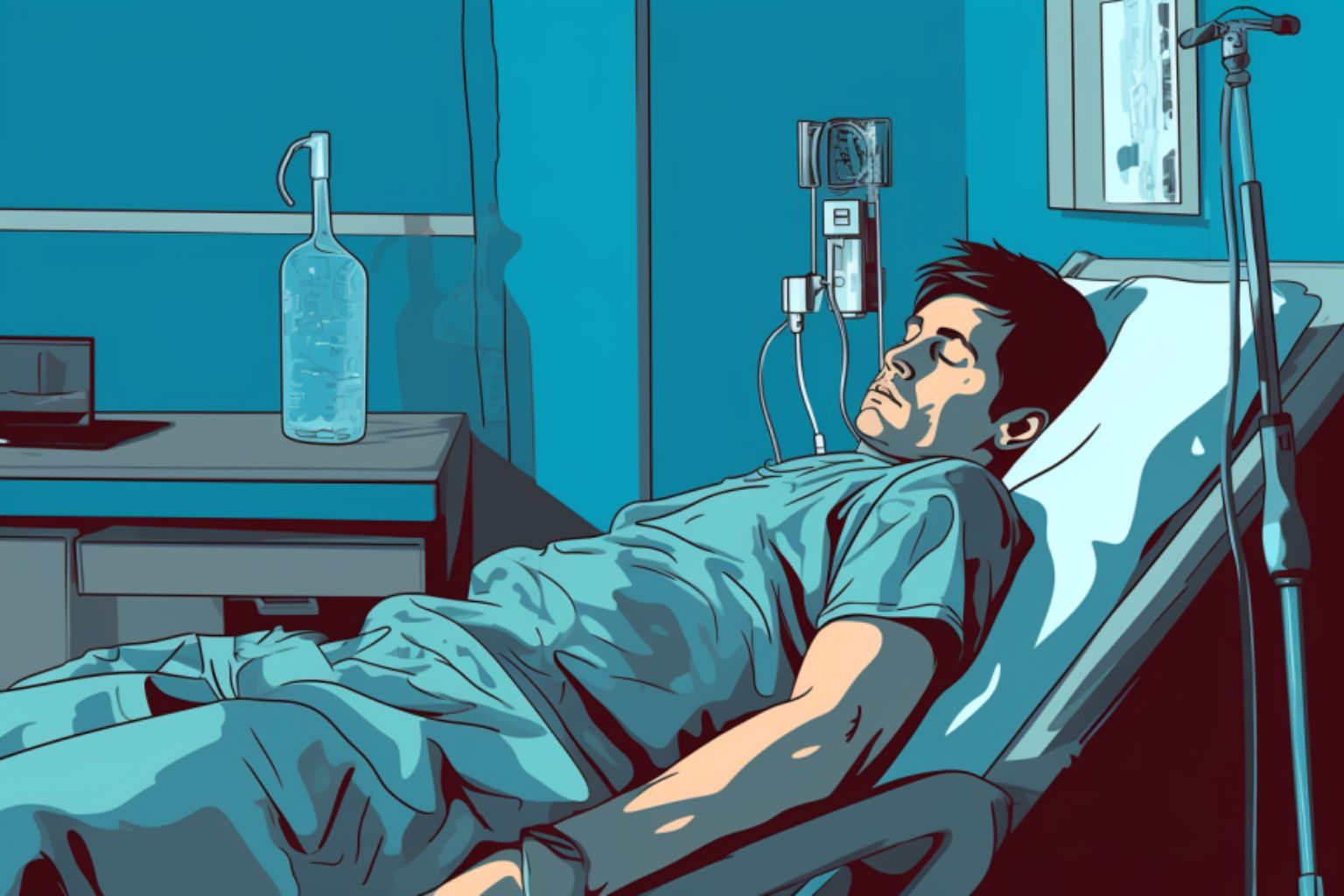
Ahem. Are we forgetting something?
The debate about health-care reform seems to be ignoring a significant group of Americans: international travelers.
People like Aphrodite Tsairis, who said she fell “violently ill” on a visit to Bermuda last month. After a CAT scan, a diagnosis of bowel obstruction, a night at King Edward VII Memorial Hospital and a medical evacuation by private jet back to the States, Tsairis got a bill for $23,785.
Traditional health insurance plans typically limit out-of-country coverage to emergency expenses, at most. They also have high deductibles and co-pays for treatment abroad and don’t cover evacuations such as Tsairis’s.
About one in five Americans buys travel insurance, according to the US Travel Insurance Association, a trade group. But a new survey by the organization found that only a fraction of the policies bought — about 5 percent — are primarily medical in nature.
That means a lot of Americans might be traveling without adequate coverage. The Joint Commission International, which accredits hospitals, estimates that 6 million Americans will be treated in overseas hospitals next year. Some, of course, will be medical tourists, but others will just be tourists like Tsairis, who had the misfortune of getting sick while on vacation.
Tsairis, the director of a nonprofit foundation in Bloomingdale, N.J., wasn’t covered under her American health insurance policy and would have been liable for the entire hospital bill and evacuation costs were it not for the coverage on her American Express card (about $216 a year) and by MedjetAssist, a medical evacuation service ($250 a year).
“It’s a good thing we had that,” she told me.
Amex paid the $9,885 hospital bill. MedjetAssist covered her $13,900 in evacuation-related expenses.
Not everyone is so fortunate. As a reader advocate, I often hear from travelers who forgot to take out travel insurance only to find themselves in a postoperative daze in a Mexican hospital, clutching a five-figure bill. One bad trip like that can clean out your bank account.
Shouldn’t health insurance cover you no matter where you go?
I asked some of the folks who were working on health-care reform, and they agreed that it should — kind of. An aide to the Senate Finance Committee said that its version of the bill creates an insurance exchange that would increase competition and force insurance companies to offer the best plan at the best price. As they do today, health plans will have the flexibility to cover overseas health-care expenses, the aide said.
Actually, that sounds like a “maybe.”
“I’m told there is nothing specific with regard to requiring overseas coverage,” said Brendan Daly, a spokesman for House Speaker Nancy Pelosi. “But there could be an added benefit at premium-plus level.”
A premium-plus level, in the context of international coverage, would be an option for policyholders, but not a mandate. In other words, insurance companies would be able to continue refusing to cover their customers when they leave the country.
Hey, I know health-care reform is hard work, but I don’t understand why our coverage must end at the border. Considering that medical care is less expensive almost anywhere outside our country, shouldn’t it be a no-brainer to cover American policyholders regardless of where they are?
Until that happens, says Michael Ambrose, president of the Travel Insurance Association, you might want to consider buying separate insurance for your international trip. He recommends a policy that includes trip interruption because of a medical emergency and that covers emergency services required in any country, including doctor expenses, ambulatory services and hospital fees, plus medical evacuation coverage.
“You would need to review some of the top health insurance plans in order to analyze what they would and would not cover,” he says.
Under such a policy, if you get sick while you’re on vacation, at least you’ll be covered. Whether you’ll actually file a claim is a different question.
Gwen McLean, an information designer for a financial software company in San Jose, Calif., says she’d be thrilled if health insurance covered more Americans who travel internationally. But after being treated for a painful urinary tract infection on her last vacation to Scotland, she decided not to bother with a claim on her American policy.
McLean was charged a total of £11.50 (about $19 today) for prescription drugs and a doctor’s visit, less than it would have cost under her American insurance plan. She was also, much to her surprise, allowed to see a doctor without the customary one-hour wait at the hospital back home.
“National Health,” she says, “saved my vacation.”
(Photo: brykmantra/Flickr Creative Commons)
✓ Get the latest travel news, tips and commentary from Elliott’s E-Mail, the subversive newsletter from industry gadfly Christopher Elliott. You’ll travel like a pro. Sign up here. It’s free.

Sign up for my 


{ 17 comments… read them below or add one }
I am something of an expert in this area and I can tell you that a direct result of what Pelosi and that clown Reid are planning will be the elimination of any coverage outside of the US and perhaps no coverage when you travel more than say 100 miles from home. What’s left of the insurance industry will be doing everything they can to eliminate coverage so that they can compete with the idiotic government schemes. All of you “liberals” and “enlightened thinkers” that believe what is being done in Washington will help you are DEAD wrong. Ask any Canadian where they would rather get care? Ask any Brit (that will be honest with you) how good their system is. If you travel you should buy the very best travel medical insurance available and also make sure that it covers emergency evacuation without limitation. If you think trip cancellation is expensive wait until the insurance companies drop all out of area coverage. Good Luck or as the French would say Bon Chance!
Sorry should have been “Bonne Chance”.
Here is the Canadian model:
- Everybody are covered everywhere in the world up to the same rate paid by the government (all doctors in Canada are employed by the governements)
Now, if there is a difference:
- Who is covered by the employers insurance plan, the difference usually are covered outside of their province/territories up to the maximum of the amount insured (usually 1 million and up, mine is 5 millions).
- Who is not covered by an employer, usually coverted by a gold card like Diner Clubs, Gold Visa, Gold MasterCard, etc.. so no need to buy Medical Insurance if you pay the package/airlines ticket by the cards
- Who is not have a gold card, just buy Travel insurance which including medical coverage.
The travel insurance companies will adjust to the needs of the travelers and the governement plan by offering Insurance package with and without Medical Coverage.
The Credit Card issuers usually offer an annual plan to cover the difference for a small annual amount around 120$ to cover the difference.
Canadian health care does not cover you everywhere in the world, it only covers you in the province you are a resident in. When leaving the country of Canada, you have to buy additional health insurance just like anyone else, I would know because I just purchased my mother travel health insurance who comes to visit me in Georgia from Canada several times a year. We purchased a plan that provides health coverage up to 35 days out of Canada as many times in one year as you would like.
On another note, my GEHA health coverage, covers me where every I go which is why I opted with them. I was just in Germany during the summer, and didn’t need emergency services, just wanted my knee looked at because I had the time. GEHA covered everything after I had met my deductible of $350 which was already covered earlier in the year so I did not have to pay anything. They processed my claim within 2 weeks of me filing it and I didn’t even have to get the majority of the paperwork translated from German to English to make the claim.
Canada’s coverage is nice but has many limitations, first you have to pick a primary doctor who is usually very hard to get an appointment with, if you’re luck you may get one within a week or two. Once you do get an appointment, do not try to get more than one issue addressed. You have to make another appointment for that. Say if you have back pain and migraines, that is two different appointments you need to make. The doctor is suppose to spend 15 minutes with you and that is it. Of course you always have the option to go to urgent care where you will wait 2 to 4 hours. Also the health care does not cover prescriptions.
I have lived in Canada and the US, and although I liked not having to pay almost $600 a month plus co-pays and deductibles, I like being able to go to a doctor whenever I want, where ever I want, without a referral. The only thing I don’t like about my health care plan is that I have to pay the price a family would pay when it is only myself and my son. The dental and vision plans have the option for self + one, I wish the health care had the same option.
Whoa, sorry, but in Canada you’re covered by your provincial health coverage, not a national plan. While your plan covers you fully (for covered expenses) in your own province you might not get the same amount of coverage in another province. For instance if you live in Saskatoon and you end up needing medical care in Toronto, the limits of your provincial medical plan may not fully cover the costs charged in another province. They don’t even fully cover the costs in your own province depending on what needs to be done. For care outside of Canada you’re still covered at the rate your plan would pay your provincial doctors, which is a lot less than you’re going to get charged at the hospital. Believe me I’ve personally known people who have had medical emergencies in the US who have had to pay out of pocket because your provincial medical coverage does not adequately extend outside the country. From the Manitoba Health page:
Out of Province (within Canada): “some physicians may choose to bill you directly”; “Because some services are excluded, you are encouraged to obtain additional health insurance before travelling.”
Out of Country: “You may be charged more than the amount paid by Manitoba Health for services provided outside Canada. The difference above the covered amount may be substantial and is your responsibility.”
Your employee health plan MIGHT cover you outside the country, but read the fine print and make sure that it doesn’t require that you actually be on a business trip in order for that coverage to kick in.
For both the employee plans and credit card plans you want to check and see if a) there’s a deductible that you’re still responsible for and b) they cover the balance directly to the healthcare providers rather than reimbursing you for your expenses. Some plans have a high deductive ($500 or $1000, I’ve heard of one with a $2000 deductible), and reimbursement is fine if you happen to have the money to pay for the bill in the first place.
When you can buy travel medical insurance for $50 for a full YEAR plan, why on earth would you take the risk that your employee or credit card plan MIGHT cover you when you need it?
I am a Canadian and while in Los Angeles a few years ago, I came down with a very nasty bout of food poisoning which necessitated a trip to the emergency room. After an hour I was released with a prescription to last until I flew home the next day. I also left with a bill of over $1,000, which I had to pay directly.
My Canadian health plan only covered about $200 which is what it would have cost for a one-hour emergency visit and three minutes with the doctor. Thankfully, our private insurance through work automatically covers us for up to 90 days with no deductible anywhere in the world and therefore the remaining $800 charge was payed. I have also obtained medical treatment in East Africa, the UK, and Italy and the charges have been quite reasonable. As another writer noted, health care in Europe is excellent. It is only in the US that there lies a problem with high costs, (good care though) so it is imperative to be covered to the hilt!!
Nothing is certain yet except that perhaps some progress in covering uninsured people at home may be starting. There are so many unfair situations with inusrance bieng canceled once one needs it, pre-exisitng conditions beign excluded and so on that as important as coverage for travel is for all of us on this blog, it is not the primary function of the reforms. If we travel for business, health coverage policies will still be written for us. If for pleasure, we may have to shop a bit harder for a short term policy. Of the commonly available insurance I only know of certain Blue Cross policies that cover international travel – all the rest including Medicare – say sorry get your own separate coverage. Most insurance now only covers providers in certain geographical areas except for emergencies. I just changed from a policy limited to only New Hamphire to one with in network coverage for all of New England – this is a major change with the kids away at school in Massachusetts and employees who live in Maine. Nearly any scare one wants to mention already exists for someone. Let’s see if things can be made better for most people and add in the extra coverages for the few who need them. Only something like 30 % of all Americans have passports – so why do the other 70% need international coverage?
I am a little confused. Why would anyone expect a US health insurance company to pay everything for out-of-country medical care, when normal, every day insurance does not cover everything in other countries? Americans traveling to Europe have benefited from the wonderful national health insurance programs available in Europe and haven’t needed to get travel insurance in the past (although it was always recommended). When I got sick in England back in 1993. I went to my friend’s primary care doc and got my prescription of antibiotics for 5 pounds. A friend partying in Paris back in 1989 went to an emergency room for stitches and didn’t pay a thing. Now, of course, plans in Europe have changed, and it is a good idea to have travel insurance when you go to Europe or anywhere else. It would be nice if travel insurance bought in the US were as reasonably priced–and as reliable!–as my British and Canadian friends pay, but in American it seems you really can’t rely on companies actually doing what they claim they are charging you for.
@Alia, does everyone have access to GEHA? It sounds wonderful.
@Christine, I second your suggestion that US health costs become more reasonable, like those found in Europe, Latin America or East or South Africa.
For those who think that health care is always cheap in Europe, I had to spend time in a French hospital. It cost 750 Euro daily just for the room. My entire 4-5 days there cost over 10k.
On a long-term stay in Japan back in 1989, I got really sick with pneumonia and bronchitis. I waited several hours each visit to see a doctor that could speak English. They gave me prescriptions and receipts all written in Japanese, and when I returned to Canada I submitted all of them to Alberta Health Care (provincially funded health care insurance). I was reimbursed for everything without being questioned or being required to have them interpreted (was out only a few dollars but I think it was due to the fx difference). I guess I was really lucky because I had no other health insurance except my basic Alberta Health Care. It scares me to think what it would cost these days if I were to get sick out of country and require medical treatment. And even scarier to think of all the beauracracy that I would have to deal with to get any of my money refunded. I will make sure to have out-of-country medical coverage from now on.
@Lisa
I think that we should be able to expect that one’s US coverage would cover you at the same level whether you are in the US or not. Incidentally, my blue cross of california does exactly that. It doesn’t make a distinction
As far as utilizing other countries insurances, I paid 180 pounds for a doctor visit in the UK and 150 euro for one in Paris. A friend living in Italy told me he had a waiting period before he was covered under the national health plan.
I work for a company that sells travel medical insurance, and there are 2 issues that have been mentioned here that should be elaborated on:
Blue Cross, does cover outside the US, but read the fine print: it only covers 30% of what it would cover stateside. They are correct in saying that they cover, but they leave out that very important percentage.
Typically, you take out a travel insurance policy to cover major catstrophes, mainly those that involve a medical evacuation. Most travelers can absorb the cost of a simple doctor visit overseas, but when one is injured and needs to be flown home, that can be financially devastating. One of my co-workers recently caught meningitis while traveling in Viet Nam and he and his wife had to be flown back to the states first class so that he could obtain adequate care. His bill was $40,000. The medical insurance policy for him and his wife was $26. His Blue Cross plan denied everything and his travel medical plan picked up the entire tab. He even got a daily hospital indemnity benefit in addition to his coverage, so he actually made money from his ordeal.
I see traveler’s claims on a daily basis, and I would NEVER leave the country without travel medical coverage. I can afford to get sick overseas, but I cannot afford a $40K plane ticket home!
At a friend’s wedding a few months ago, I was seated next to a doctor with a medical practice in the UK. She said she has constant issues with people coming into her office and asking to be seen for all types of medical services, especially radiology.
She said she just has to patiently explain to them that she is a veterinarian and whilst she is happy to see their pets, she does not treat humans, and that she is just as frustrated with NHS as they are.
Free enterprise is a cruel joke as far as health care in this country is concerned.
Everyone knows this…It’s like the fable of the Emperor’s New Clothes, yet, nobody says a word about the nakedness of our dysfunctional health care system. We have let this madness go on for so long, that people just assume that’s the way it is.
Doctors operate on intuition and not scientific principals, as an excellent article by David Leonhardt points out in last Sunday’s NYT Magazine. There are no national standards for health care. Why do doctors in Sioux City use fewer stents for heart patients than doctors in Davenport? Why does it cost two and a half times as much to treat patients in Florida vs. Minnesota, according to studies from Dartmouth.
The rest of the developed world doesn’t put up with this lunacy, which is why their healthcare bills average about two thirds less than the costs in the US, and their outcomes are often twice as good. US health care ranks 37th in the world. Life expectancy is 31st, tied with Kuwait and Chile.
That’s why health reform is so important. The Republicans rail about how the free enterprise system will fix everything … How our healthcare system is the best in the world.
Sure, that’s why an American woman is 11 times as likely to die in childbirth as an Irish woman.
Martin Smith; my sentiments exactly.
@ Lisa S.
I get GEHA from my employer so I am not sure who else has access to them. Right now for my employer it is time to pick our providers and I considered going to Blue Cross Blue Shield but after the ease of my international medical care and the claim being processed so quickly, I decided not to change. I am also covered everywhere in the US. My family travels a lot so I made sure to choose a provider with this option.
A good descriptive article about travelin
flight with sickness. People will get lots
of help from this article. That’s a really
very good articl through which people make
themselves aware about all those staffs.
Thanks for the detail informative post.