



|
What's
elliott?
About elliott
Contact us
t o p i c s
Business
Commentary
Destinations
Help
Leisure
Technology
Vault
Read
back issues. Like what you
see? Now you can become an underwriter.
a l s o
Referring sites
Public relations
Visit Tripso
Home
s e a r c h
Find a story.
Copyright Elliott Publishing. All rights reserved. For more information,
call (305) 453-4781 or send e-mail
to us.
|
|
Do New Laws
Persecute Wireless Travelers?
The Travel Technologist · July
19, 2001
These
aren't the best of times for travelers who use cell phones.
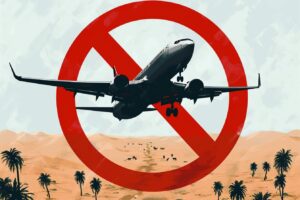
A few weeks ago, a woman on a Czech Airlines flight landed on the wrong
side of the law when she whipped out her wireless device in midair, despite
repeated warnings from a flight attendant. According to a police spokesman,
the call temporarily disrupted the turboprop's navigation devices and
jammed communication between the plane and the tower. She faces one year
in jail if convicted.
And earlier this month, the New York state Assembly approved a measure
that would make New York the first state to ban of the use of hand-held
cell phones while driving. Motorists caught in the act of chatting while
steering a car could get fined up to $100. The legislation does not address
the issue of dialing while driving and tickets can be dismissed if you
show the judge a receipt that proves you've bought a hands-free cell phone
system.
To road warriors who depend on cell phones, the clampdown looks like the
beginning of witch-hunt. Travelers like John Getter are frustrated with
the turn of events and want to stop the cell phone persecution before
it goes too far.
"This is all about petty power trips, not safety," he says. "Since distracted
driving is already illegal, let's outlaw driving altogether. Far more
people die in cars than aboard 'public' transit. Let's ban doctors. They
kill thousands more than cell phones. Let's ban alcohol and tobacco -
big killers. And let's outlaw risk and simply mandate that everyone, everyplace
must stay inside and safe so they will never die."
His rage is not unusual among jet setters. Already trapped in a microcosm
of outrageously expensive air fares, dwindling service levels, overcrowded
airport terminals, hotels and car rental companies that add surprise surcharges
to bills, and technology that rarely works the way it's supposed to, many
business travelers are perilously close to flying off the handle.
"I think the airlines and the authorities need to get very clear on what
technology truly creates problems," says Henry Mensch. "They keep broadening
the list of technologies which are deemed troublesome, and many of these
technologies have never actually been proven to cause trouble."
Mensch wonders how much of a hazard a cell phone actually is after a plane
lands, for example. The reason: a British Midland flight attendant recently
gave him "grief" after he tried to make a call before reaching the gate.
"Would the pilot suddenly have trouble finding the gate because my phone
was on?" he asks.
Bob Trimble, a Vancouver, Wash., pilot who is also a telecommunications
expert, says cell phones shouldn't affect communications on the ground
but can affect an aircraft's ability to communicate in the air. Still,
airlines have a set of rules that could put a passenger like Mensch at
odds with the cabin crew. Are a few minutes of waiting on the tarmac really
worth getting arrested for?
Before I continue, a disclaimer: Eight years ago I was run off the road
by a truck whose driver was using a cell phone, so I'm sympathetic to
those who say we should restrict wireless devices. I also practice what
I preach. I won't answer a cell phone while I'm driving, won't make a
call while I'm steering a vehicle, won't phone home from a plane. It's
not always easy, but I think it's the safe thing to do.
When I hear from readers like David Deehl, I am convinced that I'm on
the right side of the argument. Deehl is trial lawyer who is representing
a woman whose husband was killed by a high school student speeding in
an SUV while dialing her cell phone. "I asked [the student] if she was
using her cell phone, and she denied it. I subpoenaed her cell phone records
and she was on the phone at the exact time - 2:20 p.m. - that the crash
occurred," he says.
Deehl believes that the combination of a novice driver operating a sports
utility vehicle, using a cell phone and not paying attention to the road,
resulted in his client's husband's death. "She actually crossed the centerline
and hit [him] when he was already in the other lane of traffic at an intersection.
[The deceased] was a wonderful man who was working to help an orphanage
in Haiti, and serving meals as a volunteer at a homeless shelter. His
widow and family miss him terribly," he told me.
I'm not the only one who thinks that limiting cell phones - whether on
a car or on a plane - is a good idea. Business travel expert Jonathan
Meigs, who has been following this issue a lot longer than I have, believes
restricting some wireless devices is reasonable.
"As far as the cell phone crackdown goes, I'm all for limiting the use
of cell phones, especially in the close confines of an airplane cabin
- safety issues aside, and they are open to question - I hate listening
to some yahoo bond trader or salesman bragging about himself loudly while
I'm trying to work or read or even talk to an associate. Talking on the
phone while driving is very dangerous. I've lost 30 to 60 seconds of time
at 70 mph concentrating on a phone conversation while driving," he says.
And yet some of us remain on the line, figuratively speaking. We know
that the rules make sense on one level, but we're also opposed to the
idea of more laws. We're responsible technology users, after all. We would
never do something to endanger the life of another driver or a fellow
passenger. Can' t the airlines, the state governments, just trust us?
Ken Krause sees parallels to another time in American history when the
public overreacted to a problem. "All these headline-grabbing legislators
are going to find out what the well-meaning Prohibitionists did in the
1920s - once the genie is out of the bottle, you can't put him back in,"
says the Arlington Heights, Ill., account manager for a technology company.
Have we gone too far? Have we not gone far enough?
The answer to both questions is "yes." We've gone too far in the sense
that we've created a patchwork of new laws designed to treat the symptoms,
but not cure the disease. Because wireless technology is constantly evolving,
it's practically impossible for rules to keep up with it. What happens,
for example, when 3G technology lets us videoconference? What good will
"hands free" laws be for drivers when their eyes aren't on the road?
We have also not gone far enough because the wireless industry is fighting
government regulation instead of collaborating with governments on ways
to educate customers about responsible use - in a car or a plane. The
disease, if you'd like to call it that, is that a dangerous minority of
cell phone customers lacks the common sense to know right from wrong when
it comes to technology.
We ought to prefer
education to legislation. Only when that doesn't work should we pass laws
that restrict our freedom to use cellular phones.
Christopher Elliott is a travel
commentator based in Annapolis, Md. All e-mailed questions may be edited,
condensed or republished at the site's discretion. The
Travel Technologist appears weekly on this site. This
story was also published on Biztravel.com.
|
|
|