What's the book corporate America doesn't want you to read? Find out now -- or you could get scammed.

Less is more

March 22, 2002

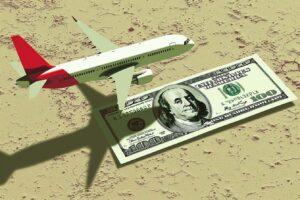
Travel agents are angrily denouncing Delta Air Lines’ long-awaited decision to eliminate their commissions – a move matched by the carrier’s competitors almost immediately – as a hidden fare increase. They claim airlines are effectively raising ticket prices by forcing travelers to pay higher agency booking fees.

But the airline industry’s actions won’t harm anyone. In fact, the cuts promise to do the very opposite: they’ll empower us to find the best ticket prices, help the airlines recover from their earnings tailspin and turn travel agents into the true professionals they’ve long claimed to be.

How so? By ending commissions, the airlines have forced travel agents to raise ticketing fees in order to make up for the loss. Many retailers had tacked these surcharges to their ticket prices before the commission cuts, but the fees only averaged $22 per ticket, according to the American Society of Travel Agents. Now they’ve risen to an average of $32.50, which is enough of a jump to make bargain-hunters think twice before booking through an agent.

The higher fees will probably unleash these cost-conscious consumers onto the open market, where they’ll begin exploring the Internet, calling airlines directly and shopping through discount ticket brokers. In the process of becoming their own agent, they’ll also become better-educated consumers. They’ll understand how fare sales work, learn basic yield-management principles, and most important, they’ll know how to play the system.

That’s a good thing for travel agents. People who contact an agent are more likely to be a serious buyer rather than a nuisance caller. And better-educated travelers invariably realize that while buying a ticket online is relatively easy, a complicated itinerary – like a two-week safari or a Mediterranean cruise – is something best left to a professional. Many of them will no doubt return to their agents.

Of course, all of this is a moot point if there isn’t a viable commercial aviation industry to support the trips. The commission cuts will save airlines a considerable amount of money. It may even save some of the airlines outright. In announcing its decision, Delta said it had to “pursue all opportunities to reduce costs” after suffering its worst year ever in 2001. It’s not alone. None of the other airlines except Southwest turned a profit last year and the outlook for this year remains bleak. Last year the airlines paid $1.5 billion in domestic airline commissions and $2.1 billion in international commissions, down 24 percent from a year earlier, according to the Airlines Reporting Corp. The cuts will help revive a moribund airline industry like nothing else.

But the biggest beneficiaries of the commission reductions are travel agents themselves – specifically, their standing as professionals. Retailers have long claimed to be an agent for the traveler, but a look at who pays the bills suggests their loyalties were with the airline. Carriers enticed agents with bonuses ranging from free tickets to overrides for exceeding a booking quota. Meanwhile, agents were also collecting a ticketing fee from consumers, which implied that the agents were working exclusively for the traveler. Scott Ahlsmith, a vice chairman for the Institute of Certified Travel Agents calls this an “unhealthy schizophrenia” and believes the cuts will cure it. “It’s liberating,” he says. “A lot of agents will sleep better at night now that commissions are gone.”

Did Delta cut its commissions in order to turn its customers into more sophisticated travelers and to make agents bona fide travel consultants? Probably not. The airline industry stands very little to gain by creating a new class of highly educated, empowered travelers, and it will benefit even less from a group of well-organized professional travel counselors. It may have solved its short-term financial problems, but its decisions could have more far-reaching consequences for the airline industry.

Not all of them will be positive.


Travel agents are angrily denouncing Delta Air Lines’ long-awaited decision to eliminate their commissions – a move matched by the carrier’s competitors almost immediately – as a hidden fare increase. They claim airlines are effectively raising ticket prices by forcing travelers to pay higher agency booking fees.

But the airline industry’s actions won’t harm anyone. In fact, the cuts promise to do the very opposite: they’ll empower us to find the best ticket prices, help the airlines recover from their earnings tailspin and turn travel agents into the true professionals they’ve long claimed to be.

How so? By ending commissions, the airlines have forced travel agents to raise ticketing fees in order to make up for the loss. Many retailers had tacked these surcharges to their ticket prices before the commission cuts, but the fees only averaged $22 per ticket, according to the American Society of Travel Agents. Now they’ve risen to an average of $32.50, which is enough of a jump to make bargain-hunters think twice before booking through an agent.

The higher fees will probably unleash these cost-conscious consumers onto the open market, where they’ll begin exploring the Internet, calling airlines directly and shopping through discount ticket brokers. In the process of becoming their own agent, they’ll also become better-educated consumers. They’ll understand how fare sales work, learn basic yield-management principles, and most important, they’ll know how to play the system.

That’s a good thing for travel agents. People who contact an agent are more likely to be a serious buyer rather than a nuisance caller. And better-educated travelers invariably realize that while buying a ticket online is relatively easy, a complicated itinerary – like a two-week safari or a Mediterranean cruise – is something best left to a professional. Many of them will no doubt return to their agents.

Of course, all of this is a moot point if there isn’t a viable commercial aviation industry to support the trips. The commission cuts will save airlines a considerable amount of money. It may even save some of the airlines outright. In announcing its decision, Delta said it had to “pursue all opportunities to reduce costs” after suffering its worst year ever in 2001. It’s not alone. None of the other airlines except Southwest turned a profit last year and the outlook for this year remains bleak. Last year the airlines paid $1.5 billion in domestic airline commissions and $2.1 billion in international commissions, down 24 percent from a year earlier, according to the Airlines Reporting Corp. The cuts will help revive a moribund airline industry like nothing else.

But the biggest beneficiaries of the commission reductions are travel agents themselves – specifically, their standing as professionals. Retailers have long claimed to be an agent for the traveler, but a look at who pays the bills suggests their loyalties were with the airline. Carriers enticed agents with bonuses ranging from free tickets to overrides for exceeding a booking quota. Meanwhile, agents were also collecting a ticketing fee from consumers, which implied that the agents were working exclusively for the traveler. Scott Ahlsmith, a vice chairman for the Institute of Certified Travel Agents calls this an “unhealthy schizophrenia” and believes the cuts will cure it. “It’s liberating,” he says. “A lot of agents will sleep better at night now that commissions are gone.”

Did Delta cut its commissions in order to turn its customers into more sophisticated travelers and to make agents bona fide travel consultants? Probably not. The airline industry stands very little to gain by creating a new class of highly educated, empowered travelers, and it will benefit even less from a group of well-organized professional travel counselors. It may have solved its short-term financial problems, but its decisions could have more far-reaching consequences for the airline industry.

Not all of them will be positive.

Christopher Elliott is the author of Scammed: How to Save Your Money and Find Better Service in a World of Schemes, Swindles, and Shady Deals. Critics have called it “eye-opening” and “inspiring” — it’ll “grab your attention and won’t let go.” Order your copy now on Amazon, Barnes & Noble or iTunes.

1 comment

  • Dennis

    Every action taken by the airlines has been a dismal failure.
    Cutting out agents totally will only result in more customer dissatisfaction with the carriers. They are now going to charge to take your luggage with you. God help you if your bags are one pound over the limit or you have three bags instead of two bags. Ok, two bags per customer should be enough. There is talk behind the scenes that some airlines want to cancel their contracts with the cruise lines. The airlines need to be held accountable. The Government should have let one them go under and send a message to the corporate assholes at the top. Taking away pensions is a low blow. At the same time the unions also created a mess.

Previous post:

Next post: