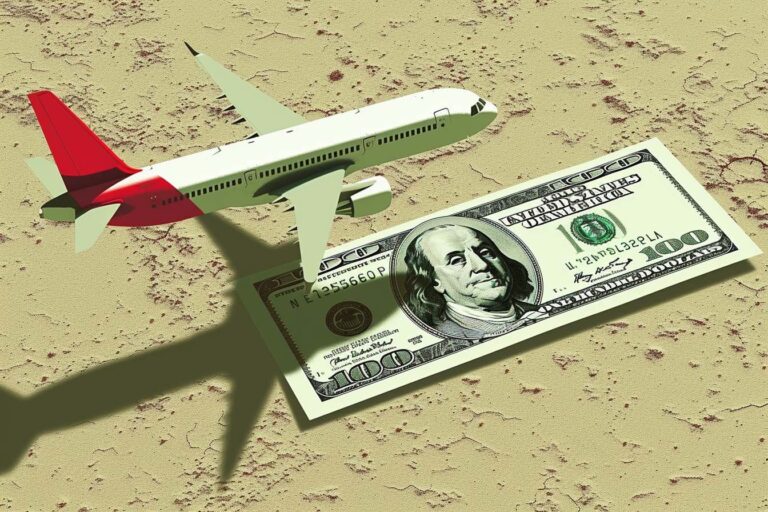
Last week, several airlines added a $10 “miscellaneous” charge for flights on on Nov. 29, Jan. 2 and 3. — those are the peak travel days after Thanksgiving and New Year’s Day. The news sent the travel blogosphere into something of a frenzy. My colleague Janice Hough this morning predicted the “holiday surcharge” was only the beginning of a new fee orgy.
Rather than devote an entire post to criticizing the airline industry for yet another poorly-conceived idea, I thought it would be a good idea to ask the Transportation Department, which regulates a significant part of the airline industry, what it makes of the new fees.
Here’s the exchange between department spokesman Bill Mosley and me:
What is your department’s understanding of these new fees?
The Department does not have the authority to regulate the fares airlines charge, but does ensure that consumers are not misled in how fares are advertised.
In 2001, your department said airlines and travel agencies were required to quote a ticket price that includes fees such as fuel surcharges. Does that ruling apply to these new fees in any way?
Yes. According to media reports, these charges are assessed by the airlines themselves for peak period travel and, accordingly, they must be included in the advertised airfare.
Was the Transportation Department consulted by any of these airlines, notably American Airlines, before these fees were added last week?
Airlines are not required to consult the Department about fares or fees.
What are you saying to air travelers who are concerned about this new fee?
Consumers should shop around and determine which carrier has a fare that best suits their individual needs. Consumers can learn more about their rights at airconsumer.dot.gov
In other words, these new fees were added to a part of the fare that is unregulated by the government. The only thing the DOT can do is regulate how the fare is advertised and displayed, to prevent travelers from being deceived. Other than that, the surcharges are completely legal.
I think there are many readers who will see this as a less-than-upfront fare increase. Does it cost more to operate a flight just after a major holiday? Probably not, but these carriers are going to help themselves to more of your money, anyway.
The honest thing to do would be to raise fares — not add a “holiday surcharge.” But what do I know?
(Photo: dnkbdotcom/Flickr Creative Commons)
✓ Get the latest travel news, tips and commentary from Elliott’s E-Mail, the subversive newsletter from industry gadfly Christopher Elliott. You’ll travel like a pro. Sign up here. It’s free.
Similar Posts:
- Tough talkin’ Transportation Department slaps United with $75,000 fine
- Can the government regulate fees for checked baggage? The Transportation Department has a canned answer
- Government fines Continental, Hawaiian and US Airways for consumer rule violations
- US Airways fined $40,000 for failing to disclose full airfares
- Airfare absurdity: 6 tips for navigating the new world of airline tickets

Sign up for my 


{ 14 comments… read them below or add one }
The way I’ve been reading about the holiday surcharge is that it would be quoted as part of the “base” fare, and therefore is transparent to everybody but travel agents, who can see the full makeup of a quoted fare. I supposed it would be non-commissionable, if anybody still paid commissions.
P.S. I’ve never seen DCA decked out for the holidays before; it’s a nice picture.
The ‘experienced pilot’ surcharge is coming. They’ll call it a ‘regulatory training reimbursement fee.’
Aircraft Maintenance? ‘C/D Check Overburden Charge’
Fuel already has a surcharge.
“Airport Facility Energy Surcharge” =keeping the lights on in the terminal
“Covered Walkway Maintenance” = jetway fee – you’ll love this when you have to walk outside to the airplane.
“Regulatory Fee” = your share of the fines charged by DOT for maintenance and other rule violations
“Crew Hospitality Fee” = crew overnights away from home
“Holiday reservation fee” – we’ve got that one out of the way.
“Union Surcharge Fee” does your flight arrive after 5pm? time and half for those union members
“Consumables Surcharge” – cost of tires, aircraft cleaning, water and soap in restroom and in terminal.
“Landing Slot Fee” – only at LGA and DCA; what the airline paid for the right to be able to land your flight at National or LaGuardia.
“mileage posting fee.” you earned those miles – now you want them posted to your account, right?
The scary thing is, some of these are probably on the drawing board right now.
Is this idea not smart? Depends on who your asking. Since people are willing to pay fees to fly, airlines will charge them. http://www.usatoday.com/money/industries/travel/2009-09-24-airlines-fees-revenue_N.htm
Today consumers can shop around and review prices to find the best deal. As long as the final total price is shown before any card is charged consumers can make their own choice to pay or use someone else.
The airfare for those days is usually considerably more than flying non peak days anyway so I don’t understand why the airlines would add the fee. It just generates bad press. I just booked at ski trip from the east coast to the west coast and by traveling on the non peak days saved considerably on the airfare. If they are adding the fee just because they can, why not just jack the price up a bit more. An increase in price due to supply and demand makes sense; a fee is extremely short sighted.But perhaps there is a reason the airlines can’t just jack the price up on those peak days (though it seems that they do already).
Chris
Just because you interview a TSA rep and get his answers, doesn’t mean that you have to publish them :) Sheesh! What a bunch of non-answers and milquetoast advice. “Consumers should shop around and determine which carrier has a fare that best suits their individual needs.” Wow! Really? Thanks for that absolutely brilliant insight.
Sorry. I meant DOT, not TSA.
I’m losing interest in this topic. If you’re buying the ticket online, it seems to me that if they tell you the total price before you pay for your ticket, there is no problem.
This just highlights the airline’s stupidity. If they just increased the base fair by $10 during the holiday season no one would bat an eye. IT’S THE FREAKIN HOLIDAYS!! People EXPECT to pay more!! The only reason to label this a “surcharge” is some bizarre marketing ploy/misdirection that defies any sort of logic.
@Noah
I’m with you. As long as you know what the total, out the door, price is before you make any payments or any other committments, I don’t see the problem, particularly in an online environment where there is no issue of undue pressure.
Joe, you forgot a few.
Bouyancy Enhancement Fee = A seat cushion that floats.
Gastric Distress Alleviation Fee = $2.00 for the airsick bag, thank you.
Respiratory Fuel Surcharge = Fee to cover the cost of the jet fuel fumes you’re inhaling.
I totally agree with Lianne. Increasing the fare for the high-demand season is perfectly reasonable, but the marketing guru who decided to publicize it as a fee ought to be fired.
Hmmm….better watch my tickets for the jetway charge when I fly into/out of those airports that make me walk out to my little prop plane.
@noah / @carver
The problem is that it becomes almost impossible to reasonably compare ticket prices if I have to go all the way to the point of purchase before I find out what the final cost of a ticket will be. Especially, since this really isn’t final cost because additional costs will be added at the terminal (checked bag, blanket, food, etc) depending upon your airline. It takes large amounts of time to do true comparisons. Especially if you are using all of the various websites to get the best fares. I’ve noticed that there is almost always a difference between fares on the various major online sites and the individual airline website itself. Therefore, I’ve often had 6 -10 windows open comparing options on these sites to see what gets the best price. Now, I need to have a spreadsheet to also include the various fees I’ll be charged on the various airlines.
@carver – no undue pressure.
I wouldn’t agree with that. I’ve noticed that I can be quoted different prices on individual sites within minutes of previous quotes. Therefore, when I find what may be a good price I have to act quickly in making the determination whether it is really the best price I can get. With all of these additional variables now that becomes quite difficult.
@everyone
Just as the FCC is discussing the implications of its “truth in billing” requirements for wireless phone service and whether prices should be transparent earlier in the process of acquiring phone service there needs to be some government agency doing the same thing for travel (cruise, airline, car rental, hotel) pricing. If there are no agencies empowered to do this, then a law should be passed empowering an agency to do it. Personally, I feel that the DOT should be able to do this for airfairs, but then again I’m not a lawyer.
Aside from the obfuscation factor of giving fares by component, keeping charges outside of the nominal fare may very well have tax advantages for the airline, leading to lower taxes due from the airline to the government. Yes, it’s just another tax break!